Category Archives: Uncategorized
Posted in Uncategorized
Permalink Enter your password to view comments.
Russian Art Week: London, June 2021
It’s that time of the summer when the auction houses of London focus the Art of Russia (see Russian Art Week Summer 2021 | Russian Art + Culture (russianartandculture.com)) which is always a delicious nosegay of paintings from across Russia and Russian history. Anyone following my little Russian Art & Artists research course will, hopefully, enjoy browsing the online galleries, especially as there are pictures, even by the most celebrated artists, that are rarely seen in public (especially in Britain) because they’re in private collections.
It means too that, for the common viewer, one begins imagining which paintings to buy in the creation of a personal collection (imaginary cheque books at the ready!) – I have chosen three:
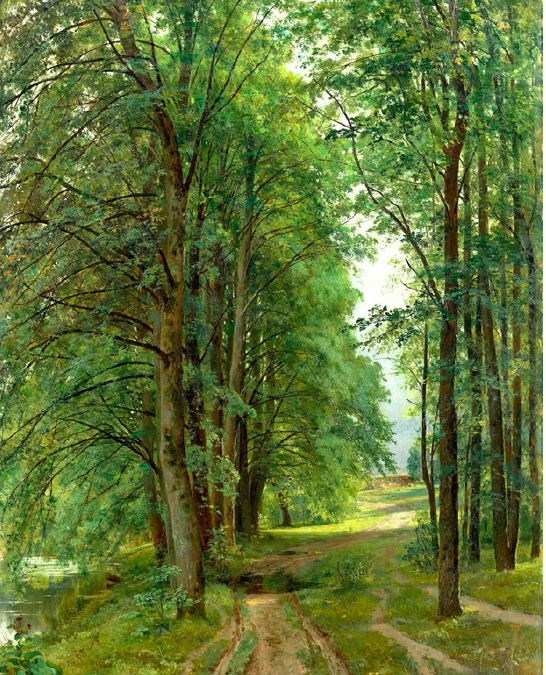
I would have to start with this glorious painting by Ivan Shishkin: “Forest Road” (1896) at MacDougall‘s. I love the way (as with many artists of the 19th century Wanderers movement) the path comes right up to the lower frame, as a viewer one feels invited in, as if already walking along, enjoying the light, the air and the colours of the forest.
MacDougall‘s notes:
Here, as in many of Shishkin’s best works, there is no pursuit of a beautiful motif or exalted tone yet, for all its apparent simplicity, Forest Road enchantingly evokes the mysterious depths of the Central Russian forest landscape so familiar to everyone, as well as the natural progression of the muted light, and the emotional and expressive quality of the artistic language.
That suggestion of ‘mysterious depths’ calls to the ancient history of Russia, the wildness of its interior lands, even evoking the traditions of story-telling, the grand legends and folk-tales.
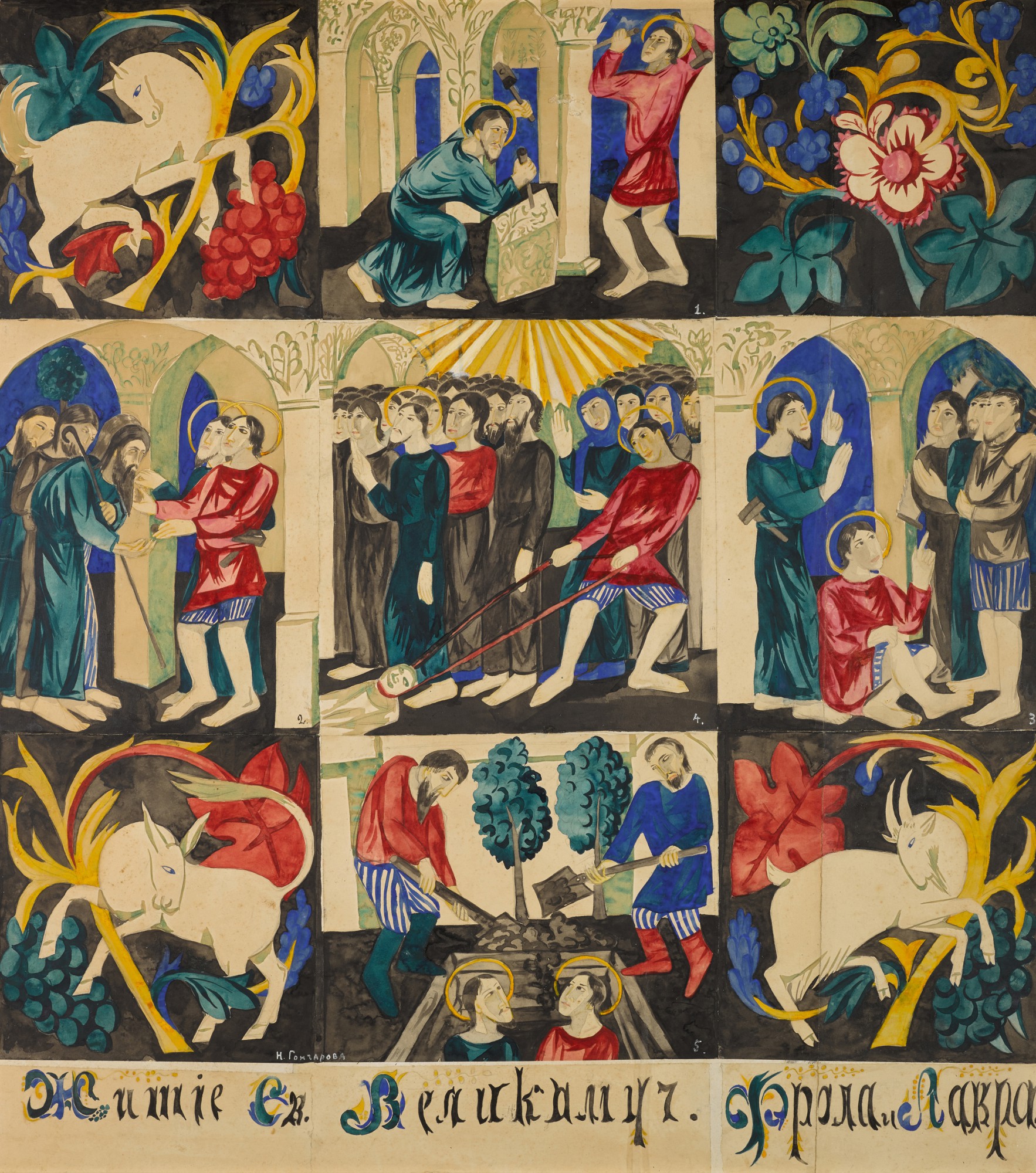
My second ‘imaginary acquisition’ is – and this will surprise no-one! – a painting by Natalia Goncharova: The Life of the Holy Martyrs Florus and Laurus from 1913 and on sale at Sotheby‘s. For all the radical difference of Goncharova’s art from that of Shishkin, they share the same catalyst for their work: the traditions of Russia. Here, Goncharova explores the story of two Orthodox saints from the Russian Icon tradition.
Florus and Laurus are known as protectors of horses and have been important for the Russian peasantry. In both its form and subject matter, the work therefore continues Goncharova’s exploration of peasant traditions
say Sotheby‘s in their Catalogue Note. With its simplified forms, bright colours and decorative elements (the flowers top right) Goncharova connects folk art and visual culture with avant-garde modernism.
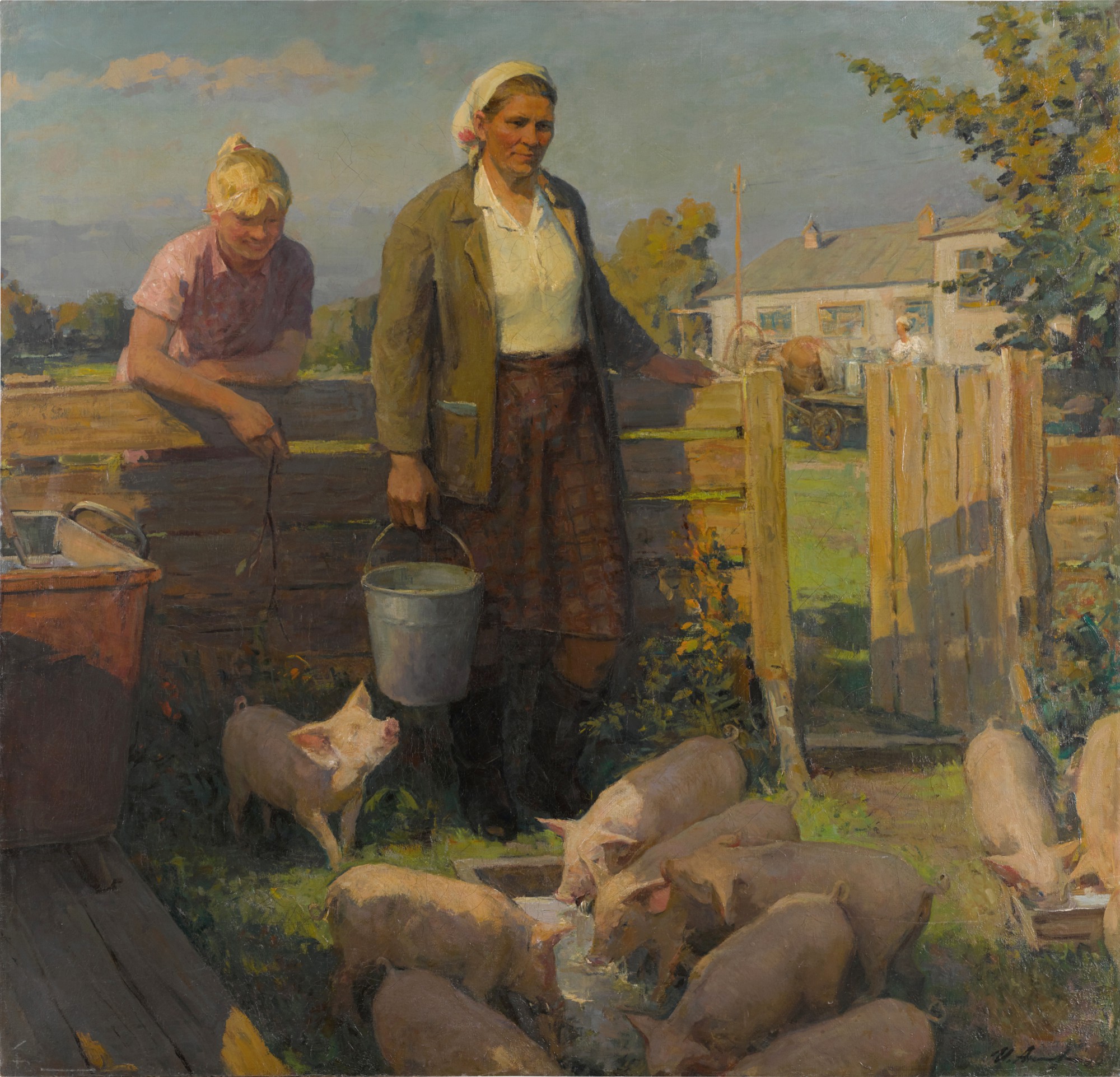
Now this might come as a surprise! Ivan Andreev’s “Pig Farm” is undated and, on sale at Sotheby‘s, sadly there are no additional notes. But surely it is from the ‘heroic’ / ‘working class impressionism’ period of 1950s Socialist Realism? Everyday life is recognised as worthy of monumental representation, the lives of the happy, healthy worker-citizens gloried in sunlight and even pig farming is an honoured part of Soviet collective productivity. Of course we can see it is ‘propaganda’: Socialist Realist artists were closely circumscribed in their art even after the demise of Stalin, both in the subject matter and style; and yet, I find there is something immensely satisfying in Andreev’s painting.
***
If you want to explore further, the websites are:
Sotheby’s: Russian Pictures (sothebys.com)
Christie’s: Browse Lots (christies.com)
MacDougall’s: MacDougall’s Auction | Home (macdougallauction.com)
and Bonhams: Bonhams : The Russian Sale
***
And if you are following the Russian Art & Artists research series here on The Common Viewer, our next ‘episode’ (to be published 12th June) will be on Russian Icons and the Art of Kandinsky.
***
Posted in Uncategorized
Words and Pictures (A Russian Aside): Rasputin and Anna Krarup
The Moscow Times has reported that – yesterday in Copenhagen – two portraits of the notorious/infamous Rasputin painted by Danish artist Anna Theodora Krarup went to auction, see: Bruun Rasmussen Auctioneers of Fine Art (bruun-rasmussen.dk).
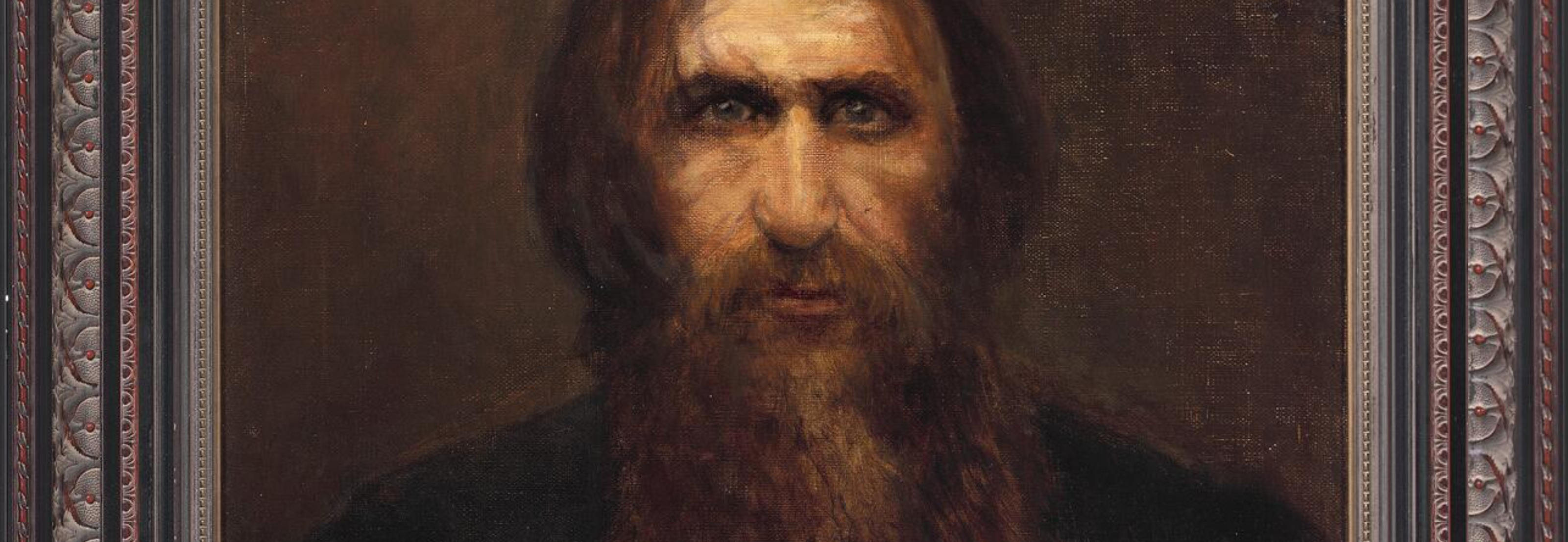
I’m not sure if I’m more intrigued by the paintings – done from life, incredibly rare – or the artist!
Christie’s writes of Krarup:
Theodora Krarup was born in Scheelborg in 1862 and studied in Berlin, Copenhagen, Paris and Helsinki, before fulfilling a lifelong ambition to visit Russia, at the age of 34, where she remained for forty two years. Krarup lived in St. Petersburg, where she was asked by the, dowager Maria Feodorovna to paint the late Alexander III from pictures. She was then commissioned to paint further Imperial portraits from life.
Krarup became a friend of Rasputin and painted a total of twelve portraits of him, the last of which was completed five days before his death. According to her memoires, Rasputin entrusted his own memoires, photograph album and letters to her, but these along with her own remaining works, she had to destroy the day before her deportation in 1938. However, she attempted to refute the scandalous reputation of Rasputin in her own memoires, dictated to and published by : Henning Kehler and William Haste.
What a fascinating story this must be – living in St Petersburg through the Revolution and deep into Stalinist times – but apparently it’s only published in Danish.
The Moscow Times adds:
She had a studio on Nevsky Prospekt and painted portraits of not only Russian royalty, but also other prominent cultural and scientific figures. She was acquainted with Grigory Rasputin and strongly refuted the depiction of him as a womanizer and fraud. She wrote that he was a kind person without ambition.

Concidentally, I’ve just been reading Teffi’s short story/memoirs Rasputin and Other Ironies [Pushkin Press] in which she describes meeting Rasputin:
Lean and wiry and rather tall, he had a straggly beard and a thin face that appeared to be gathered up into a long fleshy nose. His close-set, prickly, glittering little eyes were peering out furtively from under strands of greasy hair. I think these eyes were grey. The way they glittered, it was hard to be sure. Restless eyes.
It’s a description that approximates Krarup’s portrait so closely it’s astonishing.
Teffi meets Rasputin a couple of times, he’s clearly a very peculiar man sometimes posturing and high-handed, sometimes dancing madly, sometimes a womaniser; but then Teffi also sees the security around him, the journalists exploiting his story, and the powerful interest all sorts of people had in him, and for all sorts of motives. Teffi, however, doesn’t fall for his magic act:
Here he was, Rasputin in his element. The mysterious voice, the intense expression, the commanding words – all this was a tried and tested method. But if so, then it was all rather naive and straightforward. Or, perhaps, his fame as a sorcerer, soothsayer and favourite of the Tsar really did kindle within people a particular blend of curiosity and fear, a keen desire to participate in this weird mystery.
I think I’m with Teffi here; it would be much more interesting to find out about Anna Krarup’s time in Russia/USSR!
***
Posted in Uncategorized
Words and Pictures: Arty Books for June 2021
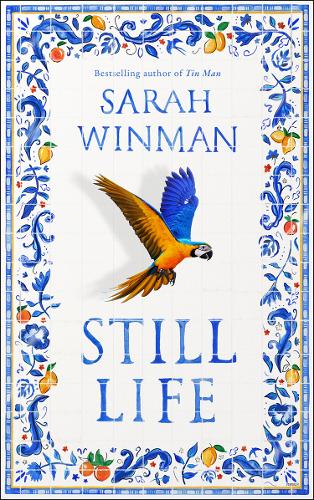
The first book to mention is Sarah Winman’s new novel “Still Life” which is published by HarperCollins next week, 10th June and looks fascinating. Anyone who had read her glorious “Tin Man” [Tinder Press] will know her extraordinarily succinct use of language to conjure atmosphere, a strong sense of place and time and always a dramatic, unexpected and often emotional plot. Throughout that novel the presence of Vincent Van Gogh – both his paintings (the Sunflower series) and his biography – haunted, sometimes even drove, the narrative, in surprising ways.

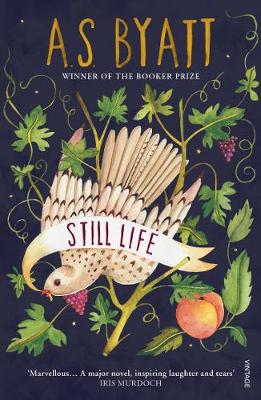
Reading “Tin Man” then took me back to re-reading A. S. Byatt’s novel (also called) “Still Life” [Vintage] which is similarly infused with the spirit of Van Gogh as well as other painters. The Prologue is set at an exhibition at the Royal Academy, and one of the main characters, a writer, looking at Van Gogh paintings reflects how difficult he had found it to find “an appropriate language for the painter’s obsession with the illuminated material world.” Perhaps Byatt, too, found it difficult, but her success throughout the novel – as Sarah Winman achieved in “Tin Man” also – is the creation of story, characters, fictional events that enable one to look again at the paintings and their effect/s upon the viewer.
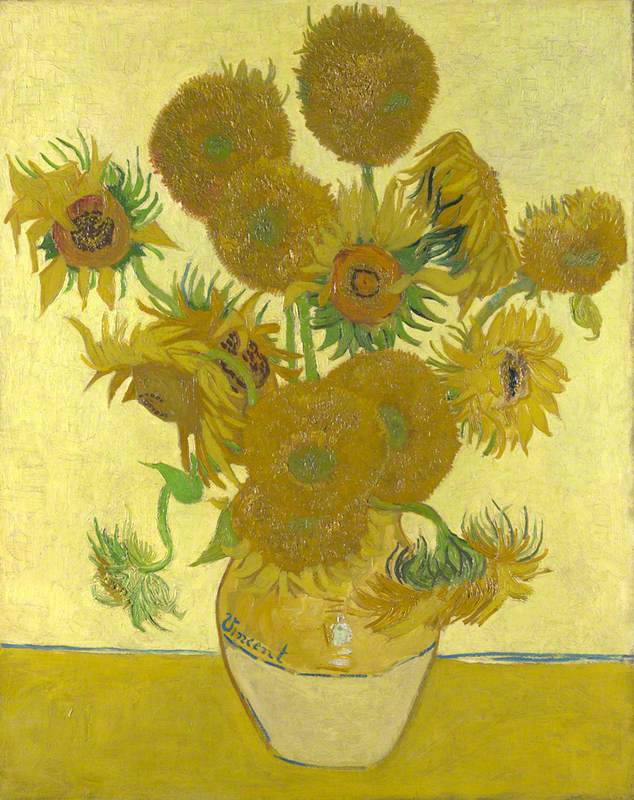
The National Gallery, London; http://www.artuk.org/artworks/sunflowers-115371
In Winman’s novel the propelling catalyst is a reproduction of “Sunflowers” won at a raffle – Dora hangs it on the wall of her otherwise drab and depressing back room, and against her husband’s wishes.
“She stood back. The painting was as conspicuous as a newly installed window, but one that looked out on to a life of colour and imagination, far away from the grey factory dawn and in stark contrast to the brown curtains and brown carpet, both chosen by a man to hide the dirt. It would be as if the sun rose every morning on that wall, showering the silence of their mealtimes with the shifting emotion of light.”
The painting now on the wall leads immediately to a near murder Dora’s her husband returns and goes to pull it down: “Do it and I’ll kill you. If not now then when you sleep. This painting is me. You don’t touch it, you respect it.”
Van Gogh’s “Sunflowers” changes lives throughout the story in, as I say, surprising and powerfully emotional ways.
The publisher’s copy for Sarah Winman’s “Still Life” reads:
Still Life is a big-hearted story of people brought together by love, war, art and the ghost of E.M. Forster. 1944, in the ruined wine cellar of a Tuscan villa, as bombs fall around them, two strangers meet and share an extraordinary evening. Ulysses Temper is a young British soldier, Evelyn Skinner is a sexagenarian art historian and possible spy. She has come to Italy to salvage paintings from the wreckage and relive memories of the time she encountered EM Forster and had her heart stolen by an Italian maid in a particular Florentine room with a view. Evelyn’s talk of truth and beauty plants a seed in Ulysses’ mind that will shape the trajectory of his life – and of those who love him – for the next four decades. Moving from the Tuscan Hills and piazzas of Florence, to the smog of London’s East End, Still Life is a sweeping, joyful novel about beauty, love, family and fate.
In other words: it will be amazing!
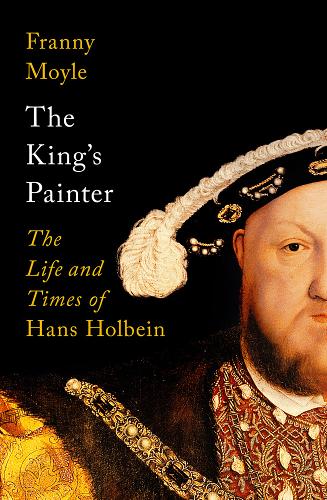
A book more directly linked to an artist is Franny Moyle’s The King’s Painter [Head of Zeus] which, I have to say, is one of the most beautifully illustrated and produced art/biographies that I’ve seen in a long time. What is particularly interesting is that each chapter is dedicated to a particular portrait that then illuminates the context of the working artist. Moyle notes in the Introduction that there is very little by way of written records from the artist’s life, which means that the the paintings themselves, their subjects and their cultural-political receptions, are superbly foregrounded. And of course the paintings have been so historically affective: we could not ‘see’ or perhaps even understand Henry VIII and his court except through the eyes of Holbein.

The King’s Painter: The Art and Times of Hans Holbein is published now, and four episodes of it from Radio 4’s Book of the Week are still available (as of today): BBC Radio 4 – The King’s Painter: The Life and Times of Hans Holbein by Franny Moyle – Available now and – fascinatingly – as she was going about her research, Franny Moyle also discovered a portrait of the artist as a child: The child hidden in plain sight: how one painting has upended the Holbein world (telegraph.co.uk)!

My third ‘recommended’ book is Frances Wilson’s “Burning Man” [Bloomsbury] which is absolutely brilliant. Wilson not only portrays D.H. Lawrence in a uniquely new light – especially by way of his usually-forgotten-about writing – she has also transformed the art of biography by mapping Lawrence’s life by way of Dante’s travels from the Inferno of Hell through Purgatory to Paradise. It is truly extraordinary and, when the ‘blurb’ says “a landmark biography” for once this rings true.
You might be thinking – why is he talking about this when it’s not about an artist or art? Well, the third part is especially interesting as, when Lawrence and his wife Frieda move to New Mexico, an artist who travels with them is Brett (1883-1977), the Hon. Dorothy Eugenie Brett to give her formal name. Brett had been a student at the Slade, a friend of Carrington and one of the Bloomsbury artists who, during World War I, stayed at Ottoline Morrell’s Garsington Manor – thesae were the circles through which she met Lawrence. At a dinner party, Lawrence – drunk – suggested the guests should all move with him to create a writers/artists colony. One way or another they demurred, except Brett.
The artuk.org website has only four of her paintings, including one of Ottoline and her Garsington guests and a portrait of Lawrence himself:
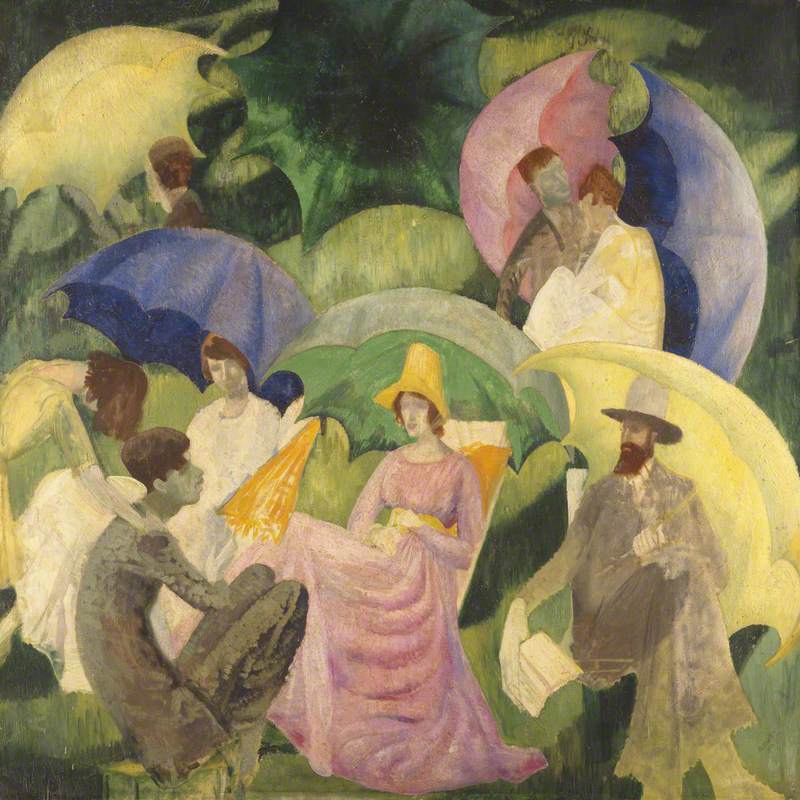
Brett, Dorothy Eugenie; Umbrellas; Manchester Art Gallery; http://www.artuk.org/artworks/umbrellas-204543 
Brett, Dorothy Eugenie; D. H. Lawrence; National Portrait Gallery, London; http://www.artuk.org/artworks/d-h-lawrence-155286
The other two are later paintings (both in the Tate) from New Mexico where, from 1924, Brett would live for the rest of her life.
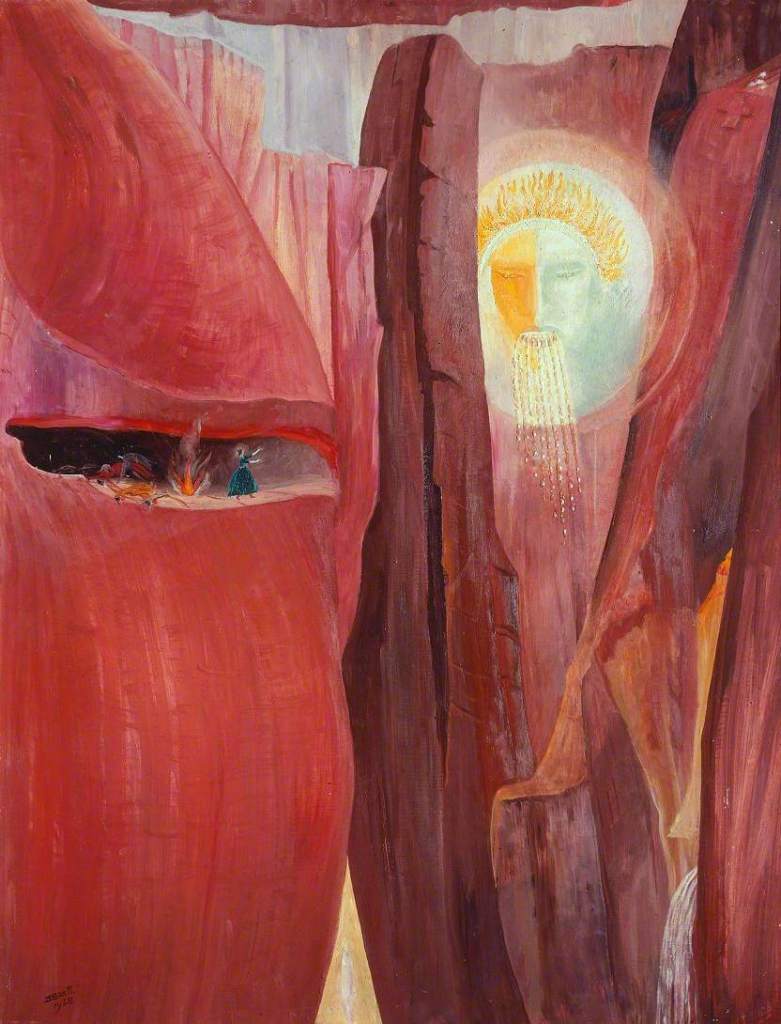
Brett, Dorothy Eugenie; Massacre in the Canyon of Death: Vision of the Sun God; Tate; http://www.artuk.org/artworks/massacre-in-the-canyon-of-death-vision-of-the-sun-god-197994 
Brett, Dorothy Eugenie; Ceremonial Indian Dance: The Matachinas; Tate; http://www.artuk.org/artworks/ceremonial-indian-dance-the-matachinas-197996
The Tate website tells a little more about these astonishing pictures.
And, one other book to mention is Ian Collins biography of the artist John Craxton [Yale University Press]:
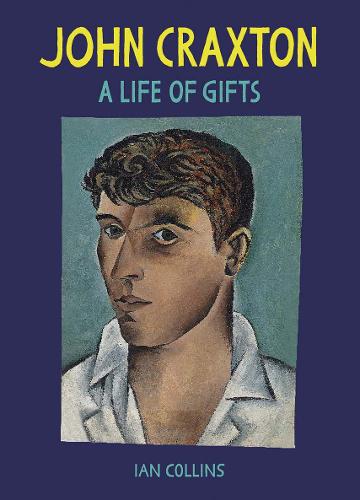
which I will be reading over the next few days before discussing it with the author himself (via @HatchardsPiccadilly on InstagramLive next Wednesday 9th, 6pm), when I’ll have much more to tell!
So, for now, happy book-reading and picture-viewing!
***
Posted in Uncategorized
John Nash in Essex
I’ve just spotted that there’s to be an exhibition of John Nash’s paintings at the Towner Gallery in Eastbourne:
John Nash: The Landscape of Love and Solace | Towner Eastbourne
which is very exciting, as John is so often over-shadowed by his more famous brother Paul.
This will be the first exhibition of his work for sixty years and, especially interesting is that the Towner website says:
“The Landscape of Love and Solace will contextualise the artist’s life and work within the history of the 20th century, and in particular via his key relationships with Dora Carrington and Christine Kuhlenthal, who later became his wife”.
*
“Combining acute observation and a strong individual vision Nash’s oeuvre includes many of the finest depictions of the British landscape created in the 20th century” notes the Towner, which immediately brought to mind the John Nash painting in my own local gallery, The Beecroft in Southend,
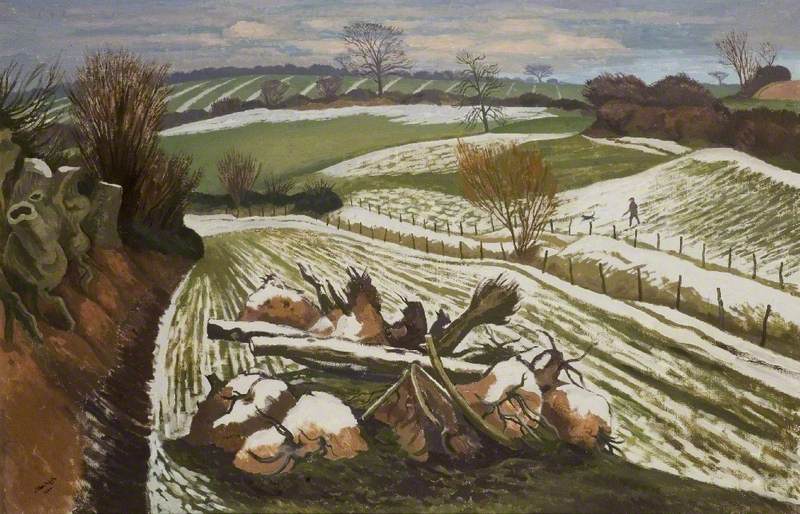
which always fills me with delight. Why? Partly because there’s so much of interest to look at: the deep wide view to the horizon, the quilt of fields and the man (a farmer?), his dog running ahead. The colours are those of nature, and beautifully calming. And then there is this heap of cut down trunks and branches right in the foreground, ‘blocking’ our view and refusing to allow the painting enter the ‘pastoral’ genre; it’s a recognition that even in winter there is work to be done on the land. The tree stumps to the left are also fascinating, they have a hint of Graham Sutherland – looking a little monstrous or wounded, we might think of that gaping stump as howling in the aftermath of such violence. This is not a ‘bucolic’ Essex landscape then, there are harsh realities. And yet I cannot but sense that ‘opening of a window’ feeling, the scent of late-winter freshness in the air as the land emerges from a blanket of snow; the adrenalin-rush of hope and joy that the season is turning and spring not far away. I want to go out and walk, take it all in.
*
There’s a gorgeous-looking book by Andy Friend that accompanies the Towner exhibition.

There is also a really interesting article by Frances Spalding reviewing Andrew Lambirth’s book on John Nash: John Nash and the British landscape | Apollo Magazine (apollo-magazine.com) and 79 paintings by Nash on http://www.artuk.org
***
Posted in Uncategorized
Posted in Uncategorized
Permalink Enter your password to view comments.
Three Colourful Summer Exhibitions…
The landscapes and communities of England, the characters of bohemian Paris and London, the glory of the creative imagination…
There are three very exciting exhibitions coming this summer that will draw us out of the lockdown slumber to thrill us with paint, colour and the exuberance of living. And this common viewer for one is very excited!
(I’ve included as many links as possible for further exploration, but please let me know if there are any others I can add to build up our Common Viewer Resources!)
At Penlee House in Cornwall, they are celebrating the life and art of Laura Knight from 17th May to 16th September in what they’re calling a “major retrospective” that includes a number of paintings from private collections.
The exhibition will bring together over 60 works by the artist, exploring different themes she became fascinated with over her life. Her stunning landscapes in Cornwall, Yorkshire and Worcestershire will be shown alongside her paintings of circus performers and Gypsies.
There is also an accompanying book “Laura Knight: A Celebration” by art historian and curator Elizabeth Knowles published by Sansom and Company.
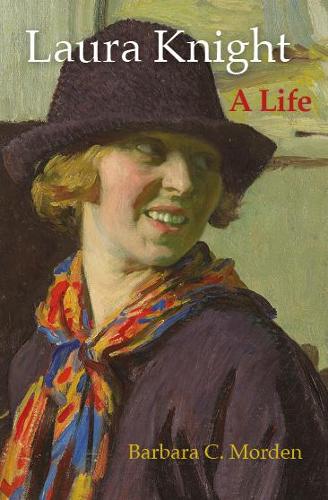


And, as I was looking that up, I’ve also discovered not only that Barbara C Morden’s brilliant biography Laura Knight: A Life is being freshly published in paperback, but that Laura Knight’s autobiography “Oil Paint and Grease Paint” is to be republished in February 2022 – and that is excellent news indeed as it brings Laura Knight’s voice directly to us, as well as numerous anecdotes!
Meanwhile, over at Charleston Farmhouse in Sussex (19th May – 30th August), there is to be a celebration of Nina Hamnett – the Queen of Bohemia as she was, quite wonderfully, known!
Hamnett’s paintings give us a glimpse into her life in Paris and London’s avant-garde communities, and into the relationships she forged. Her compelling portraits and skilful compositions such as her Parisian café scenes, reveal Hamnett to be one of the most talented and exciting artists of her time.
see: https://www.charleston.org.uk/nina-hamnett/
Again there is a book Nina Hamnett to coincide with the exhibition written by the brilliant Alicia Foster and published in the Modern Women Artists series from Eiderdown Books.
Sadly there’s no sign that Hamnett’s autobiographies are to be republished, but Rachel Campbell-Johnston certainly offers a flavour of the artist’s life in her Times review article “The Painter who became a Magnet for Scandal” as does Lucy Davies in the Telegraph: “Lucien Freud Perched, Rapt, on her Deathbed“.
Eiderdown Books also include Eileen Agar by Laura Smith in their Modern Women Artists series:
Eileen Agar was an artist who explored painting, photography, collage and sculpture. Her independent and inventive experiments with assemblage and colour linked her work inextricably with two major art movements of European twentieth century culture: Cubism and Surrealism.
which coincides with the Whitechapel Gallery exhibition: Eileen Agar – Angel of Anarchy (19th May – 29th August).
‘I have spent my whole life in revolt against convention, trying to bring colour and light and a sense of the mysterious to daily existence. One must have a hunger for new colour, new shapes, and new possibilities of discovery.’
– Eileen Agar quoted on the Whitechapel Gallery website.
As Laura Cumming has written in the Guardian:
[Agar’s] art seems infused with a constant sense of the sea and the shore, but also with a characteristically independent joie de vivre. This survey of over a hundred works is long overdue, but better late than never.


Laura Smith has also edited a book “Eileen Agar” to accompany the exhibition that should be especially valuable as it brings together the insights of Andrew Lambirth and Marina Warner. I must also mention Michel Remy’s excellent book Eileen Agar: Dreaming Oneself Awake as well as BBC Radio 4 programme on Sounds about Agar by Iwona Blazwick, the director of Whitechapel Gallery, which is definitely worth hearing as an overview/introduction to the artist.
*
And of course Art UK | Home is as ever a fabulous website through which to explore all these artists.
Oh, what a summer of gorgeous looking we have ahead of us if we share Eileen Agar’s “hunger for new colour, new shapes, and new possibilities of discovery”.
***
Posted in Uncategorized
Posted in Uncategorized
Permalink Enter your password to view comments.
Posted in Uncategorized
Permalink Enter your password to view comments.
Posted in Uncategorized
Permalink Enter your password to view comments.
 thecommonviewer