“Art & Coffee at The Beaumont” is a gentle art appreciation meeting supported by Barchester Healthcare and open to both residents and local community.
*
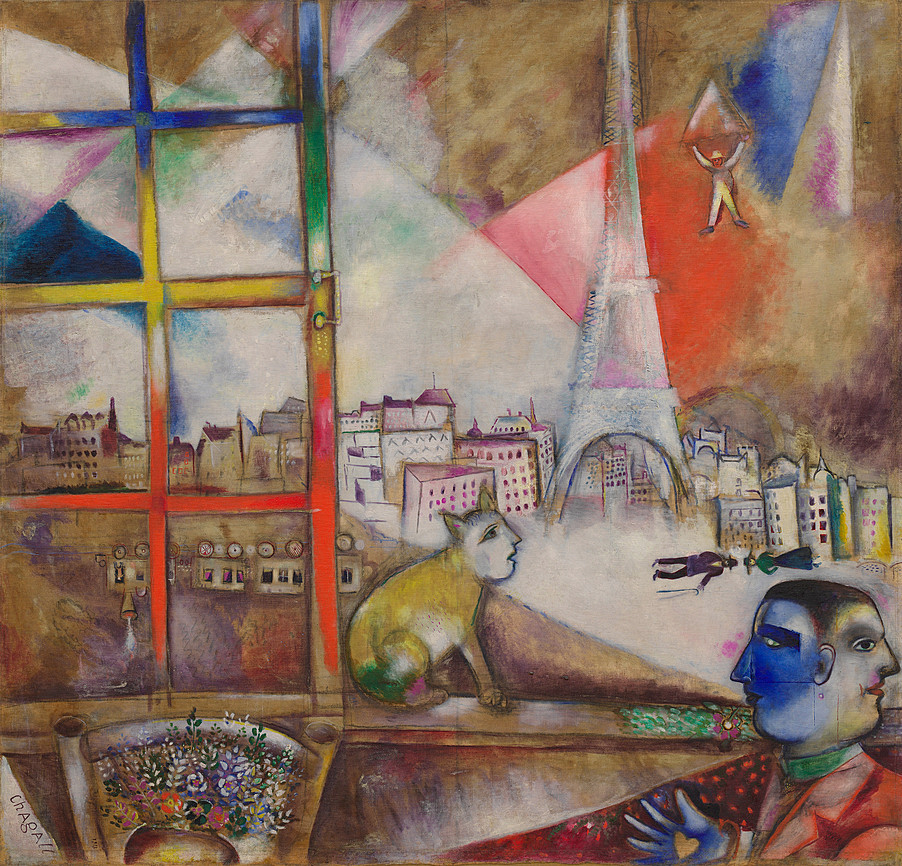
For further research, it is worth looking at the Tate website [here] and there really is no better biography of the artist than Jackie Wullschlager’s “Chagall: Love and Exile”. Published by Penguin in 2008, it seems to be unavailable at bookshops sadly, but should be in your local library.
*
As a little diversion, for anyone living in or visiting Kent there are the glorious stained glass windows created by Chagall and glassmaker Charles Marq for All Saints Church in Tudely; see Wikipedia for Ian Alexander’s photographs/close-ups including this stunning Angel:
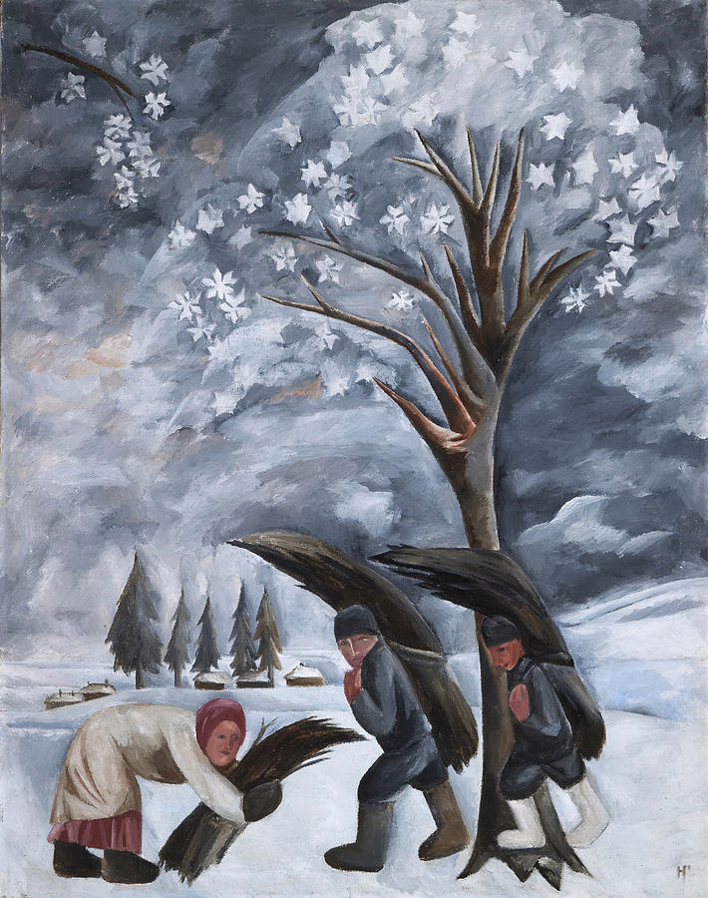
Join us on Saturday 16th December, 11.15am for about an hour & a half, at The Beecroft Gallery’s lecture theatre to gently explore Vincent Van Gogh’s Sunflowers paintings at the Yellow House in Arles – and the impact they would have on Russian avant-garde artist Natalia Goncharova.
Vincent Van Gogh’s “Sunflowers” [1888; National Gallery London];
Natalia Goncharova “Sunflowers” [1908; State Russian Museum, St Petersburg]
*
All welcome!
£10 admission on the door includes coffee at the Jazz Centre (lower ground floor).
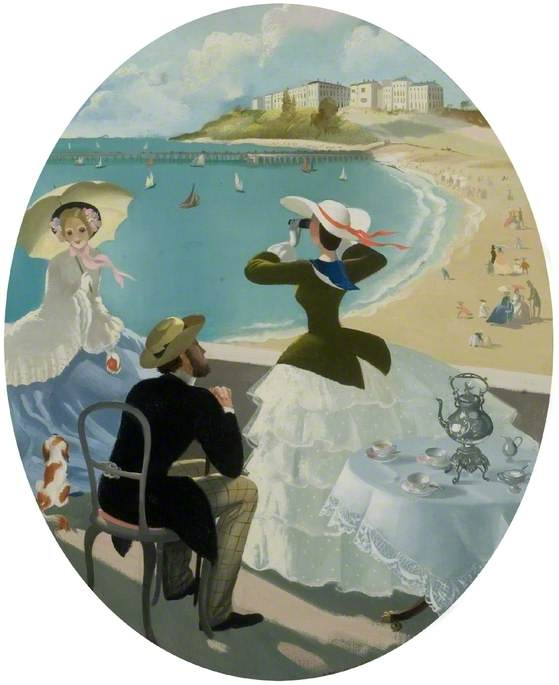
Join us on Saturday 25th November, 11.15am for about an hour & a half, at The Beecroft Gallery’s lecture theatre when we’ll explore the art of sisters Doris and Anna Zinkeisen, with especial regard to:
“Promenade Scene ‘Old Southend'” by Anna Zinkeisen [1930s; artuk.org; Beecroft].
We’ll discuss how the painting fits in with the artist’s work more broadly, how her vision compares with other 1930s pictures of Southend and wonder what could have brought Anna – perhaps with her sister – to sunny Southend in its inter-war heyday.
All welcome!
£10 admission on the door includes coffee at the Jazz Centre (lower ground floor).
*
As ever these meetings are very much about sharing ideas & resources for interest & further research…
There is a brilliant essay by Alicia Foster on artuk.org [here], noting in her introduction:
Doris Zinkeisen (1897–1991) and Anna Zinkeisen (1901–1976) are unusual in the history of art. The sisters both had careers as fine and decorative artists and worked together on the same commissions at times. Their work encompassed the extremes of twentieth-century experience: from the glamour and pleasure of high society and theatreland, to the horrors of the Second World War and the Holocaust.
Doris Zinkeisen’s poster design work is also highlighted in a BBC News essay: “Poster Girls exhibition showcases forgotten design heroines” [here].
And, for anyone looking for a relevant book “The Art of Doris and Anna Zinkeisen” (2021; Unicorn Publishing Group – sadly not apparently available via the Library) is a fascinating overview of the sisters’ lives and paintings, and includes a chapter focusing on Doris Zinkeisen’s “The Misses Jane and Anne Grahame Johnstone and Miss Julia Heseltine” painted in the 1950s and now in the Ipswich Museums collection.
I’ll update this further as we go. Please also let me know of anything you find that could be included!
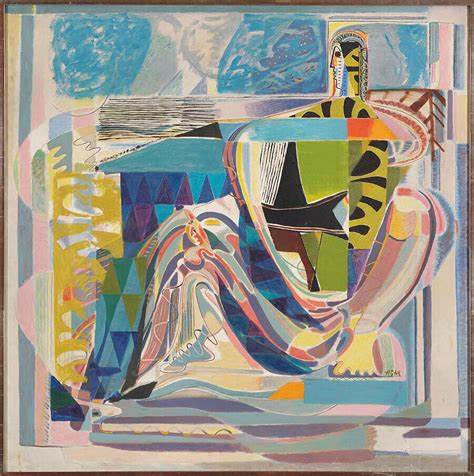
Popping into The Beecroft Gallery this morning, I discovered two paintings by the artist William Crosbie (1915-1999) that absolutely fascinated me, each in their own right and also in comparison and contrast to each other.
Born in China to Scottish parents, the National Gallery of Scotland tells us, he studied in Glasgow in the early 1930s, then, in Paris later in the decade. One might suggest then that a number of influences from both places have combined in the creation of this fascinating and really quite mysterious work of art, which leads to a little “gallery” in the mind.
The layering and patterning of shapes through outline, colour and texture brings to mind Eileen Agar’s paintings, the ‘mother’ figure perhaps especially if we look at “Muse of Construction” [1939; c/o Christies], revealing the interaction of Cubism and Surrealism through the 1930s:
The Surrealist element certainly comes through in the unnamed figure floating above the child in Crosbie’s painting: is it an angel, or something more threatening and nightmarish, even the figure of death (note how the mother’s arm blocks it, holding it at bay)?
Both artists also share a powerful sense of colour. The Lyon & Turnbull Gallery notes that in 1939, William Crosbie returned to Glasgow where he was part of “‘a little local renaissance’ with figures including the Scottish Colourist John Duncan Fergusson”…
And the child, protected by the mother certainly, but with a distinct – if perhaps uncertain – individuality that recalls Joan Eardley’s portraits of children such as “Brother and Sister” [1955]:
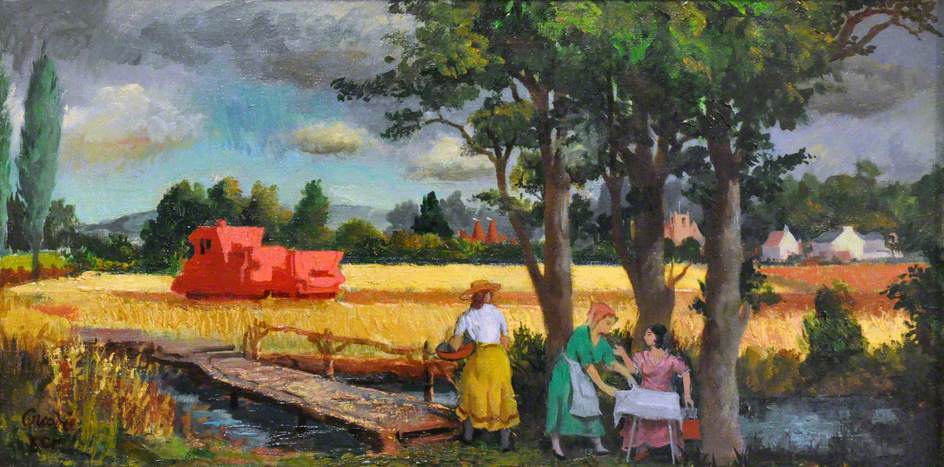
Looking through William Crosbie’s paintings at National Galleries of Scotland and artuk.org it is clear that he was brilliantly experimental, and that colour was central to his vision as the second painting of his at The Beecroft, “Hampshire Harvest” [1991; Reiff Collection], also shows. In subject matter and style (and indeed scale, for it is tiny in comparison with “Mother and Child” canvas) this is quite a contrast, but the richness of the palette is breath-taking…
Join us at The Beecroft Gallery in Southend-on-Sea on Saturday 29th October, at 11.15 am (for an hour or so) to discuss three women artists at the heart of the avant-garde in early 20th-century Paris:
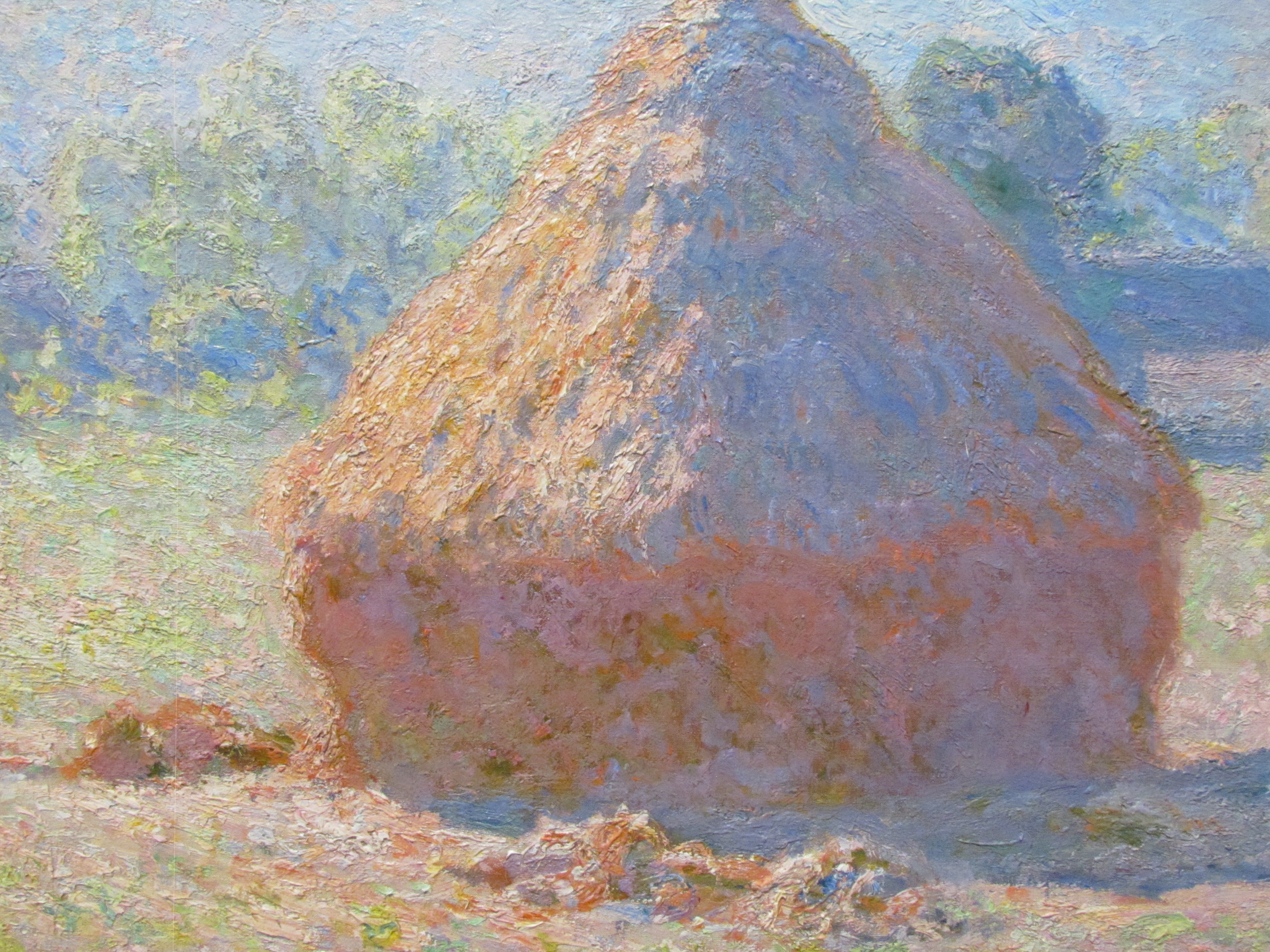
My goodness, this city is full of art. My last day here, so a quick scoot firstly to the Musee d’Orsay where from so many highlights – indeed all the joys of Impressionism! Oh, okay, here’s one of Monet’s fabulous “Haystacks”, the series of paintings that inspired Kandinsky to abandon his career in law and become an artist.
Claude Monet (1840-1926): “Haystacks, End of Summer” [1891]
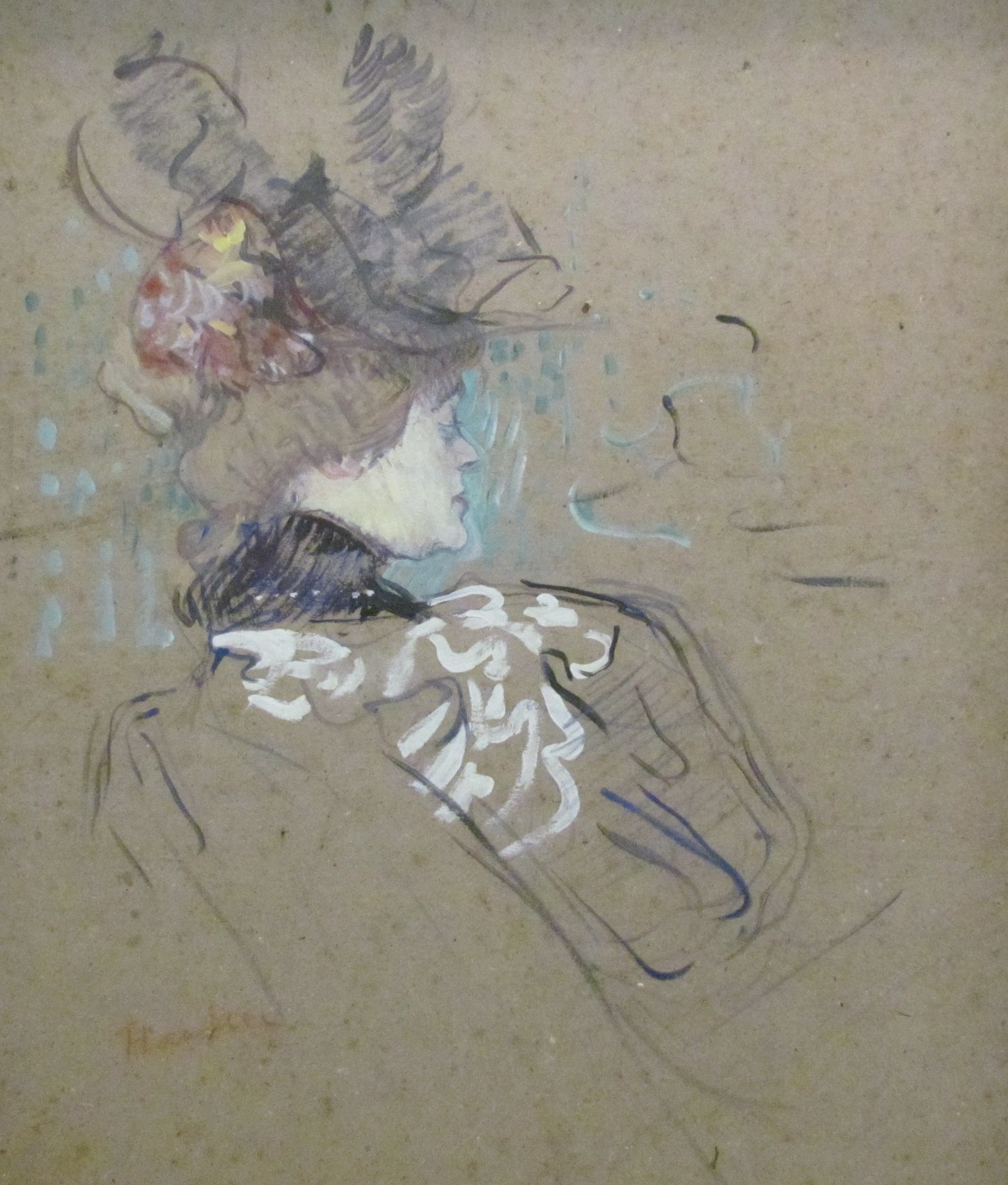
But I have chosen for my d’Orsay postcard an amazing sketch by Henri Toulouse-Lautrec: “A Woman in Profile (Madame Lucy)” [1896]…
I say ‘sketch’, but it is extraordinary how with apparently simple brush-strokes, gestural patterns of line and colour, the artist makes Madam Lucy so vividly present.
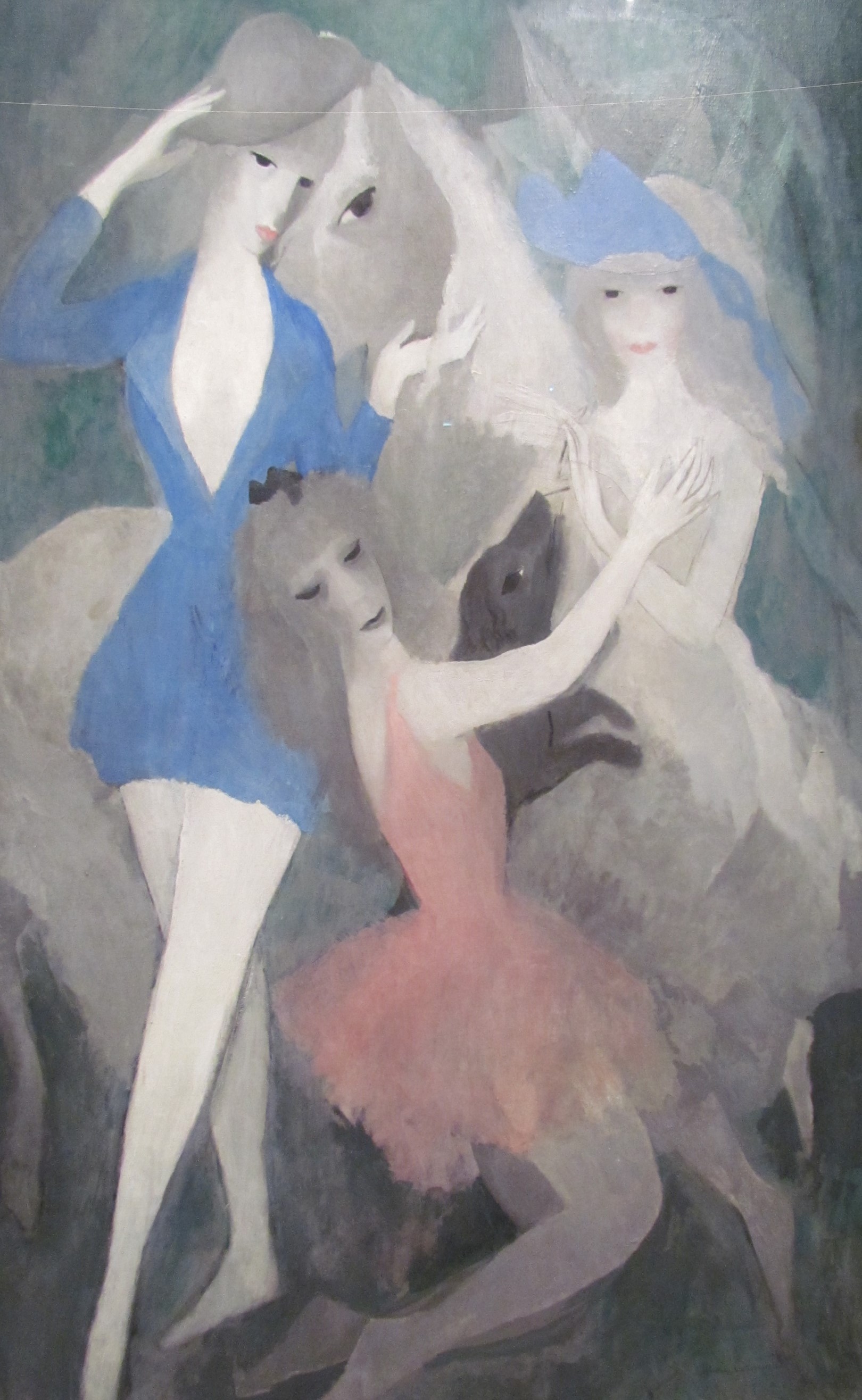
Then to the Musee d’Art Moderne and, oh my, Natalia Goncharova!
Firstly a “Still Life” (1911), then this mind-blowing “Two Spanish Women” (1930 or thereabouts):
In the gallery’s label, they quote a critic declaring: “these are not women, they are cathedrals!”
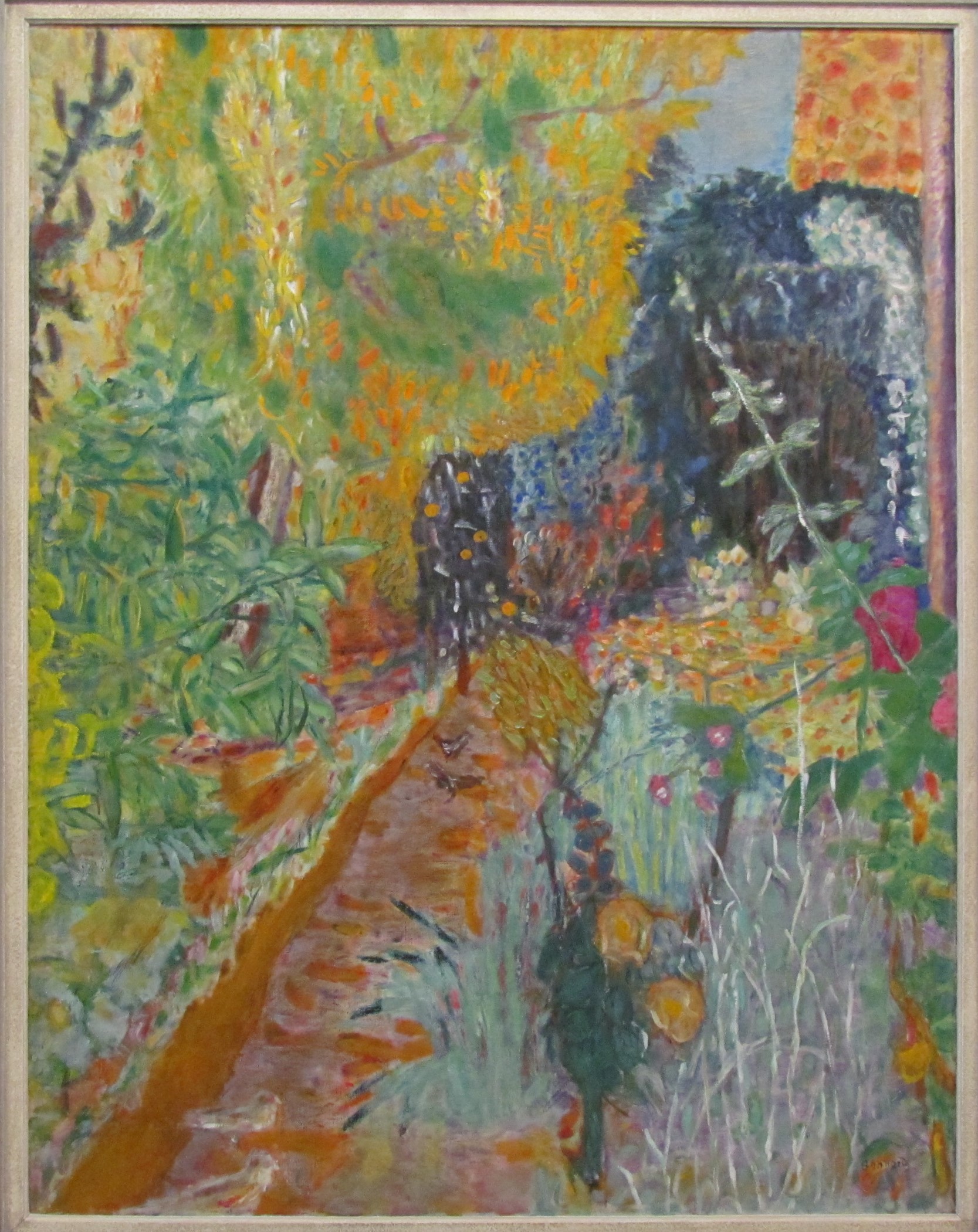
And to finish with a blast of full colour again, here’s Pierre Bonnard’s “The Garden” (1936):
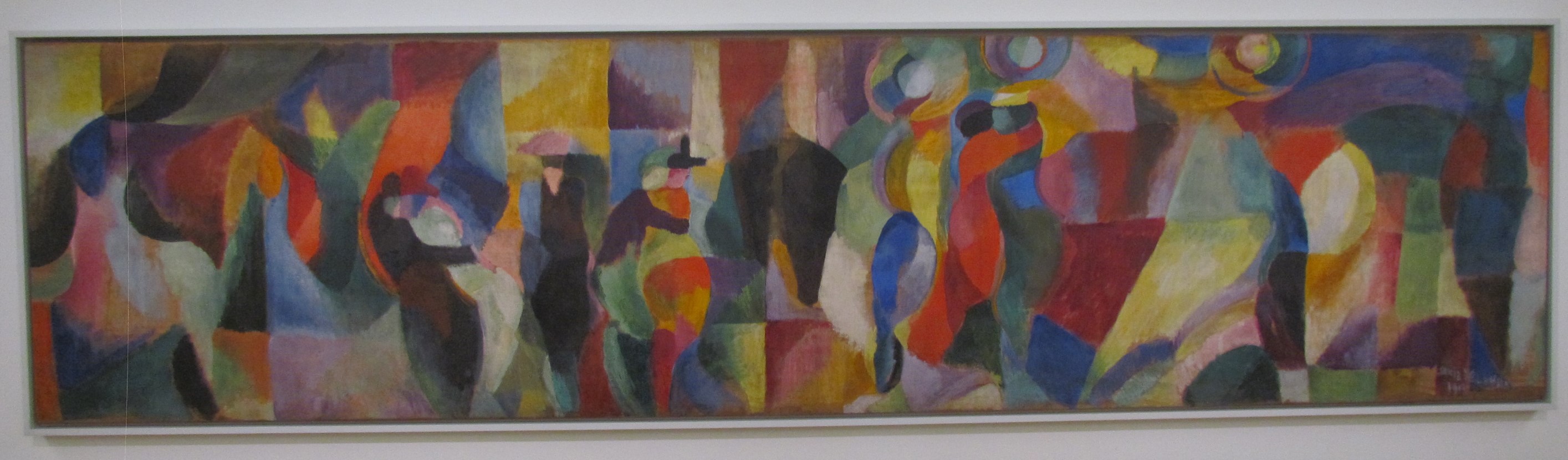
what a day at the Pompidou! so many fabulous paintings such as Sonia Delaunay’s “Le Bal Bullier” (1913) which stretches the length of a wall – a vibrant, joyous dance of colour:
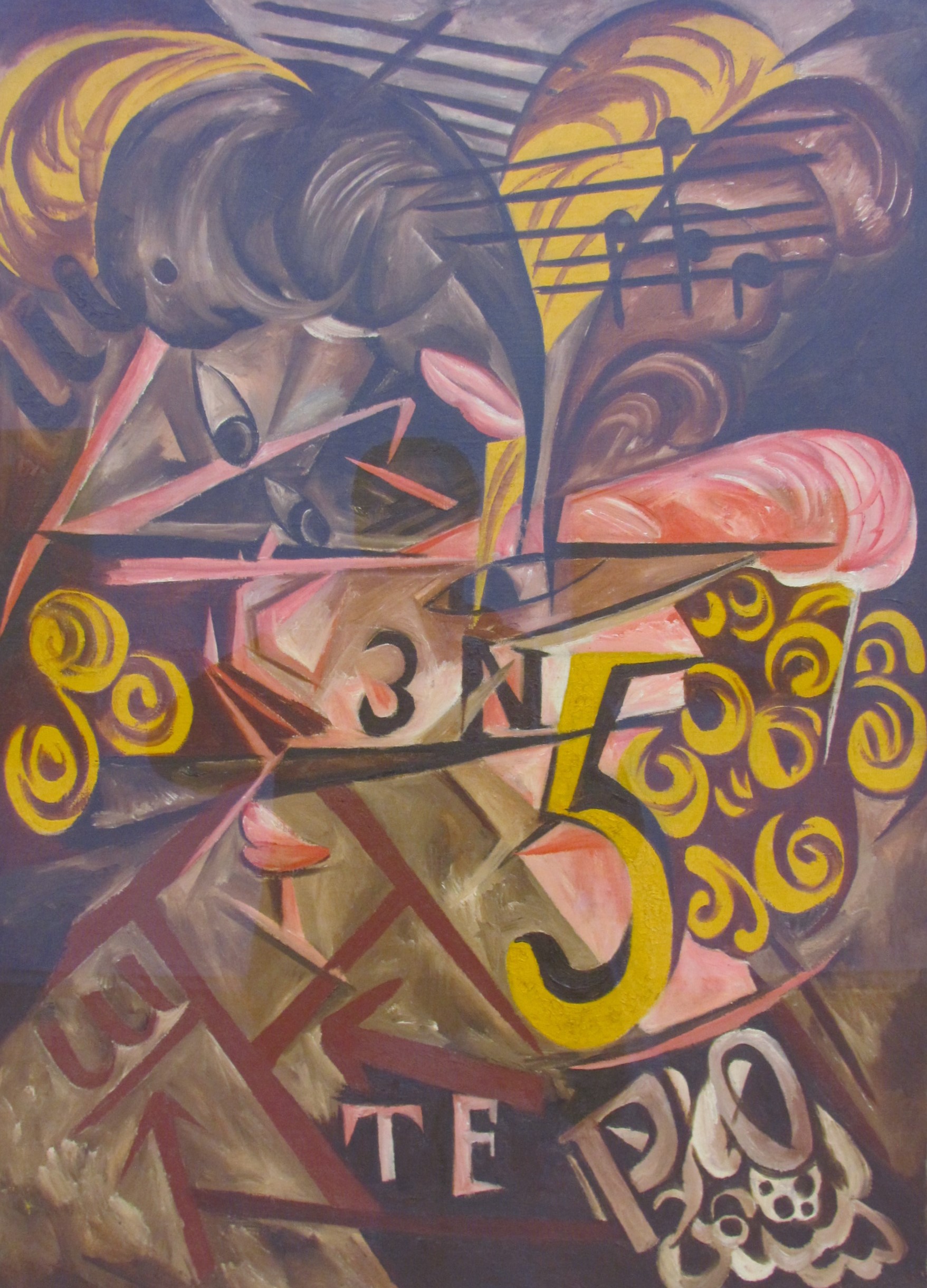
also Natalia Goncharova’s incredible “Femme au Chapeau” (1913) which, I learned, is actually a self-portrait – those eyes!
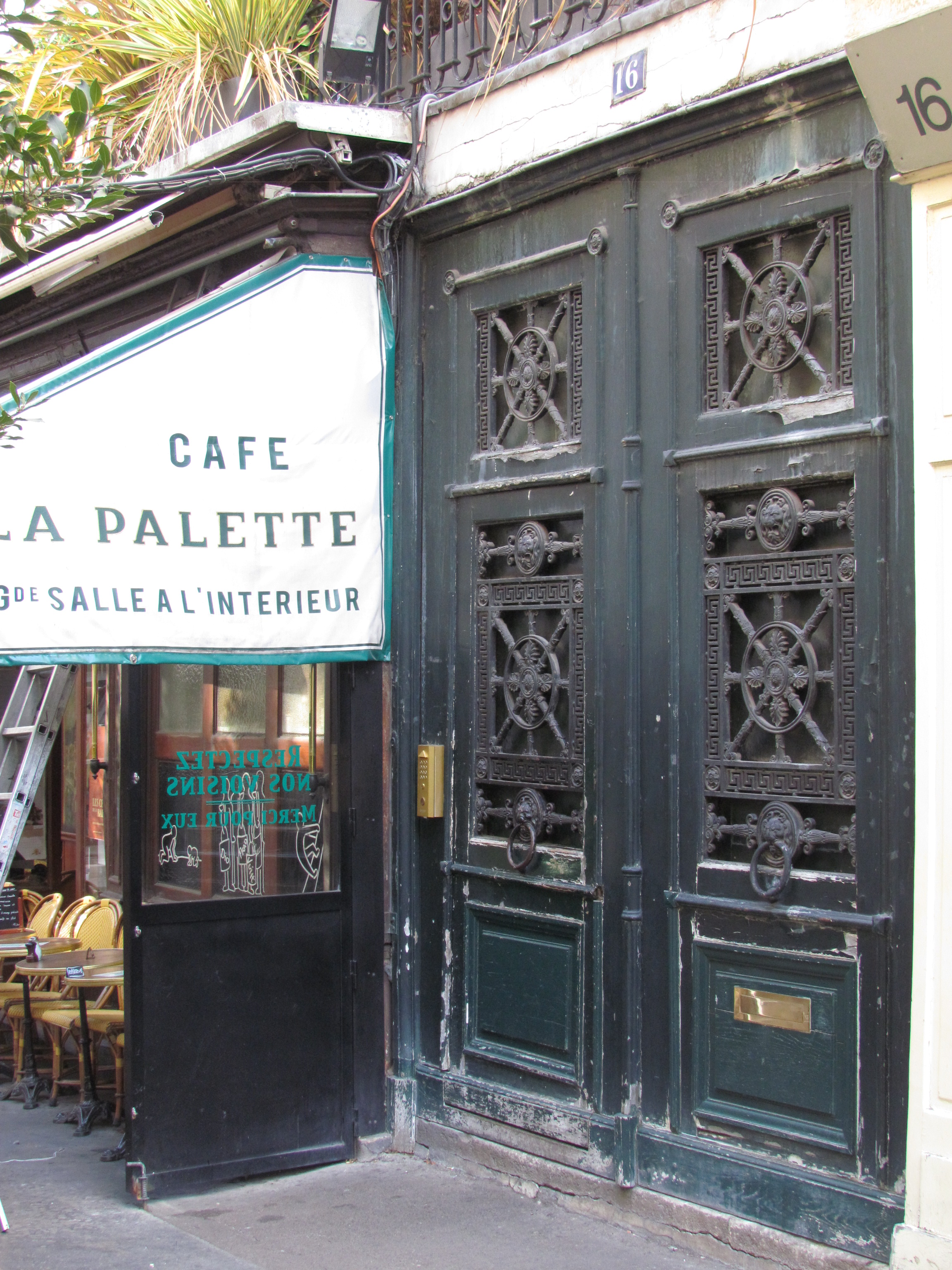
earlier in the day I discovered the doorway to Goncharova’s Paris apartment at 16, rue Jacques-Callot, right next door to the La Palette cafe!
my painting of the day though just has to be Wassily Kandinsky’s “Painting with Red Oval” [1914] – shimmering with colour
just as Paris itself is shimmering in glorious autumn sunshine!
Join us at the Beecroft Gallery, Southend on Saturday 24th September (11.15am-12.30pm, or thereabouts) for the last in our little series “Surrealist Magic”.
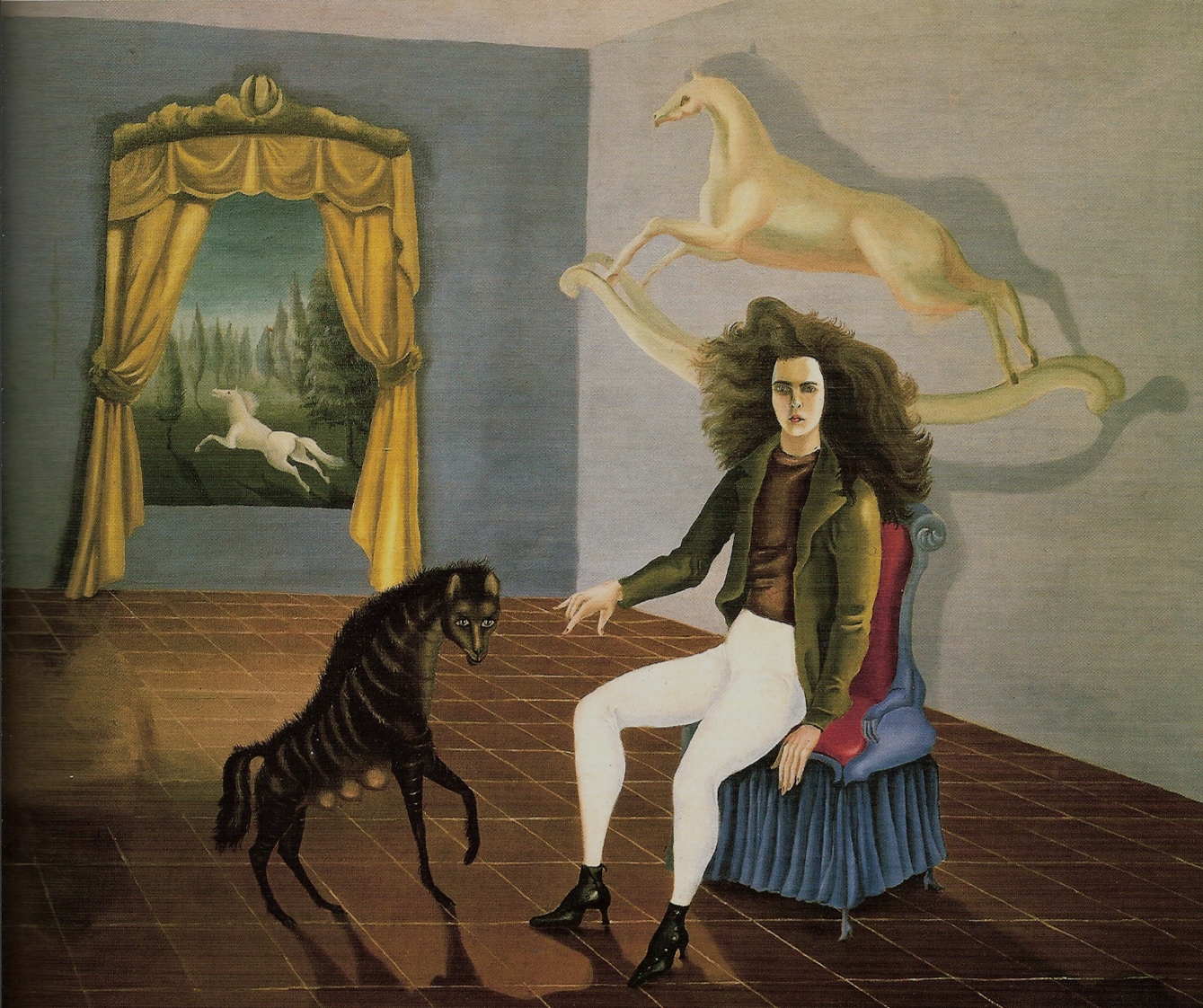
We’ll begin with works such as Edith Rimmington’s The Oneiroscopist [1947, Jewish Museum] and, as we open our minds into the possibility of other ways of seeing ourselves and the world, our focus will turn to the life and art of Leonora Carrington whose ‘artist manifesto’ might be seen from her early
“Self Portrait (Inn of the Dawn Horse)” [1937, Metropolitan Museum, NY].
It will be a morning of stunning and inspirational pictures, I promise!
All are welcome to join us, £10 on the door with coffee & biscuits to follow.










 thecommonviewer