Please join us on Saturday 14th December, 11.15am (for about an hour & a half)
at The Beecroft Art Gallery, Southend on Sea
to explore the French and British artists who associated in 1890s Dieppe which, as an informal art colony, forms a nodal point in the cross-Channel sharings and translations of painterly ideas in modern art and Impressionism.
Walter Sickert: L’Hotel Royal, Dieppe [1894; artuk.org; Sheffield Museums]
Lots to talk about! Do come along if you’re able!
We’ll be in The Beecroft’s Lecture Theatre and a £10 charge on the door also covers coffee afterwards at The Jazz Centre downstairs.
Please join us on Friday 13th December, 11.30am (for about an hour)
at The Beaumont, 15 Cannon Hill, Old Southgate, London N14 7DJ
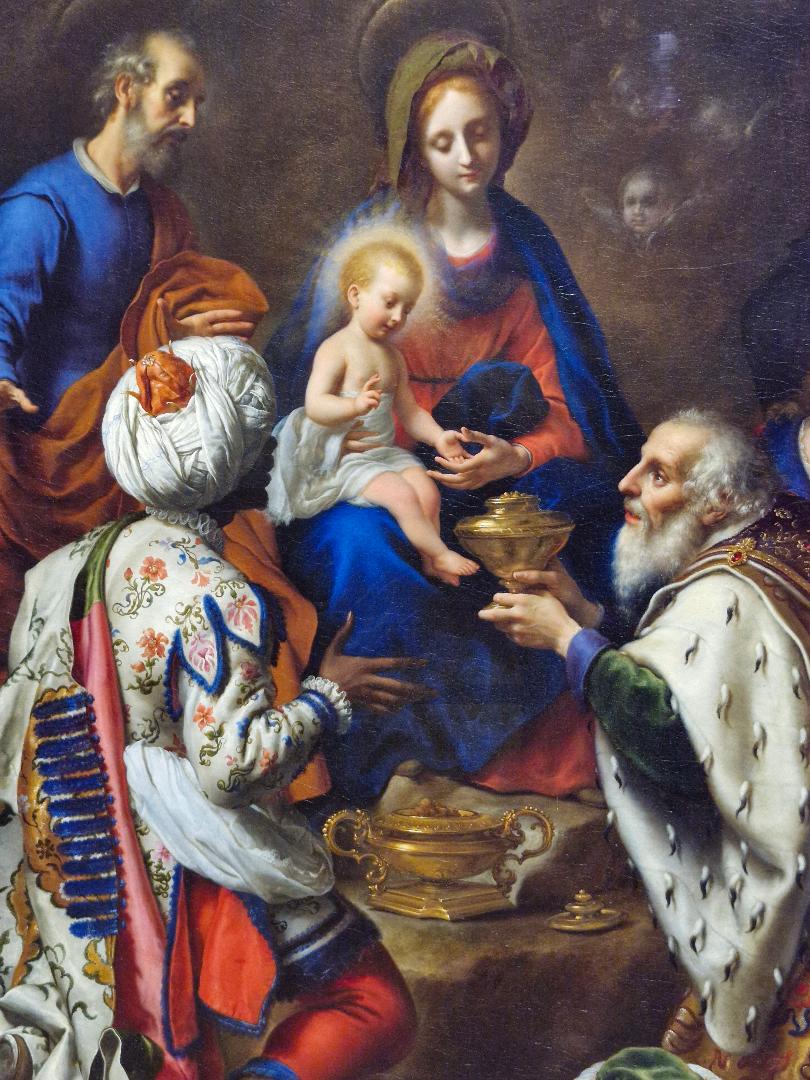
for a festive discussion looking at paintings of the Three Wise Men as they follow the Star to worship the new-born Jesus in Bethlehem with gifts of gold, frankincense and myrrh.
Detail from: The Adoration of the Kings by Carlo Dolci [1649; National Gallery, London]
With thanks to Barchester Care. Residents and the local community are all welcome. Please note there is a £3 charge on the door to cover coffee, tea & biscuits. Looking forward to seeing you.
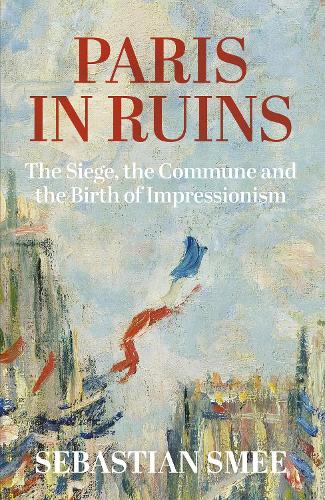
A very quick note to say that Sebastian Smee’s new book “Paris in Ruins: The Siege, the Commune and the Birth of Impressionism” has just been published and, if you are looking for a good art/history read, I’d highly recommend it!
Paris, January 1871 – the final, agonising days of the Franco-Prussian War. As the German army cements its advantage, shells rattle through the Left Bank. It is a bitterly cold winter; there is no fuel, no medicine, no food. The city’s poorer citizens have long turned to eating rats, cats and dogs. France has been brought to its knees. Édouard Manet, Berthe Morisot, and Edgar Degas are trapped in the besieged city. Renoir and Bazille have joined regiments outside of Paris, while Monet and Pissarro fled the country just in time. Out of the Siege and the Commune, these artists developed a newfound sense of the fragility of life. A feeling for transience – reflected in Impressionism’s emphasis on fugitive light, shifting seasons, glimpsed street scenes, and the impermanence of all things – would change art history forever. [Oneworld publishers]
What’s especially interesting perhaps for our Art, Books & Culture Research Group is the relationship – political, social and artistic – between Edouard Manet and Berthe Morisot, and Sebastian Smee gets us as close to ‘hearing’ their conversations as possible; it’s a fantastic insight into time, place and artistic inspiration.
Greetings! I hope you will be able to join us at the next Art, Books & Culture Research Group meeting
on Saturday 30th November, 11.15am (until about 12.45pm)
at The Beecroft Gallery, Victoria Avenue, Southend-on-Sea
to continue exploring the migration of Impressionist ideas from Paris to London, this month by way of Walter Sickert (1860-1942)’s inspirational friendship with Edgar Degas (1834-1917) (NB. there’s a fabulous sepia photograph of the two artists together in Dieppe c/o Tate [here]).
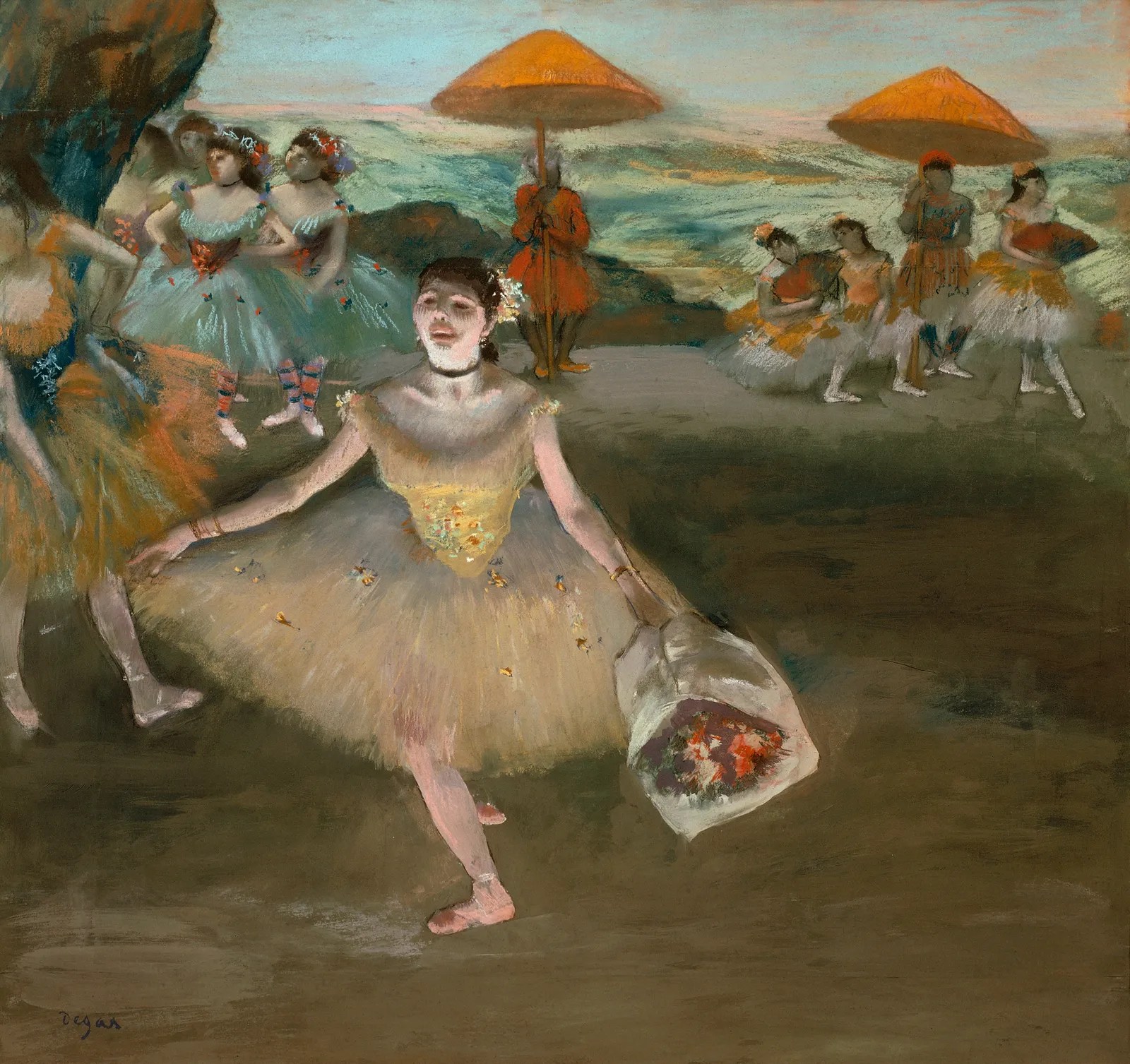
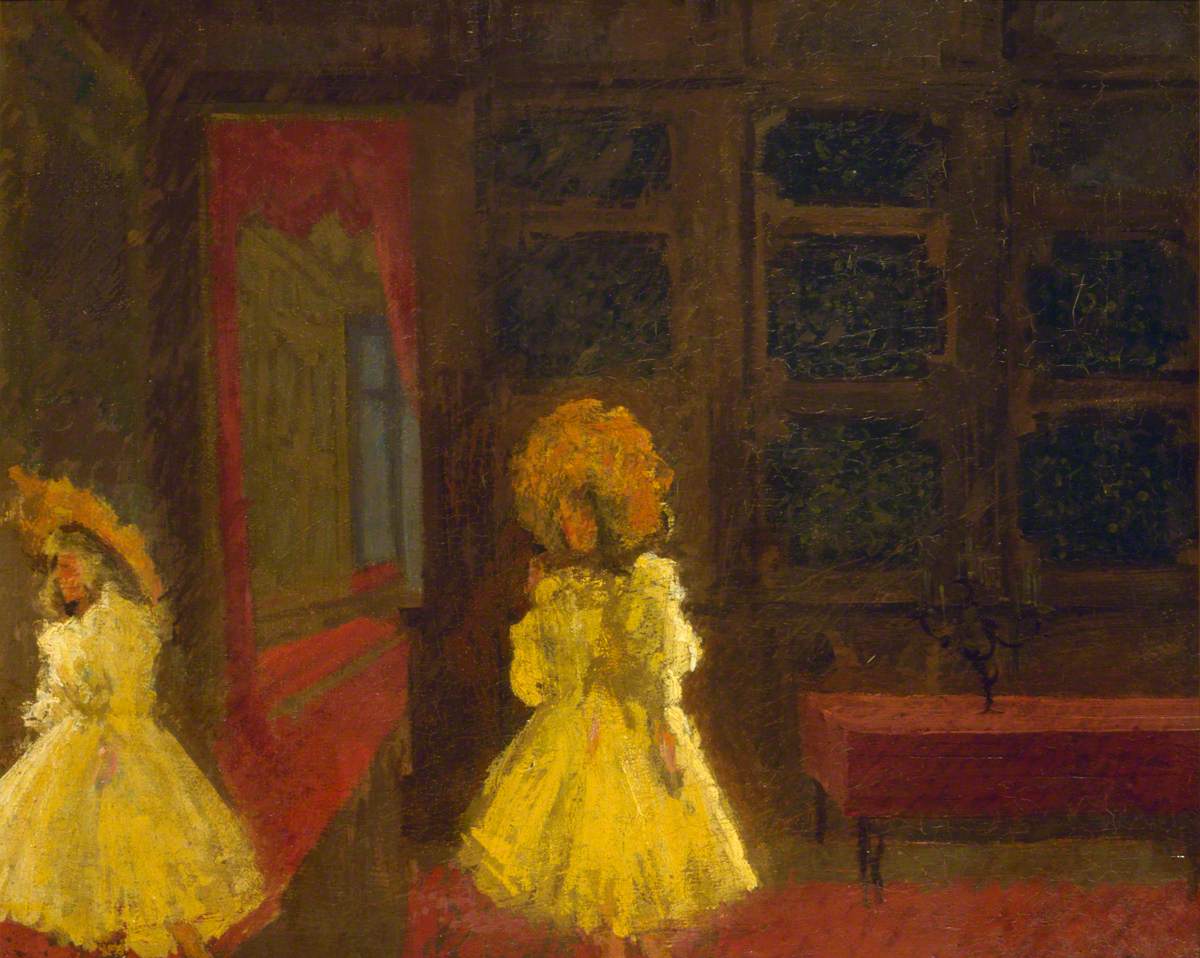
Looking broadly at both artists’ work, we’ll focus in on the ballet, opera, chanteuses and music hall turns:
Above: Degas: Dancer with a Bouquet [1878; Musee d’Orsay]
Below: Sickert: The Sisters Lloyd [1888, Government Art Collection]
All welcome!
£10 on the door includes coffee at the Jazz Centre downstairs at The Beecroft.
***
Future dates & themes:
Saturday 14th December:
The Glory of Colour – Claude Monet and Pierre-August Renoir
As the Display Label at Manchester Art Gallery notes:
[Samuel] Palmer settled at Shoreham, Kent in 1827. He referred to the area as his ‘valley of vision’ and remained there until 1835. This is one of several cloud subjects from that period. The landscapes Palmer painted around Shoreham are loaded with religious and poetic imagery. The artist read the Bible and the work of John Milton from a very young age. Lines from Milton’s Paradise Lost are reflected here: …yon western cloud, that draws O’er the blue firmament a radiant white, And slow descends, with something heavenly fraught.
This morning we’ll explore Palmer’s “Valley of vision” and the poetic, romantic and religious sensibilities he brought to his paintings there. Do come along if you can!
There’s a £3 fee on the door which goes towards Barchester Care’s generous support of these ‘art appreciation’ sessions for both residents and the local community.
Greetings! Please join us for our next Art, Books & Culture group discussion
on Saturday 27th July, 11.15am (for about an hour & a half)
at The Beecroft Gallery, Southend on Sea
to discuss the artist Edouard Manet (1832-1883).
Edouard Manet is regarded as an artist who, in 19th century Paris, revolutionised art: questioning and undermining academic traditions with a controversial approach to painting that was distinctively modern and which would, in turn, open the doors to Impressionism. In the Royal Academy catalogue for their “Manet: Portraying Life” exhibition (2013), Maryanne Stevens describes Manet’s “struggle to portray modernity through [a] hard-won and constantly questioning visual language”. Today we’ll look at and discuss key paintings, especially from his early career, to explore that struggle, and we’ll meet his contemporaries – artists, writers and friends who shared his revolutionary vision.
Then, next month, on Saturday 31st August, we’ll turn to his close involvement with the emerging Impressionist generation.
There are a number of Manet’s works in UK collections [see: artuk.org] including:
“Music in the Tuileries Gardens” [1862] at the National Gallery, and it’s worth noting the fascinating in-depth analysis of the painting on their website: here.
Lots to talk about! Do come along if you’re able! We’ll be in the Beecroft Lecture Theatre and a £10 charge on the door also covers coffee afterwards at The Jazz Centre downstairs.
Greetings! Join us on Friday 19th July (for about an hour)
at The Beaumont, 15 Cannon Hill, Old Southgate
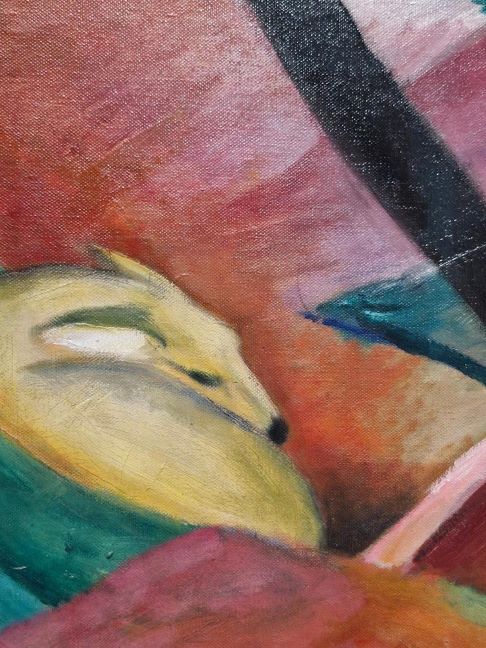
to explore the paintings of Franz Marc (1880-1916), in particular the vibrant colours and sweeping rhythms he deployed to represent the other-worldly nature of the animal kingdom.
Astonishingly, there seems to be only one painting by Franz Marc in a UK collection, at Leicester (see artuk.org) but have a look at the Lenbachhaus Gallery online, where you’ll discover a glorious survey of Marc’s works (see here) that bring an absolute joy to the viewer! And, if you are out & about, the Expressionists exhibition at Tate Modern might be of interest, as Franz Marc was very much part of Der Blaue Reiter (The Blue Rider) art group alongside Wassily Kandinsky and Gabriele Münter.
A close-up detail from Franz Marc’s “Deer in the Woods II” [1912; Lenbachhaus; my photograph]
Brilliantly supported by Barchester Care, these ‘art appreciation’ meetings are open to residents and local community alike with a £3 door charge to cover coffee & biscuits.
Although our ‘in-person’ book club is no longer running, I just wanted to recommend two rather fabulous – and very different – books that might be of interest to the readers in our Art, Books and Culture groups.
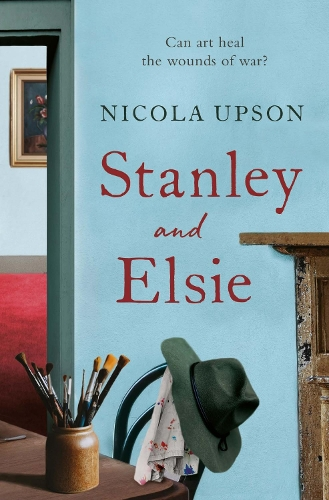
The first speaks very directly to our previous discussions on the art of Stanley Spencer. By Nicola Upson, “Stanley and Elsie” (Duckworth books, 2019) is a fictional ‘reconstruction’ of Stanley and Hilda Spencer’s marriage, the painting of the Sandham Memorial Chapel and the bizarre situation into which Stanley plunged them all by his infatuation with Patricia Preece. Brilliantly insightful in terms both of recreating the complex situation and understanding the artworks of Stanley, Hilda and Patricia (although in her case we should actually say Dorothy Hepworth of course), our perspective is that of housemaid Elsie Munday (who I’d thought was a fictional character but, again, is actually based on a real person). Completely absorbing!
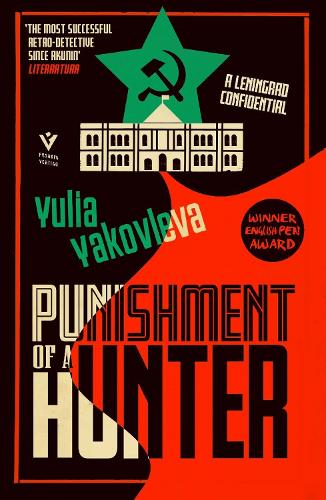
For those who love their crime/ thrillers, Yulia Yakovleva‘s “Punishment of a Hunter” (2021, Pushkin Vertigo, translated by Ruth Ahmedzai Kemp) is absolutely fantastic. We’re in 1930s Soviet Leningrad as Detective Vasily Zaitsev finds himself investigating a series of strangely theatrical murders. Zaitsev is a wonderfully sympathetic character, and this is the first in a ‘retro-detective’ series by Yakovleva, a Russian writer now living in Oslo whose love of St Petersburg, it’s people and culture shines through every page. So what have the murders to do with the ballet? art? the political machinations of the Soviet state? Read on, you’ll be utterly engrossed!
*
On the not-yet-read pile:
The Painter’s Daughters by Emily Howes [February 2024, Orion]: 1759, Ipswich. Sisters Peggy and Molly Gainsborough are the best of friends and do everything together.
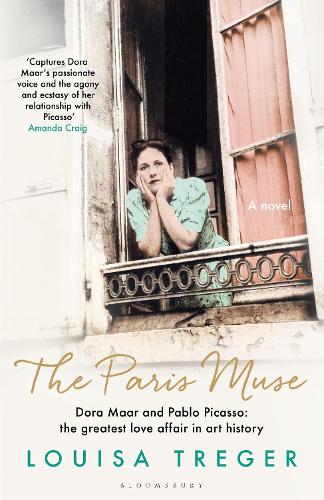
The Paris Muse by Louisa Treger [July 2024; Bloomsbury]: Dora Maar, ‘The Weeping Woman’ of Picasso’s famous paintings, steps out of the canvas in Louisa Treger’s unforgettable new novel.
Pariah Genius by Iain Sinclair [April 2024: Cheerio]: [We follow] in the footsteps of photographer John Deakin, whose chronicles of Soho life – and the world of Francis Bacon and his friends – have so influenced our perception of that generation’s work.
And a couple of interesting-looking exhibition catalogues:
In the wake of World War I, the Bauhaus in Weimar Germany became a centre of extraordinarily innovative creativity drawing together artists and designers, architects and photographers from across Europe. Today we’ll visit the Bauhaus, concentrating especially on the visual artists who worked and trained there. All welcome!
Please note there is a £10 charge on the door to cover expenses. Coffee & biscuits will be available from the The Jazz Centre afterwards.
Join us on Friday 21st June, 11.30am (for about an hour)
at The Beaumont, 15 Cannon Hill, Old Southgate to go
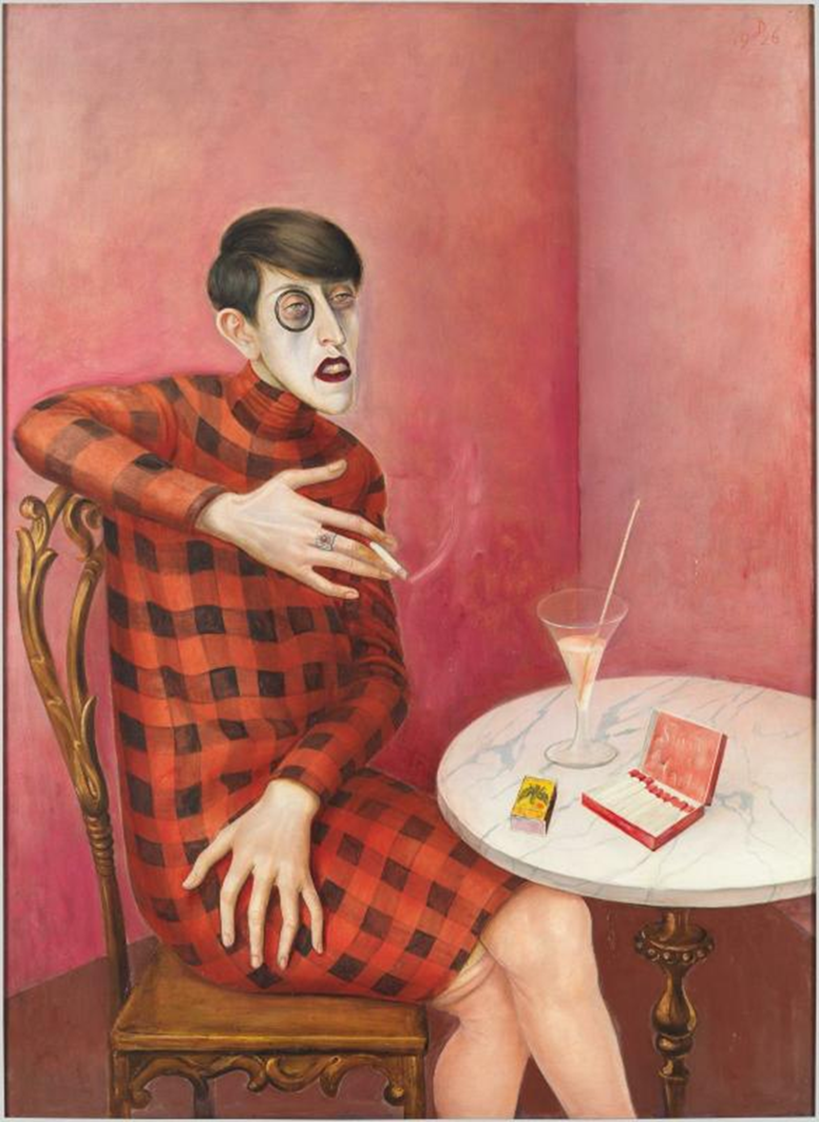
In Search of Sylvia von Harden
‘I must paint you! I simply must! You are representative of an entire epoch!’
So said the artist Otto Dix when he asked Sylvia Von Harden to sit for her Portrait [1926; Pompidou], but why? what did she represent? Hoping you’ll be able to come along and find out more!
Please note: there is a £3 charge on the door to cover coffee & biscuits.
With many thanks to all at Barchester Care for supporting these Art Appreciation meetings!






 thecommonviewer