at The Beaumont, Barchester Care, 15 Cannon Hill, Old Southgate, N14 7DJ
to explore the Pont-Aven art colony in Brittany where artists such as Paul Gauguin and Emile Bernard painted and experimented to create pictures of the local landscape and people full of rich colour and symbolism that would influence artists across Europe.
Paul Gauguin “Paysage de Bretagne. Le moulin David” [1894; Musee d’Orsay]
Meeting a community of artists along the way, we’ll explore the significance of artists’ colonies and their broader impact. There’ll be lots to look at and discuss – I hope you’ll be able to come along!
The discussions are for everyone, whether residents or local community. Please note a £3 on-the-door request to cover the cost of coffee and biscuits. With all thanks to Barchester Health Care.
***
A new book by Sue Prideaux that might be of interest to you:
“Prideaux conjures Gauguin’s visual exuberance, his creative epiphanies, his fierce words and his flaws with acuity and sensitivity. Drawing from a wealth of new material and access to the artist’s family, this myth-busting work invites us to see Gauguin anew” (2024; Faber & Faber).
Early 20th century Art & Visual Culture: London, Paris, Moscow & beyond.
“Nancy Cunard – An Uncommon Viewer”
***
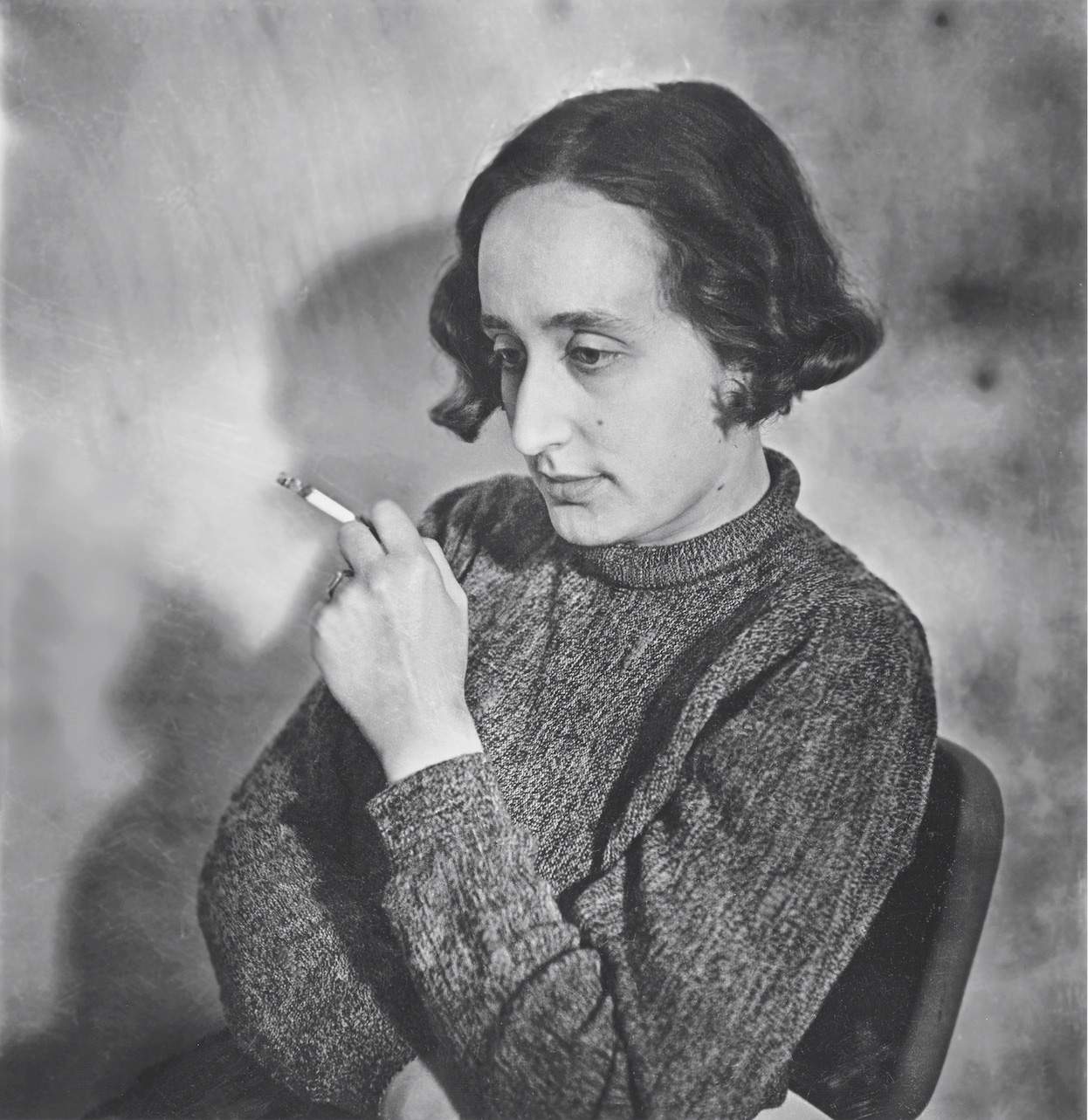
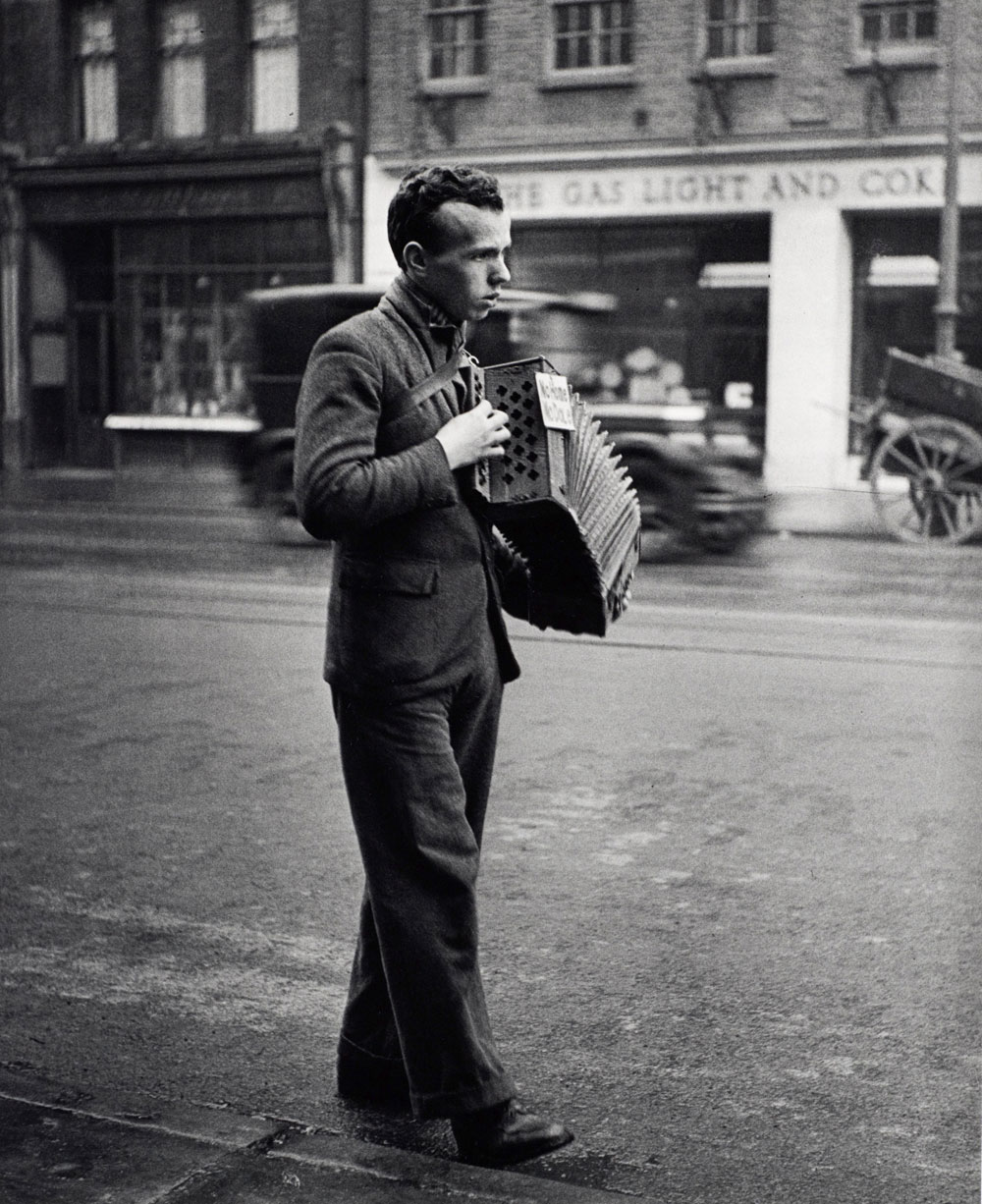
Exhibition: Through a Bauhaus Lens: Edith Tudor-Hart and Isokon
To celebrate the 90th anniversary of the opening of the Isokon Flats, the Isokon Gallery in Hampstead is pleased to announce Through a Bauhaus Lens: Edith Tudor-Hart and Isokon, an exhibition of previously unseen 1933–4 photographs by the Viennese, Bauhaus-trained photographer Edith Tudor-Hart (until November 2025)
on Saturday 29th March, 11.15am (for about an hour & a half)
at The Beecroft Art Gallery, Victoria Avenue, Southend
to continue our exploration of the influence of Japanese art on European artists in the late 19th century, including James Abbott McNeill Whistler in London and George Henry of The Glasgow Boys group.
It’ll be a feast for the eyes, with lots to see and much to discuss – do come along if you can, it’s open to everyone! Please note a £10 request on the door to cover Lecture Theatre hire costs as well as tea/coffee/biscuits at the Jazz Centre downstairs afterwards.
at The Beaumont, Barchester Care, 15 Cannon Hill, Old Southgate, N14 7DJ
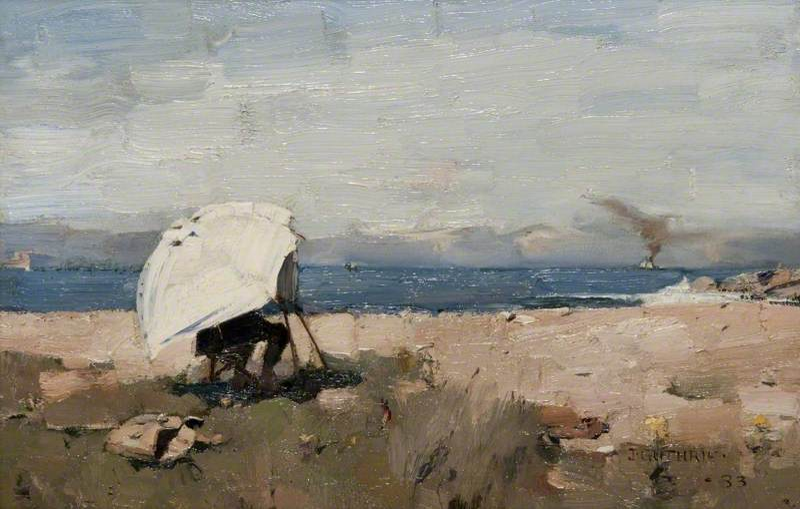
to discuss the development of artists’ colonies in Scotland in the late 19th century and their interconnections with European art movements.
James Guthrie: Hard At It [1883; Glasgow Museums Resource Centre (GMRC); artuk.org]
Meeting a community of artists along the way, we’ll explore the significance of artists’ colonies and their broader impact. There’ll be lots to look at and discuss – I hope you’ll be able to come along!
The discussions are for everyone, whether residents or local community. Please note a £3 on-the-door request to cover the cost of coffee and biscuits. With all thanks to Barchester Health Care.
on Saturday 22nd February, 11.15am (for about an hour & a half)
at The Beecroft Art Gallery, Victoria Avenue, Southend
to explore the influence of Japanese art on European artists in the late 19th century, including among others Claude Monet and Vincent Van Gogh in Paris, James Abbott McNeill Whistler in London and George Henry of The Glasgow Boys group.
It’ll be a feast for the eyes, with lots to see and much to discuss – do come along if you can, it’s open to everyone! Please note a £10 request on the door to cover Lecture Theatre hire costs as well as tea/coffee/biscuits at the Jazz Centre downstairs afterwards.
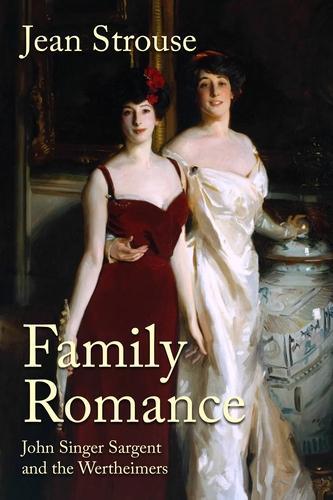
Greetings! It was fabulous to see so many people at The Beecroft on Saturday to look at the art of John Singer Sargent (1856-1925). As we were saying, it was essentially an introduction – Sargent created an enormous number of extraordinary and diverse artworks from grand ‘society portraits’ for exhibition to more relaxed paintings of friends and family who travelled in Europe with him. So I thought it might be useful to flag up some of the books on Sargent for further reading:
I’d especially recommend that first book pictured, the Tate’s “John Singer Sargent” by Elizabeth Prettejohn:
This fascinating introduction explores the life and work of Sargent, contextualising his practice within the times he lived. Beginning with his cosmopolitan childhood in Europe and studio training in Paris, it charts his rise to fame and establishment as a leading portraitist internationally, up until his final works during the outbreak of the First World War. Touching on his travels, his friendships and the personal connections that influenced his practice, this a true celebration of an extraordinary artist and his paintings, which continue to captivate today.
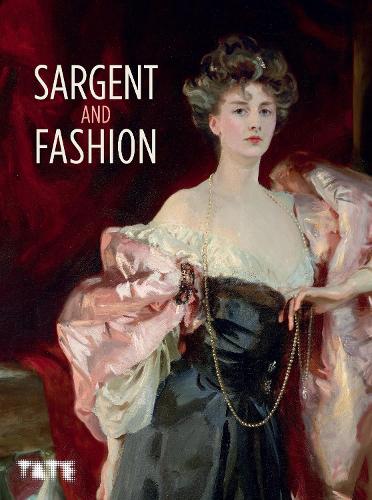
A number of recent exhibition catalogues are available at Southend Central Library, including “Sargent and Fashion” which explores the dynamic relationship of painting and dress — from portraits and performance, gender expression and the New Woman, to the pull of tradition and the excitement of new ideas.
Of note, too, is that there is going to be an exhibition of Sargent’s work this year at Kenwood House, Hampstead from 16th May to 5th October:
Heiress: Sargent’s American Portraitswill gather together, for the first time, eighteen magnificent portraits of women once dismissively known as the “Dollar Princesses”. A war-time nurse, a helicopter pilot and the first sitting female MP among them, the exhibition will reveal the often-overshadowed lives of these fascinating American women who crossed the Atlantic to marry British aristocrats in an exchange of money for titles.On the centenary of his death, the exhibition will be a salute to John Singer Sargent (1856-1925), the most admired and sought-after portraitist of the Gilded Age on both sides of the Atlantic. These portraits represent some of his most glamorous and powerful works. In addition to full-length oil paintings, masterful charcoal portraits will also feature, depicting their subjects in a candid and perceptive light.Heiress: Sargent’s American Portraitsis curated by English Heritage with the charity drawing upon the expertise of Richard Ormond CBE, renowned Sargent scholar and the artist’s great-nephew who is exhibition consultant.
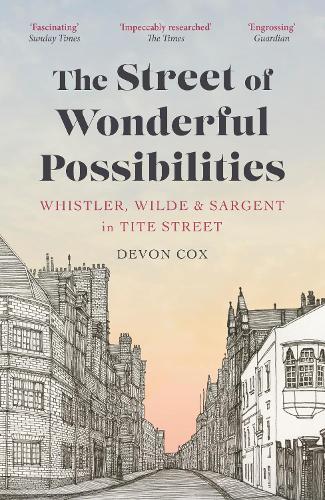
and it is worth noting that Devon Cox has a biography of Sargent coming out – apparently, hopefully – towards the end of the year “Beyond Beauty: A Portrait of John Singer Sargent” (although there are few details as yet).
As always, a good place to start for images is artuk.org which represents paintings in public collections across Britain:
also searching on Christie‘s and Sotheby‘s is always rewarding as they often have a detailed Lot Essay about individual works.
Hoping this is useful, and please let me know of anything else you come across on John Singer Sargent that you think I should share and I’ll add it in. Happy researching!
on Friday 21st February, 11.30am (for about an hour)
at The Beaumont, Barchester Care, 15 Cannon Hill, Old Southgate, N14 7DJ
to discuss the late-19th century artists’ colony at Grez-sur-Loing in France. Our guide will be John Lavery (1856-1941) who stayed at the colony through 1883-4.
Meeting other artists along the way, we’ll explore the significance of the artists’ colony and its broader impact. There’ll be lots to look at and discuss – I hope you’ll be able to come along!
The discussions are for everyone, whether residents or local community. Please note a £3 on-the-door request to cover the cost of coffee and biscuits. With all thanks to Barchester Health Care.
Perhaps one of their most intriguing works, we’ll look at the artists individually, their involvement in the Glasgow Boys art group, and the collaborative inspiration that led to The Druids painting.
This is a gentle discussion open to everyone, both residents and from the local community.
A £3 charge on the door covers coffee and biscuits.
With thanks to Barchester Care for their support. I hope you will be able to join us!
I hope you’ll be able to join us on Saturday 25th January, 11.15am (for about an hour & a half)
at The Beecroft Gallery, Victoria Avenue, Southend-on-Sea
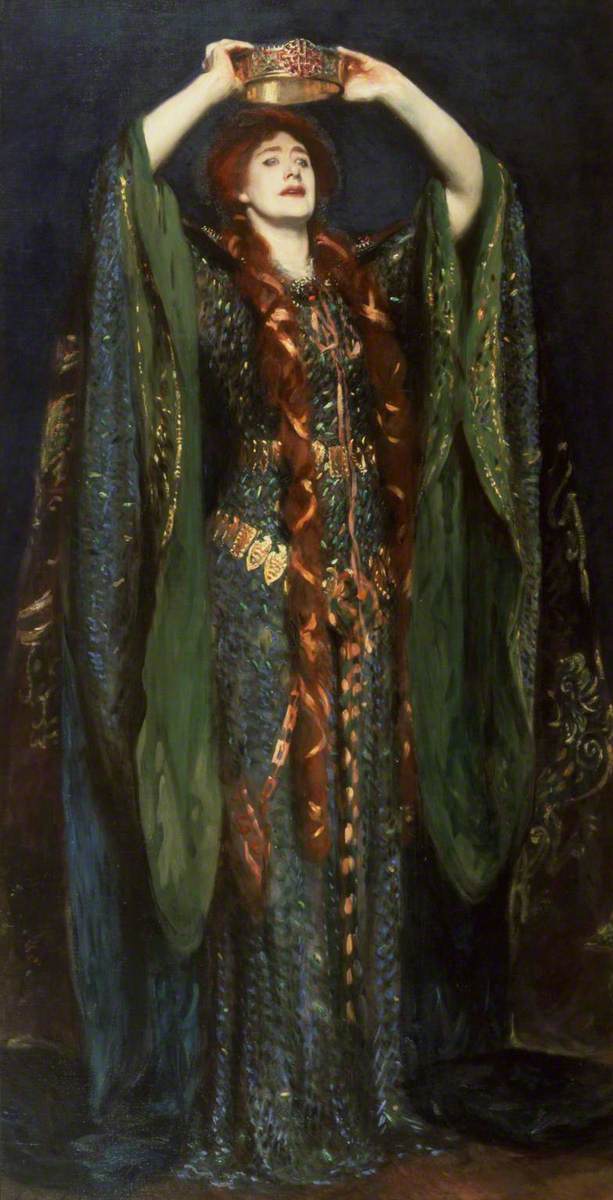
to continue our theme of artists working across the art worlds of late-19th century London and Paris by exploring the paintings of John Singer Sargent (1856-1925) from glamorous society portraits to more informal Impressionist pictures and, of course, the extraordinary drama that is:
Ellen Terry as Lady Macbeth [1889; which is in the Tate Britain collection; image c/o artuk.org]
Lots to talk about! Do come along if you’re able! We’ll be in The Beecroft’s Lecture Theatre. A £10 charge on the door covers room hire as well as coffee afterwards at The Jazz Centre downstairs.
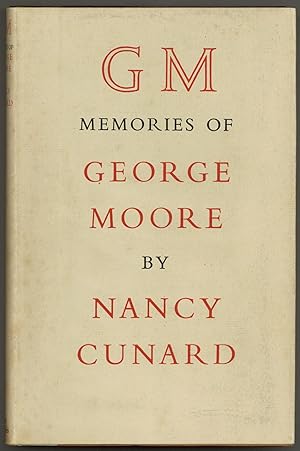
“And it was Christmas Eve or Christmas night that I set him at the top of a long, narrow table of twelve at the dinner I gave for him in the room upstairs at the Rotonde…” writes Nancy Cunard in GM: Memories of George Moore (1) – the “him” of her recollection. For Nancy Cunard the Paris of the 1920s was as refreshing and inspiring as, Anne Chisholm notes (2), 1870s Paris had been for George Moore; both decades of radical literary and artistic change. Moore had been friends with Edouard Manet and the emerging modern art of the Impressionists; Cunard, in turn, was fascinated by Dada and the developments of Surrealism. What a dinner party it must have been!
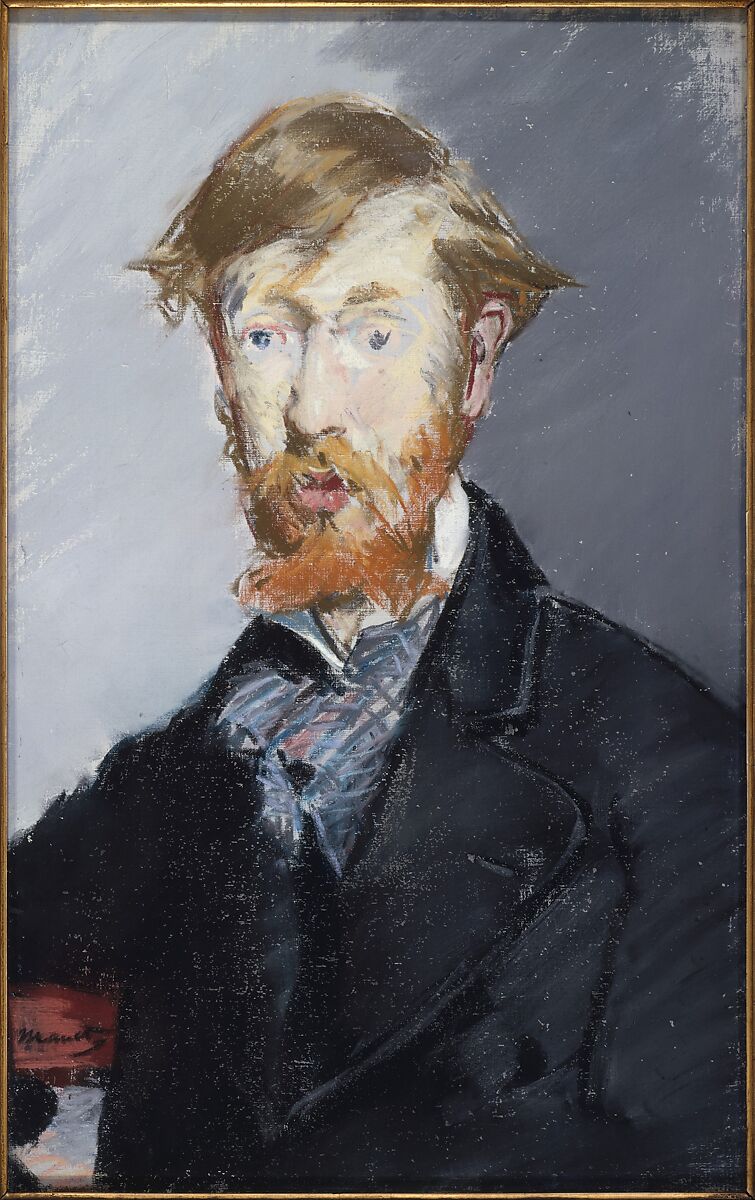
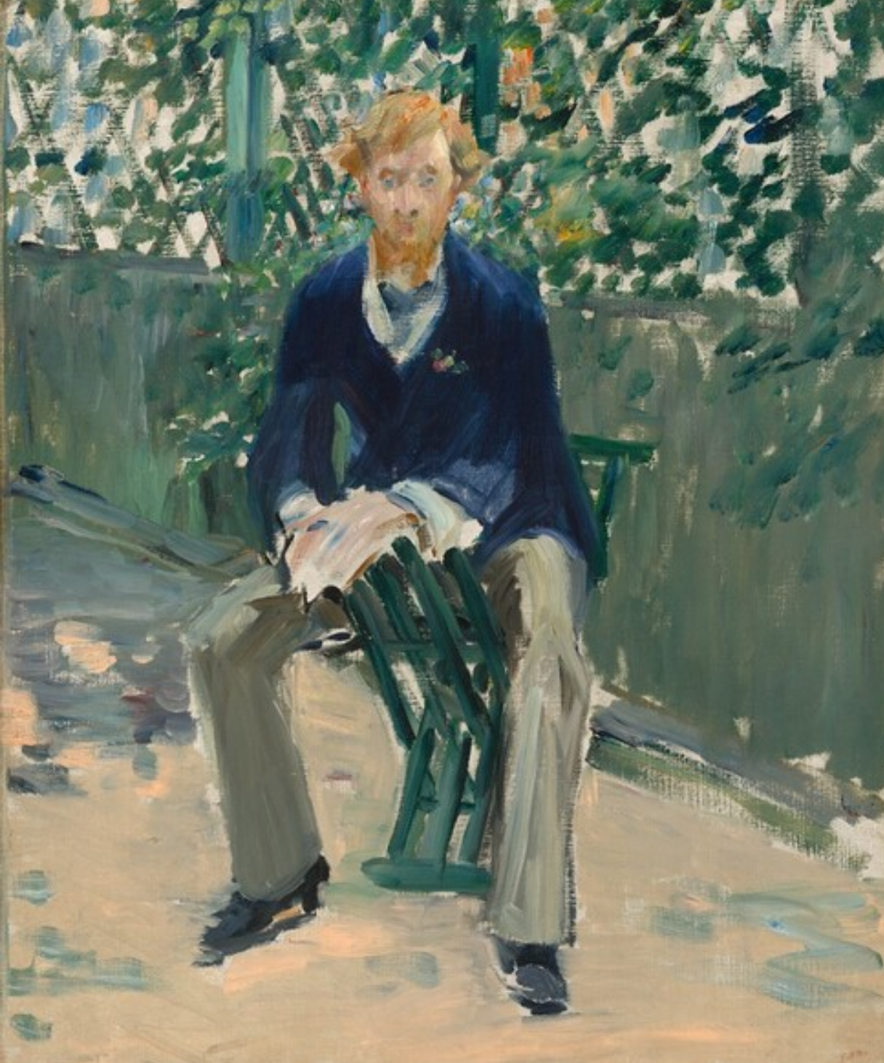
George Moore had moved to Paris in the 1870s planning to train as an artist, but soon becoming aware he was more of a writer than a painter. Friendships, however, blossomed at the artists’ favourite rendezvous the Café de la Nouvelle-Athènes, in particular with Edouard Manet who sketched and painted Moore a number of times:
and Nancy Cunard would inherit a Manet painting “Etude pour ‘Le Linge'”, which she’d loved viewing in his Ebury Street room, on Moore’s death. (This black and white reproduction is from the “Memories”, but I’ve not been able to trace the painting further.)
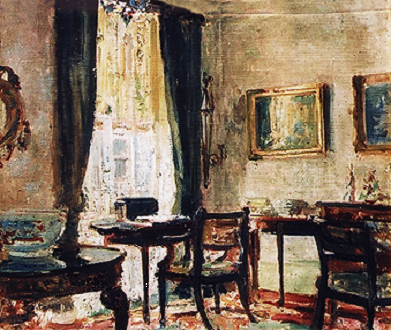
The second picture here is by another life-long painter friend Jacques-Emile Blanche and shows Moore’s room at Ebury Street: “Le Salon de George Moore” [1910; c/o Jane Robert’s fascinating online catalogue].
“But who were the other diners?” asks Nancy Cunard. She cannot recall exactly, but among them must have been, she thinks, the Dada founder and Surrealist writer Tristan Tzara, Nancy’s lover at the time “…and his fellow countryman… the Rumanian sculptor Brancusi (a fine bearded old shepherd of a face and to my mind one of the great sculptors of all time)…”
Photograph of Nancy Cunard and Tristan Tzara au bal des Beaumont by Man Ray[1924; Pompidou Centre, Paris]; La jeune fille sophistiquée (Portrait de Nancy Cunard) by Constantin Brancuși [1928; Christies]
Other artists Nancy believes may have been there (“They were surely asked.”) included Eugene MacCown, who had also painted her portrait, as well as Nina Hamnett, then living in Montparnasse, her friend from the heady days of London’s Soho bohemia during World War I when they had frequented The Eiffel Tower restaurant.
Portrait of Nancy Cunard by Eugene McCown [1923, The University of Texas at Austin]; The Eiffel Tower (illustration from “The Silent Queen”) by Nina Hamnett.
It must have been an extraordinary gathering from across the generations, linking characters from London and Paris, and indeed beyond – a heady mix, no wonder Nancy couldn’t remember the details thirty years later!













 thecommonviewer