Posted by: TheCommonViewer
Posted in The Art & Artists of Russia
Permalink Enter your password to view comments.
Words and Pictures: Medieval Moments
Since my post about Medieval church wall-paintings in the “Rambling with Rothenstein” series last year, I have had half an eye on all things that touch on the visual culture of life in the Middle Ages.
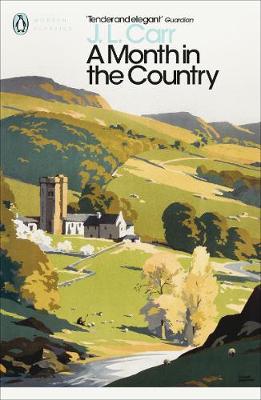
For anyone who shares this curiosity, you may be interested in J.L.Carr’s short novel “A Month in the Country”.
Written in the late 1970s, it looks back to the summer of 1920. A young man, Tom Birkin, returned from the horrors of the Great War to train as a specialist in the restoration of wall-paintings. His first job takes him to the Yorkshire village of Oxgodby, deep in the English countryside, to an ancient church. “It was tremendously exciting”, he says, “to begin with I didn’t know what I was uncovering.” By the end of the second day he has uncovered a head and face of Christ, delighted by the colours that suggested the medieval artist was one of high calibre: “And, as the first tinges of garment appeared, that prince of blues, ultramarine ground from lapis lazuli, began to show – that really confirmed his class – he must have fiddled it from a monastic job – no village church could have run to such expense.”
The novel is extraordinarily subtle as his memories of the war gentle mingle with his meetings with villagers, a brush of romance and a broad contemplation of English life; it’s a subtlety that belies some deep themes if one were to seek them out. For me, though, it is this day-by-day revelation of the wall-painting that is so fascinating, and Birkin’s contemplation of the artist and his world:
“it’s not at all easy to find your way back to the Middle Ages. They weren’t us in fancy dress…”.
Yet, gradually, he does get to ‘know’ the artist, through the details of the image (a large Doom painting) and the touch of the paintbrush, as far as it might be possible across five centuries. By the end of the tale, he stands before “the great spread of colour” recognising that, for those past few weeks, he “had lived with a very great artist”.
*
I was delighted to see fragments of a medieval wall-painting myself last week, at St James the Less Church, in Hadleigh, Essex.

My guide, local historian Sandra Harvey, told me that the Norman church had been built probably in the 1140s during the reign of King Stephen. But it wasn’t until the 1850s, during restoration work, that the whitewash was removed from the walls to reveal painted texts, border decorations and some extraordinary images.
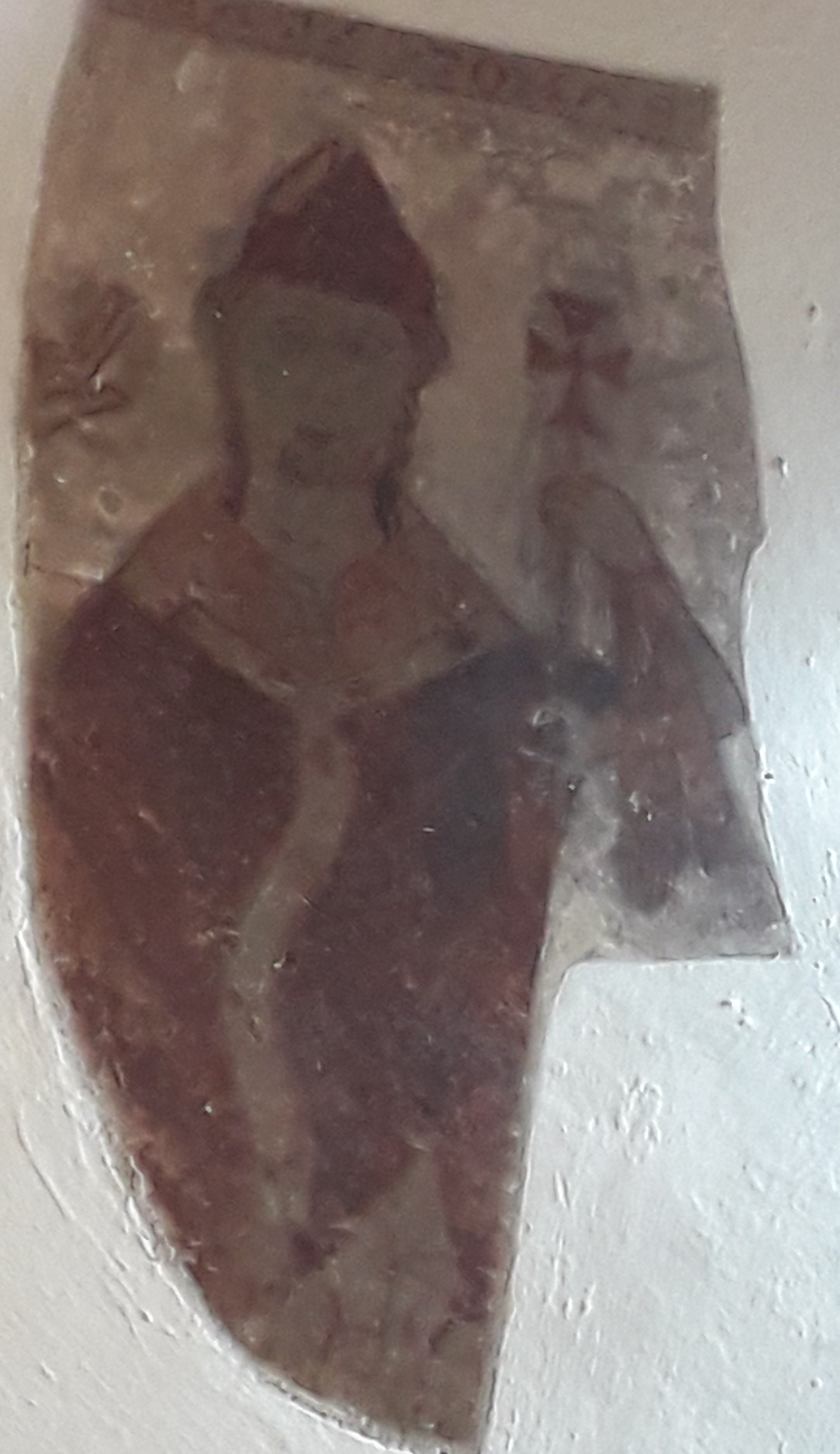
Those that survive today include an angel and a painting of St Thomas of Canterbury inscribed “Blessed Thomas” and dated to the early 1170s. This is of course intriguing, as Thomas Becket had been assassinated in 1170, perhaps on the orders of King Henry II, and was canonised by Pope Alexander III in 1173. Only months later, the King “humbled himself in public penance at Becket’s tomb” which became a site for pilgrimage as Becket became something of a medieval cult figure. That the Hadleigh painting is so early suggests the church’s proximity to Canterbury and the King, perhaps via the Priory at Prittlewell.
Other paintings at St James the Less could not be preserved, however Mr H.W.King (who oversaw the work) made some drawings, the most wonderful of which shows there had been a large depiction of St George and the Dragon from the 15th century.
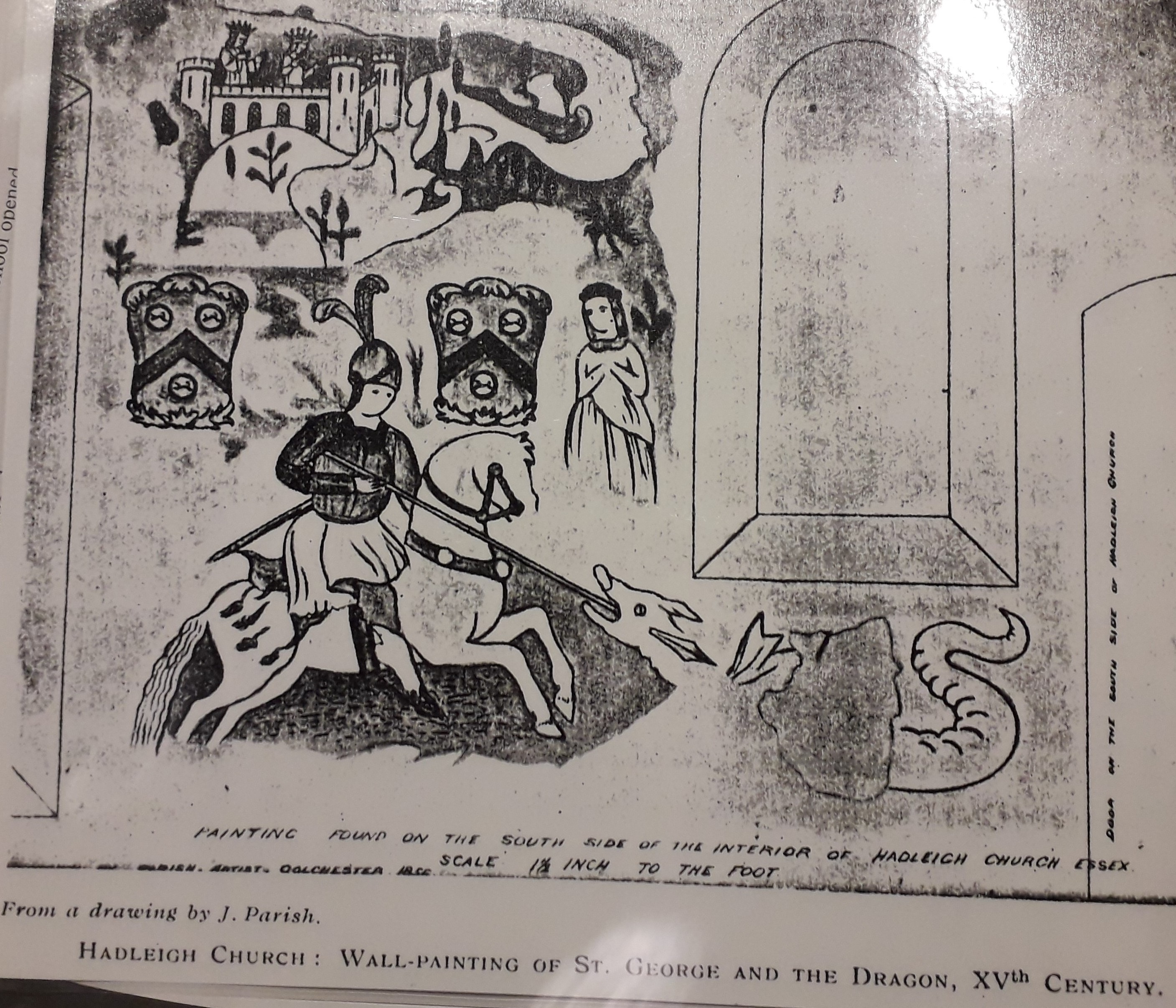
The Knight, on horseback, impales the dragon, thus securing Christian good over evil, whilst the Princess watches on along with, in the background, the King and Queen who appear to be applauding from Hadleigh Castle (which had been re/built in the 14th century).
Oh to have seen this in colour!
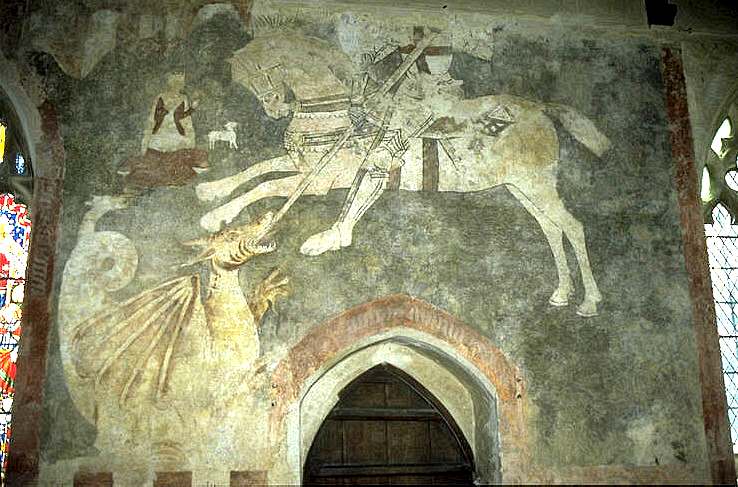
I did find a version of St George and the Dragon here: https://reeddesign.co.uk/paintedchurch/broughton-st-george.htm from a church in Broughton, Buckinghamshire, just to give a sense of the Hadleigh picture.
*
My other ‘medieval moment’ has been via Charles Spencer’s book “The White Ship” which tells the history of a medieval disaster when Henry I’s only legitimate son, William Aetheling, was one of the many to die when the White Ship – the Titanic of its day – was shipwrecked off the coast of Normandy.


The book is split into three sections. The first, Triumph, tells the story of Henry – the third son of the Conqueror – as he makes his way towards ruling both England and Normandy. It’s a complicated story, with inter-familial and strategic marriages, births both in and out of wedlock, bitter sibling rivalries, bloody battles, awful punishments and the complex relationship of kingship and papal authority. Eventually Henry secures both lands and brings a certain peace and order. His triumph, then, is to marry Matilda of Scotland, with whom he has a legitimate male heir, William Aetheling and a daughter Matilda.

I love Spencer’s imagined description of the charming and handsome seventeen-year-old William:
“Drawing on the aristocratic fashions of the time, we can guess how William Aetheling was turned out when he waited in Barfleur to make his sea passage home. If we picture him swathed in the finest sil shirt and tunic, with a fur-trimmed brocaded cloak thrown over his shoulders – to combine magnificence with warmth – we are probably not too far from the truth. If, in addition, he was following the fashion that had taken root during his grandfather’s rule of England and was still in vogue, his shoes would have been long with pointed toes.”
Part Two is titled Disaster: the White Ship, on which William was travelling from Normandy to England, met with a mighty collision against a rock. As water rushed in, William’s bodyguards got him onto a rowing boat. However, hearing his half-sister’s screams as the ship splintered further and both crew and passengers were hurled into the freezing sea, William made them turn the little boat back to try and rescue her. Those flailing in the water grabbed on to the returning boat, seeking safety, yet ultimately pulling everyone down into the water. Henry I’s dream of securing long-lasting peace, so that England and Normandy might be passed down to his legitimate son, had been shattered.
The third part of the book, Chaos, tells of the anarchy as lands on both sides of the Channel return once again to on-going rivalry, battles and bloodshed. The shipwreck had a huge impact on the course of history leading, on Henry I’s death, to the unsettled reign of King Stephen.
There is an extremely poignant manuscript image of Henry mourning the death of his son:

You may have seen or read that Charles Spencer has been taking scientific diving teams out to the site of the shipwreck to learn if anything of the ship might remain, which really would be extraordinary, and rather exciting.
***
As a postscript, there’s a great article by Simon Heffer:
Medieval church paintings were the PowerPoint presentations of their day (telegraph.co.uk)
in which he concludes: “With luck, as churches continue to be repaired, more such ancient masterpieces will be found, their glaze protecting them from centuries of whitewash; and once more our ancestors will speak directly to us.”
***
Posted in Uncategorized
Posted in The Art & Artists of Russia
Permalink Enter your password to view comments.
Posted in The Art & Artists of Russia
Permalink Enter your password to view comments.
Posted in Uncategorized
Permalink Enter your password to view comments.
Russian Art Week: London, June 2021
It’s that time of the summer when the auction houses of London focus the Art of Russia (see Russian Art Week Summer 2021 | Russian Art + Culture (russianartandculture.com)) which is always a delicious nosegay of paintings from across Russia and Russian history. Anyone following my little Russian Art & Artists research course will, hopefully, enjoy browsing the online galleries, especially as there are pictures, even by the most celebrated artists, that are rarely seen in public (especially in Britain) because they’re in private collections.
It means too that, for the common viewer, one begins imagining which paintings to buy in the creation of a personal collection (imaginary cheque books at the ready!) – I have chosen three:
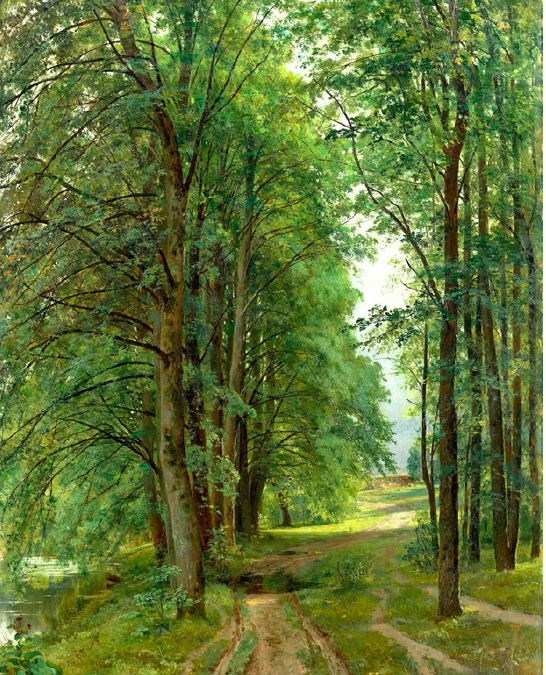
I would have to start with this glorious painting by Ivan Shishkin: “Forest Road” (1896) at MacDougall‘s. I love the way (as with many artists of the 19th century Wanderers movement) the path comes right up to the lower frame, as a viewer one feels invited in, as if already walking along, enjoying the light, the air and the colours of the forest.
MacDougall‘s notes:
Here, as in many of Shishkin’s best works, there is no pursuit of a beautiful motif or exalted tone yet, for all its apparent simplicity, Forest Road enchantingly evokes the mysterious depths of the Central Russian forest landscape so familiar to everyone, as well as the natural progression of the muted light, and the emotional and expressive quality of the artistic language.
That suggestion of ‘mysterious depths’ calls to the ancient history of Russia, the wildness of its interior lands, even evoking the traditions of story-telling, the grand legends and folk-tales.
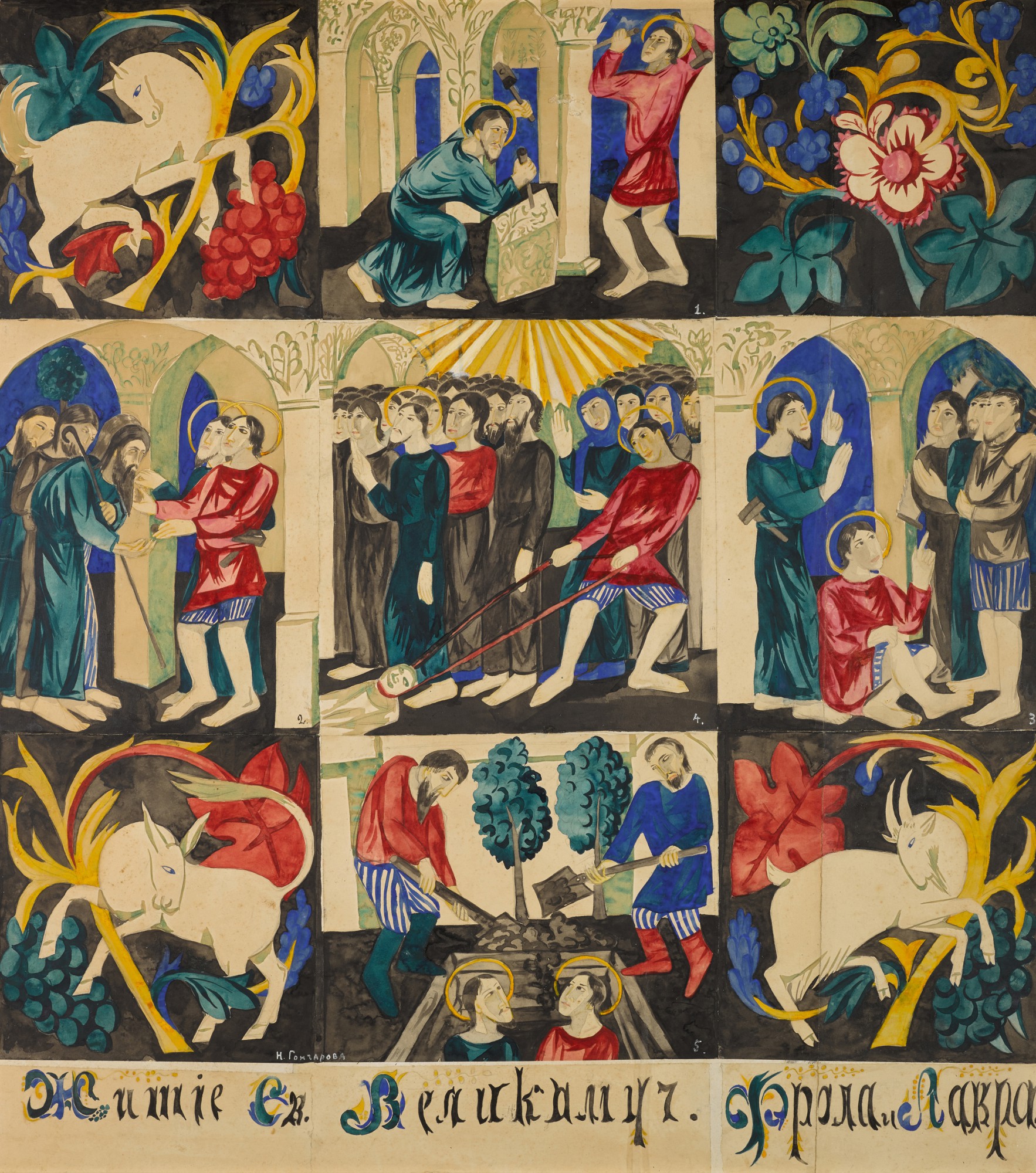
My second ‘imaginary acquisition’ is – and this will surprise no-one! – a painting by Natalia Goncharova: The Life of the Holy Martyrs Florus and Laurus from 1913 and on sale at Sotheby‘s. For all the radical difference of Goncharova’s art from that of Shishkin, they share the same catalyst for their work: the traditions of Russia. Here, Goncharova explores the story of two Orthodox saints from the Russian Icon tradition.
Florus and Laurus are known as protectors of horses and have been important for the Russian peasantry. In both its form and subject matter, the work therefore continues Goncharova’s exploration of peasant traditions
say Sotheby‘s in their Catalogue Note. With its simplified forms, bright colours and decorative elements (the flowers top right) Goncharova connects folk art and visual culture with avant-garde modernism.
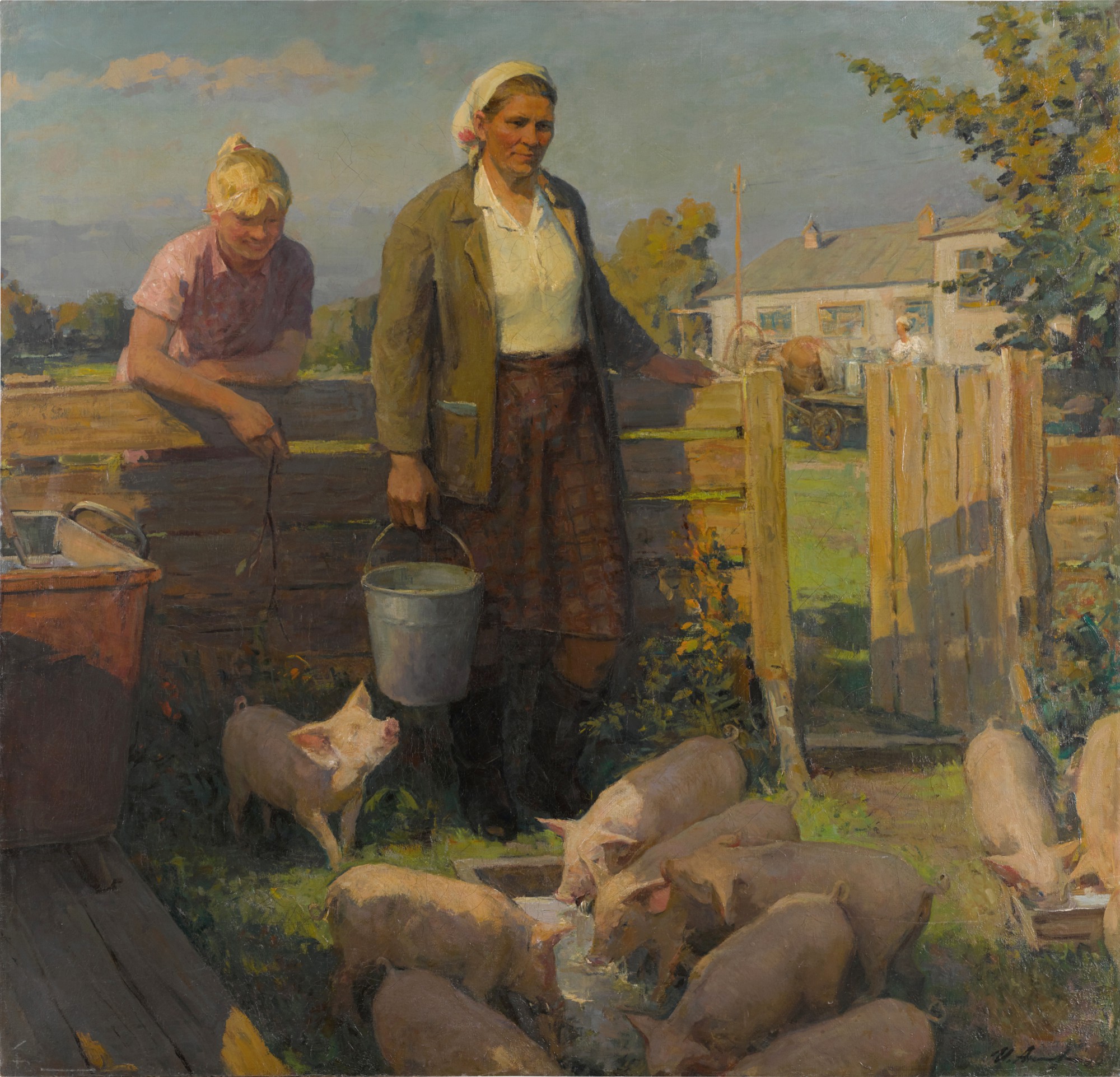
Now this might come as a surprise! Ivan Andreev’s “Pig Farm” is undated and, on sale at Sotheby‘s, sadly there are no additional notes. But surely it is from the ‘heroic’ / ‘working class impressionism’ period of 1950s Socialist Realism? Everyday life is recognised as worthy of monumental representation, the lives of the happy, healthy worker-citizens gloried in sunlight and even pig farming is an honoured part of Soviet collective productivity. Of course we can see it is ‘propaganda’: Socialist Realist artists were closely circumscribed in their art even after the demise of Stalin, both in the subject matter and style; and yet, I find there is something immensely satisfying in Andreev’s painting.
***
If you want to explore further, the websites are:
Sotheby’s: Russian Pictures (sothebys.com)
Christie’s: Browse Lots (christies.com)
MacDougall’s: MacDougall’s Auction | Home (macdougallauction.com)
and Bonhams: Bonhams : The Russian Sale
***
And if you are following the Russian Art & Artists research series here on The Common Viewer, our next ‘episode’ (to be published 12th June) will be on Russian Icons and the Art of Kandinsky.
***
Posted in Uncategorized
Words and Pictures (A Russian Aside): Rasputin and Anna Krarup
The Moscow Times has reported that – yesterday in Copenhagen – two portraits of the notorious/infamous Rasputin painted by Danish artist Anna Theodora Krarup went to auction, see: Bruun Rasmussen Auctioneers of Fine Art (bruun-rasmussen.dk).
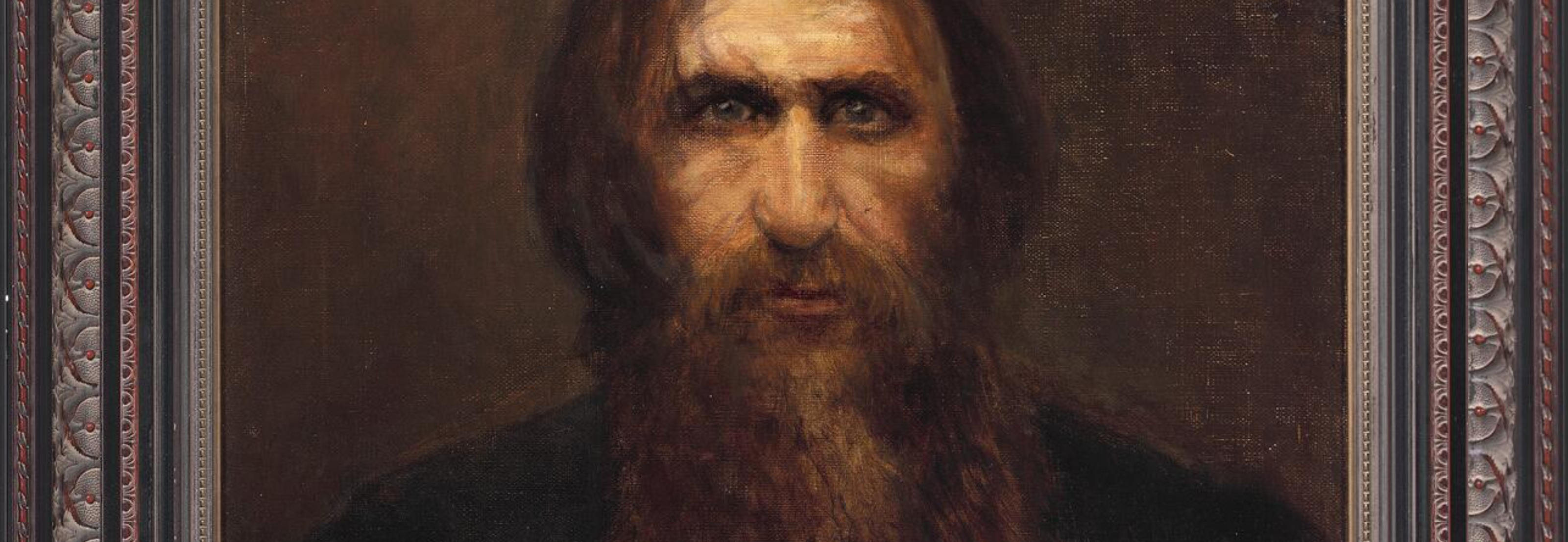
I’m not sure if I’m more intrigued by the paintings – done from life, incredibly rare – or the artist!
Christie’s writes of Krarup:
Theodora Krarup was born in Scheelborg in 1862 and studied in Berlin, Copenhagen, Paris and Helsinki, before fulfilling a lifelong ambition to visit Russia, at the age of 34, where she remained for forty two years. Krarup lived in St. Petersburg, where she was asked by the, dowager Maria Feodorovna to paint the late Alexander III from pictures. She was then commissioned to paint further Imperial portraits from life.
Krarup became a friend of Rasputin and painted a total of twelve portraits of him, the last of which was completed five days before his death. According to her memoires, Rasputin entrusted his own memoires, photograph album and letters to her, but these along with her own remaining works, she had to destroy the day before her deportation in 1938. However, she attempted to refute the scandalous reputation of Rasputin in her own memoires, dictated to and published by : Henning Kehler and William Haste.
What a fascinating story this must be – living in St Petersburg through the Revolution and deep into Stalinist times – but apparently it’s only published in Danish.
The Moscow Times adds:
She had a studio on Nevsky Prospekt and painted portraits of not only Russian royalty, but also other prominent cultural and scientific figures. She was acquainted with Grigory Rasputin and strongly refuted the depiction of him as a womanizer and fraud. She wrote that he was a kind person without ambition.

Concidentally, I’ve just been reading Teffi’s short story/memoirs Rasputin and Other Ironies [Pushkin Press] in which she describes meeting Rasputin:
Lean and wiry and rather tall, he had a straggly beard and a thin face that appeared to be gathered up into a long fleshy nose. His close-set, prickly, glittering little eyes were peering out furtively from under strands of greasy hair. I think these eyes were grey. The way they glittered, it was hard to be sure. Restless eyes.
It’s a description that approximates Krarup’s portrait so closely it’s astonishing.
Teffi meets Rasputin a couple of times, he’s clearly a very peculiar man sometimes posturing and high-handed, sometimes dancing madly, sometimes a womaniser; but then Teffi also sees the security around him, the journalists exploiting his story, and the powerful interest all sorts of people had in him, and for all sorts of motives. Teffi, however, doesn’t fall for his magic act:
Here he was, Rasputin in his element. The mysterious voice, the intense expression, the commanding words – all this was a tried and tested method. But if so, then it was all rather naive and straightforward. Or, perhaps, his fame as a sorcerer, soothsayer and favourite of the Tsar really did kindle within people a particular blend of curiosity and fear, a keen desire to participate in this weird mystery.
I think I’m with Teffi here; it would be much more interesting to find out about Anna Krarup’s time in Russia/USSR!
***
Posted in Uncategorized
Words and Pictures: Arty Books for June 2021
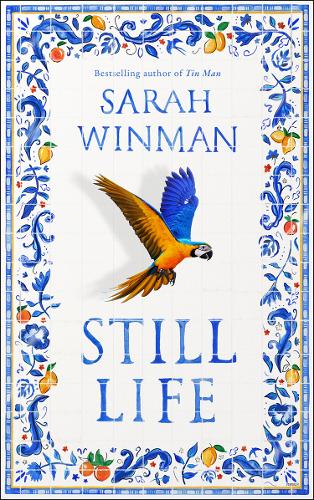
The first book to mention is Sarah Winman’s new novel “Still Life” which is published by HarperCollins next week, 10th June and looks fascinating. Anyone who had read her glorious “Tin Man” [Tinder Press] will know her extraordinarily succinct use of language to conjure atmosphere, a strong sense of place and time and always a dramatic, unexpected and often emotional plot. Throughout that novel the presence of Vincent Van Gogh – both his paintings (the Sunflower series) and his biography – haunted, sometimes even drove, the narrative, in surprising ways.

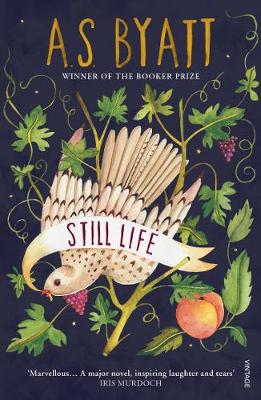
Reading “Tin Man” then took me back to re-reading A. S. Byatt’s novel (also called) “Still Life” [Vintage] which is similarly infused with the spirit of Van Gogh as well as other painters. The Prologue is set at an exhibition at the Royal Academy, and one of the main characters, a writer, looking at Van Gogh paintings reflects how difficult he had found it to find “an appropriate language for the painter’s obsession with the illuminated material world.” Perhaps Byatt, too, found it difficult, but her success throughout the novel – as Sarah Winman achieved in “Tin Man” also – is the creation of story, characters, fictional events that enable one to look again at the paintings and their effect/s upon the viewer.
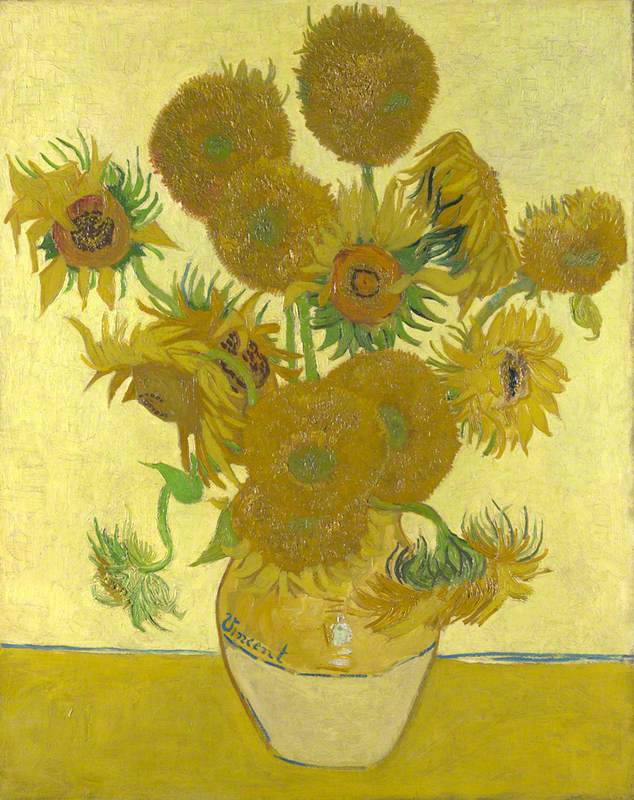
The National Gallery, London; http://www.artuk.org/artworks/sunflowers-115371
In Winman’s novel the propelling catalyst is a reproduction of “Sunflowers” won at a raffle – Dora hangs it on the wall of her otherwise drab and depressing back room, and against her husband’s wishes.
“She stood back. The painting was as conspicuous as a newly installed window, but one that looked out on to a life of colour and imagination, far away from the grey factory dawn and in stark contrast to the brown curtains and brown carpet, both chosen by a man to hide the dirt. It would be as if the sun rose every morning on that wall, showering the silence of their mealtimes with the shifting emotion of light.”
The painting now on the wall leads immediately to a near murder Dora’s her husband returns and goes to pull it down: “Do it and I’ll kill you. If not now then when you sleep. This painting is me. You don’t touch it, you respect it.”
Van Gogh’s “Sunflowers” changes lives throughout the story in, as I say, surprising and powerfully emotional ways.
The publisher’s copy for Sarah Winman’s “Still Life” reads:
Still Life is a big-hearted story of people brought together by love, war, art and the ghost of E.M. Forster. 1944, in the ruined wine cellar of a Tuscan villa, as bombs fall around them, two strangers meet and share an extraordinary evening. Ulysses Temper is a young British soldier, Evelyn Skinner is a sexagenarian art historian and possible spy. She has come to Italy to salvage paintings from the wreckage and relive memories of the time she encountered EM Forster and had her heart stolen by an Italian maid in a particular Florentine room with a view. Evelyn’s talk of truth and beauty plants a seed in Ulysses’ mind that will shape the trajectory of his life – and of those who love him – for the next four decades. Moving from the Tuscan Hills and piazzas of Florence, to the smog of London’s East End, Still Life is a sweeping, joyful novel about beauty, love, family and fate.
In other words: it will be amazing!
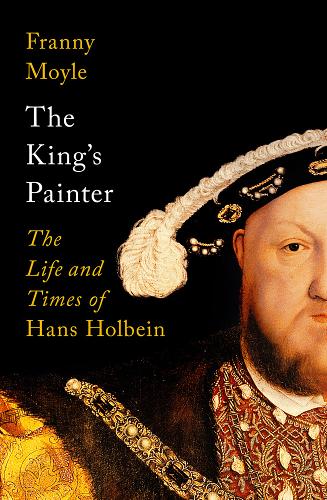
A book more directly linked to an artist is Franny Moyle’s The King’s Painter [Head of Zeus] which, I have to say, is one of the most beautifully illustrated and produced art/biographies that I’ve seen in a long time. What is particularly interesting is that each chapter is dedicated to a particular portrait that then illuminates the context of the working artist. Moyle notes in the Introduction that there is very little by way of written records from the artist’s life, which means that the the paintings themselves, their subjects and their cultural-political receptions, are superbly foregrounded. And of course the paintings have been so historically affective: we could not ‘see’ or perhaps even understand Henry VIII and his court except through the eyes of Holbein.

The King’s Painter: The Art and Times of Hans Holbein is published now, and four episodes of it from Radio 4’s Book of the Week are still available (as of today): BBC Radio 4 – The King’s Painter: The Life and Times of Hans Holbein by Franny Moyle – Available now and – fascinatingly – as she was going about her research, Franny Moyle also discovered a portrait of the artist as a child: The child hidden in plain sight: how one painting has upended the Holbein world (telegraph.co.uk)!

My third ‘recommended’ book is Frances Wilson’s “Burning Man” [Bloomsbury] which is absolutely brilliant. Wilson not only portrays D.H. Lawrence in a uniquely new light – especially by way of his usually-forgotten-about writing – she has also transformed the art of biography by mapping Lawrence’s life by way of Dante’s travels from the Inferno of Hell through Purgatory to Paradise. It is truly extraordinary and, when the ‘blurb’ says “a landmark biography” for once this rings true.
You might be thinking – why is he talking about this when it’s not about an artist or art? Well, the third part is especially interesting as, when Lawrence and his wife Frieda move to New Mexico, an artist who travels with them is Brett (1883-1977), the Hon. Dorothy Eugenie Brett to give her formal name. Brett had been a student at the Slade, a friend of Carrington and one of the Bloomsbury artists who, during World War I, stayed at Ottoline Morrell’s Garsington Manor – thesae were the circles through which she met Lawrence. At a dinner party, Lawrence – drunk – suggested the guests should all move with him to create a writers/artists colony. One way or another they demurred, except Brett.
The artuk.org website has only four of her paintings, including one of Ottoline and her Garsington guests and a portrait of Lawrence himself:
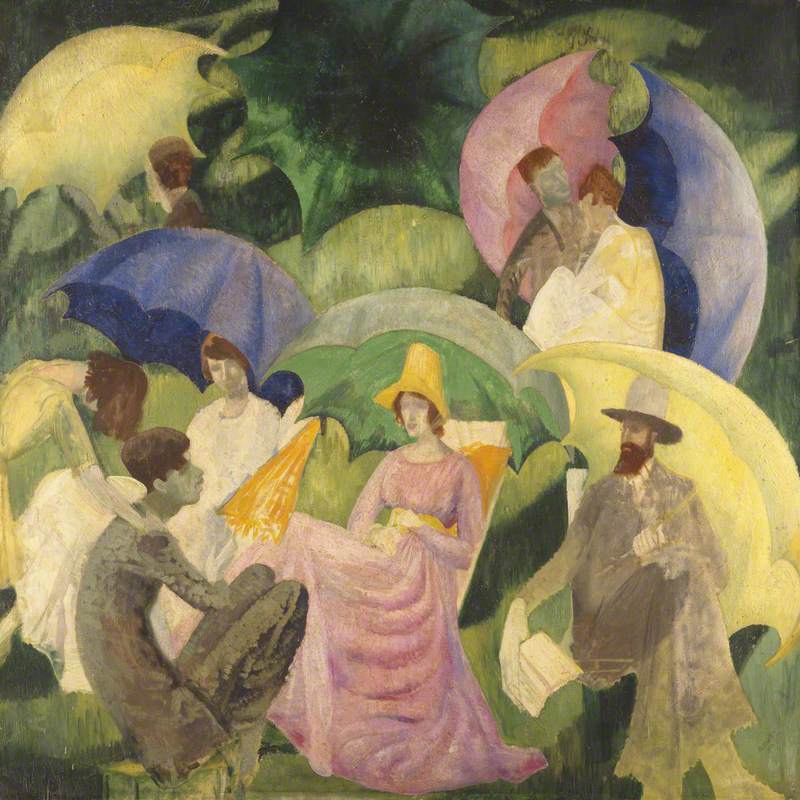
Brett, Dorothy Eugenie; Umbrellas; Manchester Art Gallery; http://www.artuk.org/artworks/umbrellas-204543 
Brett, Dorothy Eugenie; D. H. Lawrence; National Portrait Gallery, London; http://www.artuk.org/artworks/d-h-lawrence-155286
The other two are later paintings (both in the Tate) from New Mexico where, from 1924, Brett would live for the rest of her life.
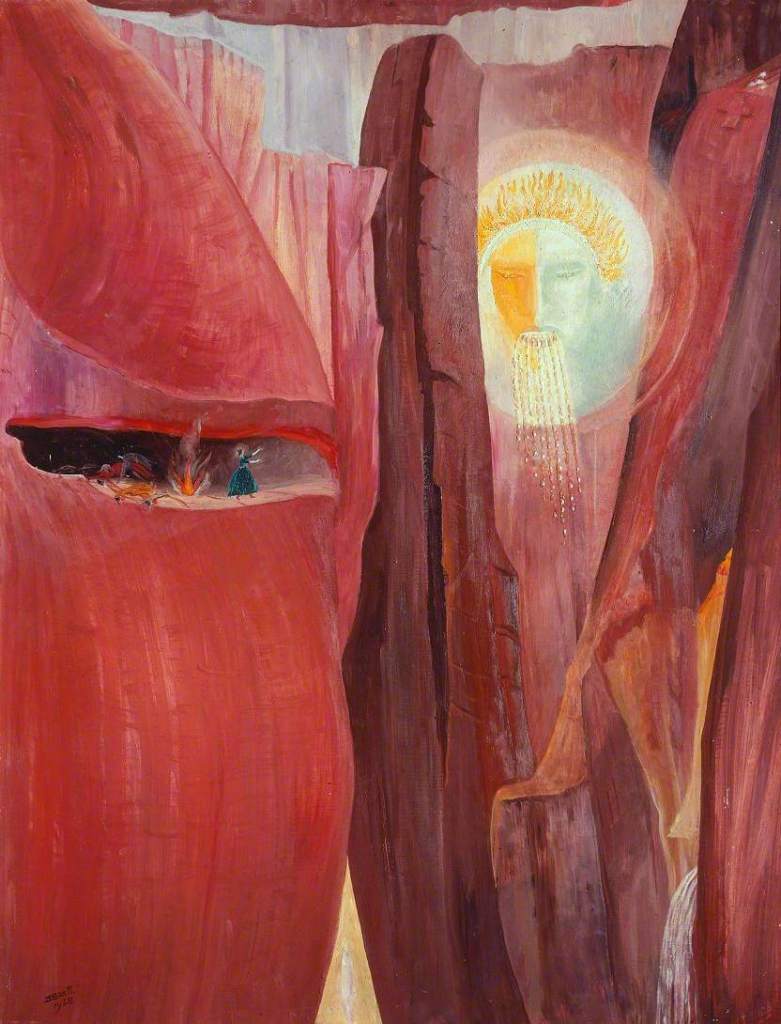
Brett, Dorothy Eugenie; Massacre in the Canyon of Death: Vision of the Sun God; Tate; http://www.artuk.org/artworks/massacre-in-the-canyon-of-death-vision-of-the-sun-god-197994 
Brett, Dorothy Eugenie; Ceremonial Indian Dance: The Matachinas; Tate; http://www.artuk.org/artworks/ceremonial-indian-dance-the-matachinas-197996
The Tate website tells a little more about these astonishing pictures.
And, one other book to mention is Ian Collins biography of the artist John Craxton [Yale University Press]:
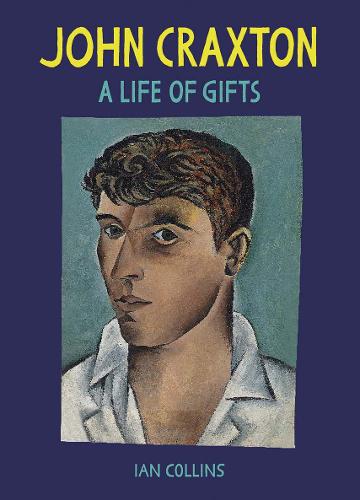
which I will be reading over the next few days before discussing it with the author himself (via @HatchardsPiccadilly on InstagramLive next Wednesday 9th, 6pm), when I’ll have much more to tell!
So, for now, happy book-reading and picture-viewing!
***
Posted in Uncategorized
Posted in The Art & Artists of Russia
Permalink Enter your password to view comments.
Posted in The Art & Artists of Russia
Permalink Enter your password to view comments.
 thecommonviewer