Artists… of the Night: the Cluj School of Romania

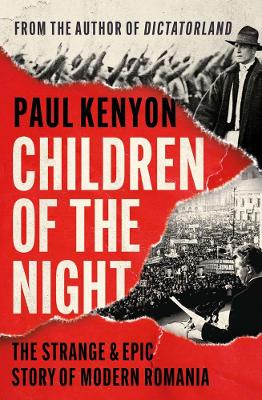
It was through reading and discussing “Children of the Night: The Strange and Epic Story of Modern Romania” (published this year by Head of Zeus) with author Paul Kenyon recently that I’ve learnt a little about Romania’s contemporary art scene.

It’s towards the end of the book – a history of catastrophic leadership in Romania throughout the 20th century – that Paul writes of the present day:

“The collective trauma of communism, followed by revolution and then a decade of near darkness, has ignited in some a rare level of drive and inspiration. Up in the Transylvanian city of Cluj, a group of pioneering painters have caught the imagination of the art world with their wild and experimental styles, their loose application of paint, and their creation of haunting, sometimes brutal images of post-communist Romania. Members of the Cluj School are in their thirties and forties, working out of an abandoned communist brush factory in the city, while their canvases are exhibited in top galleries around the world… “

There is a fascinating essay in Contemporary Art Issues that gives the broad context and highlights the key artists of the Cluj School and another overview via Christies.

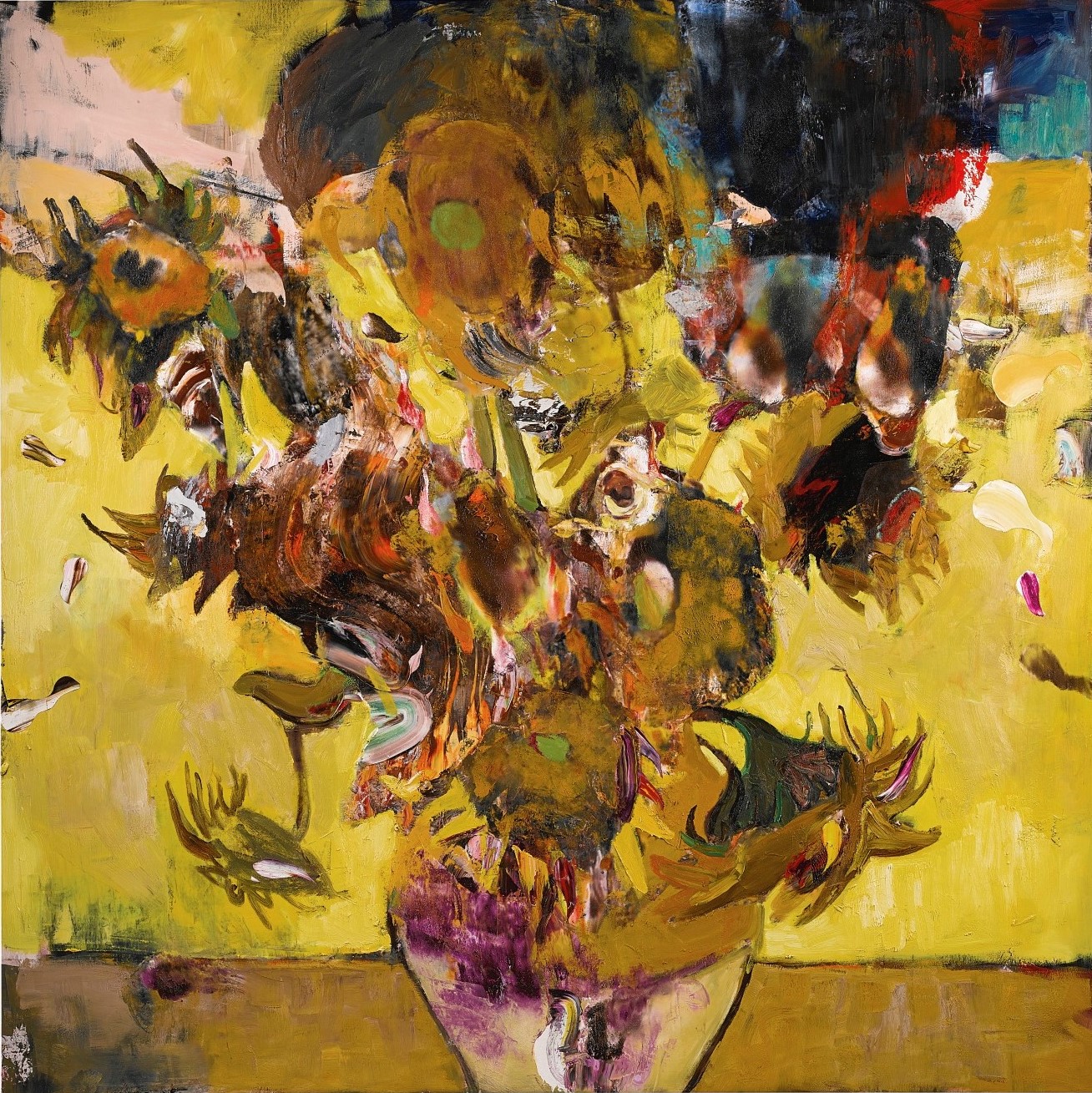
So many of the paintings are immediately fascinating, but it’s “The Sunflowers in 1937” [2014] by Adrian Ghenie that really caught my attention. The photograph at the top of the page here is from Romania Insider magazine, the headline that Ghenie’s painting sold for over £3million at Sothebys in 2016.

We all know Vincent Van Gogh’s glorious series of Sunflowers paintings, such as the one at the National Gallery in London, and that familiarity is, perhaps, what makes Ghenie’s painting so shocking and, indeed, so powerful.

The Sotheby’s essay (in full here) notes: “Adrian Ghenie’s The Sunflowers in 1937 is an extraordinary and monumental reimagining of van Gogh’s masterpiece as subject to the events of twentieth-century history”. For, along with the familiarity of the image, is the shocking recognition of the date in the painting’s title: “1937 was the year in which the Nazi regime held the infamous exhibition of ‘Degenerate Art’ at the Institute of Archaeology in the Hofgarten in Munich” and it is this history that haunts Ghenie’s picture. The Sotheby’s essay describes:

As though witnessing van Gogh’s Sunflowers in a state of near inferno, we imagine molten passages of oil paint shrinking to blackened welts as the canvas itself begins to disintegrate and disappear into thin air.

Adrian Ghenie, along with the other Cluj School artists, is only too aware of what fascism, totalitarianism and ‘cultural cleansing’ can do to a society and its people.

***

Horrendously, such cultural violence is currently being unleashed in Afghanistan where the visual art scene had been flourishing in recent years. Now:

***

researching Ursula Tyrwhitt (part i)

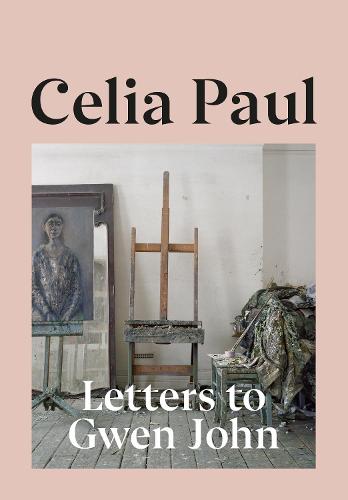
Recent researches into the art and life of Gwen John for our Art, Books & Culture discussion group have led me to begin investigating a close friend of John’s, the artist Ursula Tyrwhitt (1872-1966) – although there is at first appearance very little to go on, despite her having a number of exhibitions.

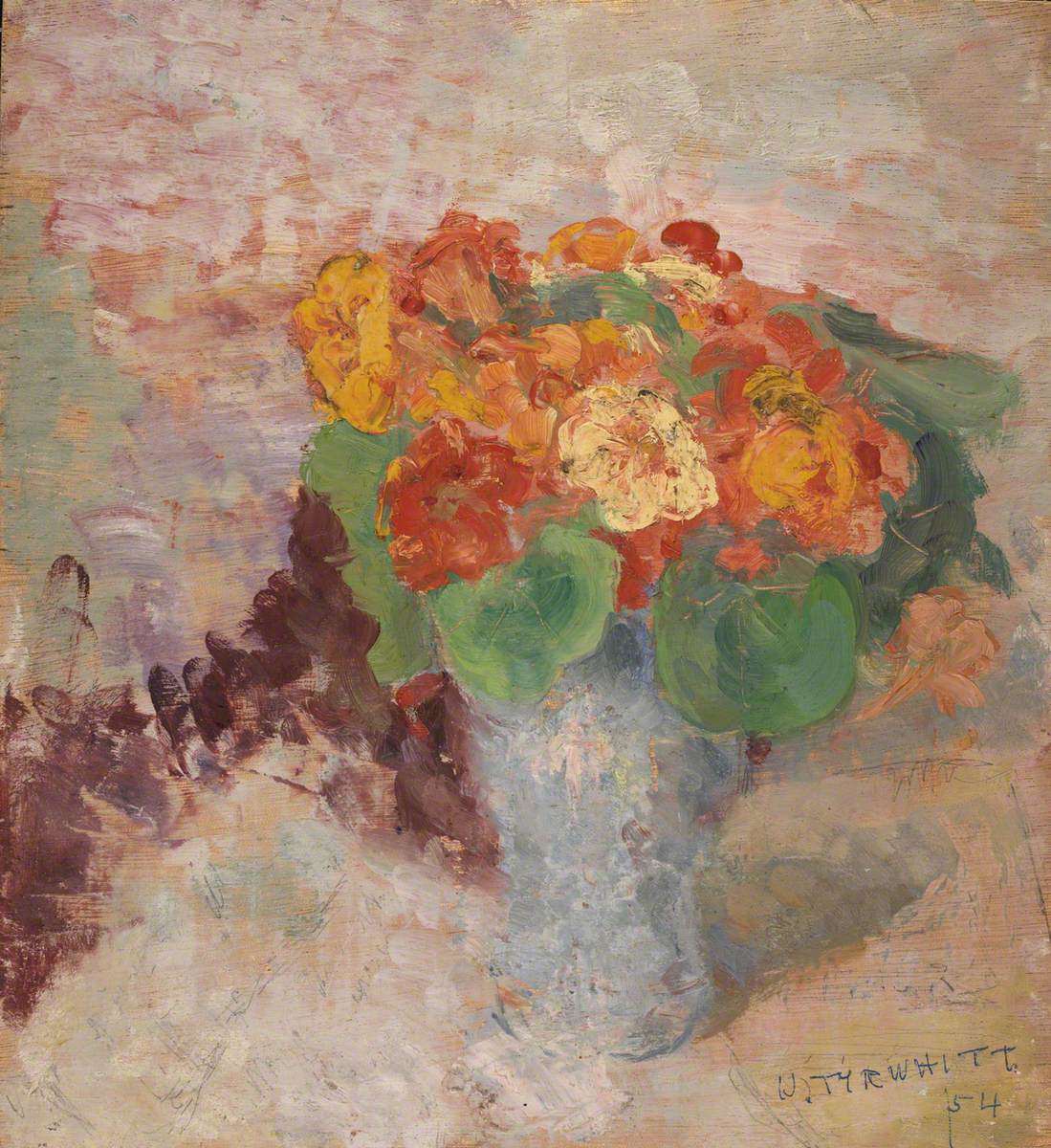
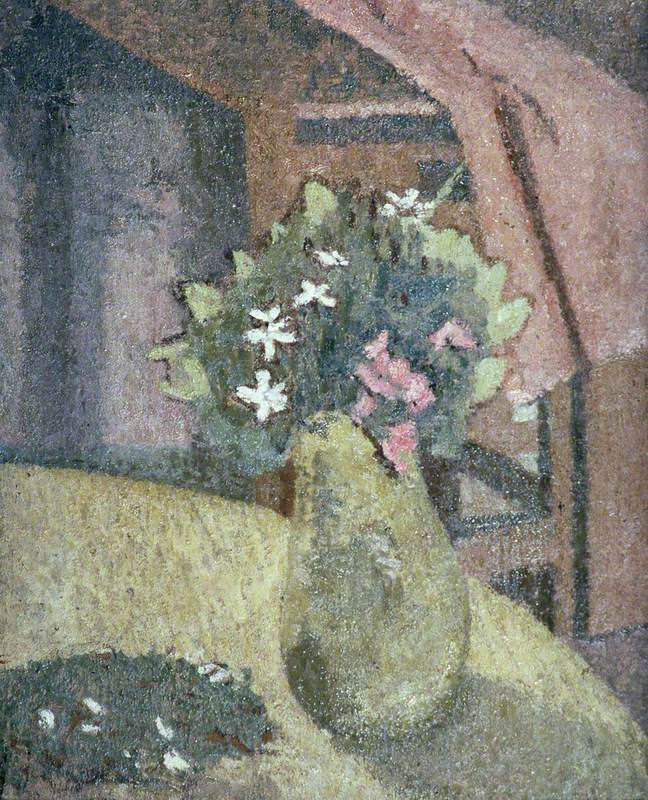
The artuk.org website does have sixteen of her paintings – mostly from the National Library of Wales, so I guess one of my next steps is to visit their archives. The painting that really stands out from this selection for me – besotted by colour and flowers as I am!) is

“Still Life with Primroses”

Tyrwhitt, Ursula; Still Life with Primroses; Llyfrgell Genedlaethol Cymru / The National Library of Wales; http://www.artuk.org/artworks/still-life-with-primroses-121307

That gorgeous blaze of oranges and yellows seems to vibrate, even fizz, deliciously.

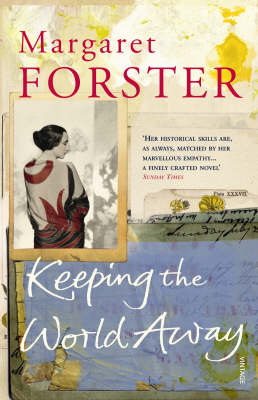
That they are primroses links to Margaret Forster’s novel “Keeping the World Away” in which Ursula visits Gwen’s apartment in Paris. She had brought with her “some primroses, bought that morning from a woman selling them in the street. They were fresh, newly picked…”. She reaches the door to see that Gwen is painting, fears disturbing the concentration, whispers her name and holds out the flowers. Her friend turns, takes the flowers and puts them in water. replacing the book that is on the table and part of her still life painting.

“‘Good’, she said, ‘the flowers are just right. They say the right things’. Ursula wondered what these right things were, but Gwen was asking her if she would like tea…”

detail from Gwen John’s “A Corner of the Artist’s Room in Paris” [1907-9; Sheffield Museums; artuk.org]

In “Portraits of Women: Gwen John and Her Forgotten Contemporaries”, Alison Thomas notes:

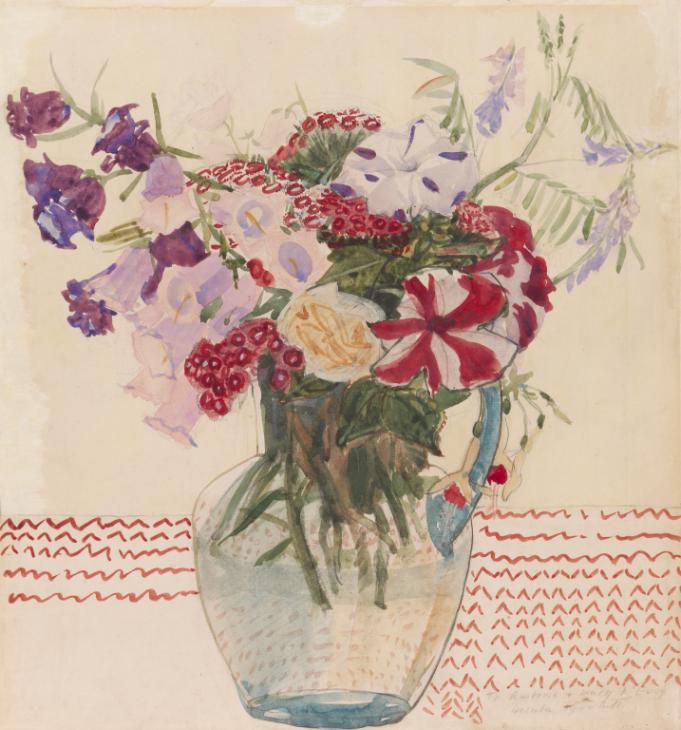
“Ursula possessed a great gift for painting flowers. The shapes, forms and colours of a vase of flowers on a table, perhaps in front of a window, would inspire her to paint a bold composition. Ursula favoured the larger, more brightly coloured summer flowers: it is their size and varied shapes that give structure and form to her compositions, yet despite their outward boldness there is much delicacy and subtlety, particularly in her handling of the paint.”

Flowers 1912 Ursula Tyrwhitt 1878-1966 Presented by Mrs Mary McEvoy 1935 http://www.tate.org.uk/art/work/N04814

Thomas continues:

By her use of thin, transparent and fluid washes, Ursula allows the essential structure of the flowers to act as a framework for the brilliant hues. She hints at literal appearance, but does not overstate. [In her paintings of flowers by windows] …the flowers themselves remain central in the composition, reinforcing their presence by glowing colour which captures our attention and incites our admiration.”

Absolutely!

*

Only the very beginning, then, but a research project has been announced: archives, here we come!

There is a gorgeous painting by Ursula Tyrwhitt on the internet called “Nosegay” [1913] but sadly no gallery link or further information; what an inspiration to find out more though:

***

Art, Books and Culture Group, August 2021 – Gwen John, some resources

Greetings! Such a glorious meeting of the ABC Group last weekend; wonderful to see everyone as always.

Gwen John (1876-1939): The Student (portrait of Dorelia McNeill) [1904; Manchester Art Gallery; artuk.org]

The Pictures

As always, one of the best resources to see the paintings is artuk.org – click on the link and it will take you to 80 pictures by Gwen John.

The other brilliant resource for images – in particular the drawings and watercolours is Sotheby’s – again, this link will take you straight there.

Articles & Essays

The Tate website has a broad overview of Gwen John’s life and work; also a number of articles in Tate Etc. magazine including: I think if we are to do beautiful pictures, we ought to be free from family conventions and ties: Gwen and Augustus John by Virginia Ironside and David Fraser Jenkins

The National Museum of Wales has a very interesting series of articles by Neil Lebeter which look closely at Gwen John’s painting technique: it’s the tone that matters

And there is an essay on artuk.org by Catherine Jamieson: Quiet Intensity.

Books

For me, the best book on Gwen John’s art is by Cecily Langdale:

which is sadly out of print, but available at the library and there is a short article, c/o the publishers here.

My ‘highly recommended’ also goes to Alison Thomas’s “Portraits of Women: Gwen John and her forgotten contemporaries” from Polity Press, a group biography of Edna Clarke Hall, Gwen John, Ida Nettleship and Gwen Smith. Sadly again it seems to be out of print, but certainly worth tracking down.

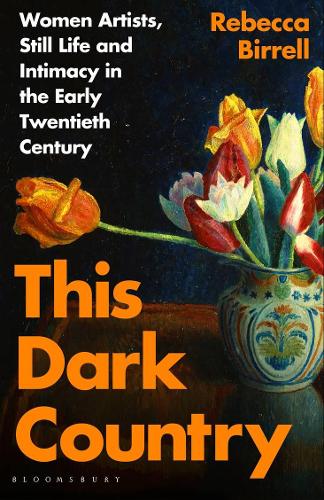
Other books we mentioned include, Among the Bohemians by Virginia Nicholson which is a wonderful read; Rebecca Birrell’s brand new book This Dark Country which looks at a number of artists from intriguing perspectives and has an essay on Gwen John and you just can’t get better in terms of a fictional portrait than in Margaret Forster’s Keeping the World Away!

Television

There is also an archived documentary programme (BBC, 1975) on both Gwen and Augustus John available on i-player: The Fire and the Fountain.

*

As always: Happy Researching! and do let me know what else you come across, and I’ll add it in!

In the meantime: one of Gwen John’s beautiful flower paintings,

“Vase of Flowers” [1910s; National Library of Wales; artuk.org]

John, Gwen; Vase of Flowers; Llyfrgell Genedlaethol Cymru / The National Library of Wales; http://www.artuk.org/artworks/vase-of-flowers-120669

All best wishes, The Common Viewer

***

Words and Pictures: The Art of Brett

I’ve been meaning to write a short post about the artist Brett since reading Frances Wilson’s brilliant new biography

Wilson’s discussion of Lawrence’s life is extraordinary in that she weaves in all of his writing (not just the obvious novels) along with his friendships, travels and, let’s face it, his contradictions and eccentricities. Even aside from her subject, however, this is a biography like no other and Wilson’s determinedly creates a narrative – following Dante’s ascent through the circles of Hell – that unfolds in such a way as to portray Lawrence more in his own unique terms, his particular vision and understanding of life, than any straightforward this-happened-then-this-and-then-that. As such it is worth reading as much for an appreciation of the art of biography as for Lawrence’s life story.

Be that as it may, one of the most interesting aspects of Lawrence’s life for me – from the perspective of visual art – is his time in New Mexico. Lawrence had always wanted to set up a community of like-minded souls and when the American socialite and patron of the Taos Art Colony, Mabel Dodge Luhan, invited him, he went, along with his wife Frieda and the artist Brett (he had asked all his other friends to join him, they all said no!).

Brett is hardly known here now, except perhaps among the devotees of all things Bloomsbury. Her ‘full name’ was The Right Honourable Dorothy Eugenie Brett; her dates 1883-1977.

Born into a very well-to-do and actually quite eccentric family, Brett was seen as the most eccentric of them all when she began studying to be an artist at the Slade. It was there – alongside Carrington – that she not only cut off her hair (becoming what Virginia Woolf called “one of the cropheads”) but also cut off most of her names to become, simply, Brett. Despite suffering hearing problems – she used a trumpet she called Toby – she flourished, associating with Augustus John, Katherine Mansfield, the Lawrences, Mark Gertler and, especially during the years of the First World War, Ottoline Morrell at her house in Garsington which became a sanctuary for pacifists and conscientious objectors.

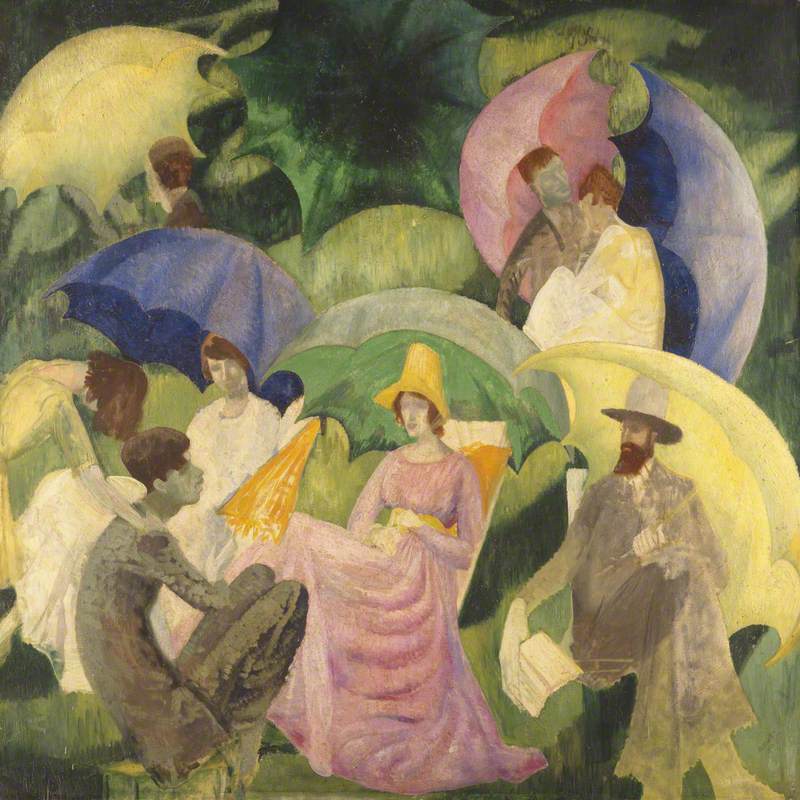
Brett, Dorothy Eugenie; Umbrellas; Manchester Art Gallery; http://www.artuk.org/artworks/umbrellas-204543

I have to copy & paste Manchester Art Gallery’s description of Brett’s painting “Umbrellas” which goes as follows:

Stylised figure composition in an outdoor park setting. Group of figures in the foreground, comprising bearded man to the right beneath an ivory coloured umbrella, limply holding a book in his right hand. There is a woman in a pale pink dress and yellow hat in the centre beneath a green umbrella, seated in deckchair facing a young man in a grey suit crouching to the left. There are more figures in the background beneath coloured umbrellas to the left and right.

They seem not to be fans of Bloomsbury! The “woman in a pale pink dress” is in fact the great Ottoline Morrell herself, the limp-handed bearded man is Lytton Strachey and the “crouching” young man is Aldous Huxley. The woman leaning on his shoulders is Ottoline’s daughter Julian. Of the “background” figures, the two to the right are Katherine Mansfield and John Middleton Murray, the single figure under the yellow umbrella to the left is Mark Gertler and the person under the blue umbrella is the artist, Brett, herself. The “outdoor setting” is, of course, Garsington Manor.

Painted through the summer of 1917, Brett took Virginia Woolf to see it. Woolf notes in her diary: Brett is a queer imp. She took me to her studio and is evidently very proud of a great picture full of blue umbrellas.

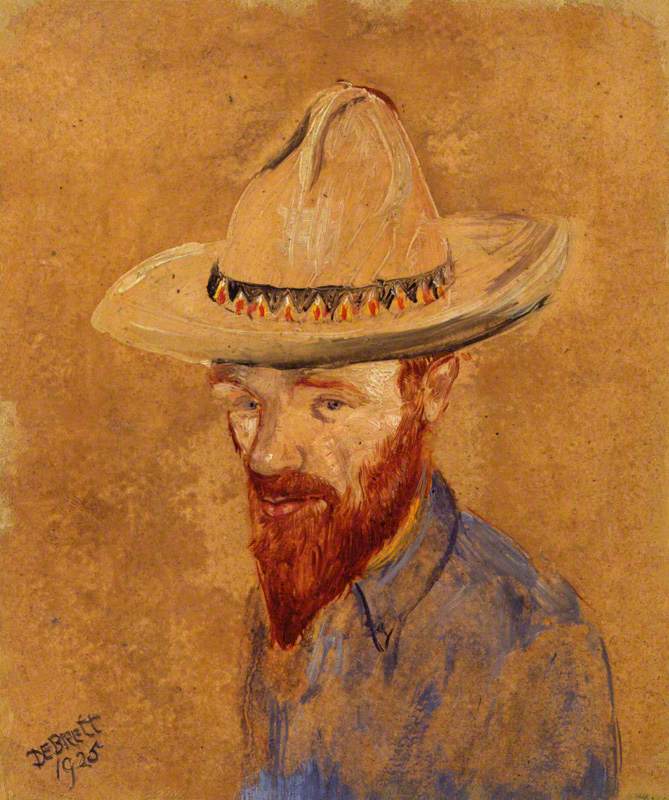
Brett, Dorothy Eugenie; D. H. Lawrence; National Portrait Gallery, London; http://www.artuk.org/artworks/d-h-lawrence-155286

Brett painted Lawrence’s portrait in New Mexico in 1925. The ‘colony’ was an endless drama of comings and goings, but Brett would stay in Taos for the rest of her days. The Sotheby’s website records: [Brett] was immediately enamoured by the new environment, remarking, “I like it better than England. O, for the bigness of it! …Here I’m free from the old conventions …Here I’m truly free” (as quoted in Cassidy, New Mexico Highway Journal, March 1933).

There’s an intriguing Self-Portrait (c/o Addison Rowe Gallery) from this time, 1925, and it looks as if Brett is holding “Toby”, her hearing trumpet:

Many of her paintings took their subjects from the Pueblo Indians’ lives. In Sean Hignett’s biography “Brett – from Bloomsbury to New Mexico” (1984), he recognises how difficult this was, especially for an outsider, alien to the community’s beliefs. However, making friends, Brett soon found a guide to the local religious ceremonies, Trinidad, who was “a discreet mediator and protector in [Brett’s] dealings with the Pueblo”.

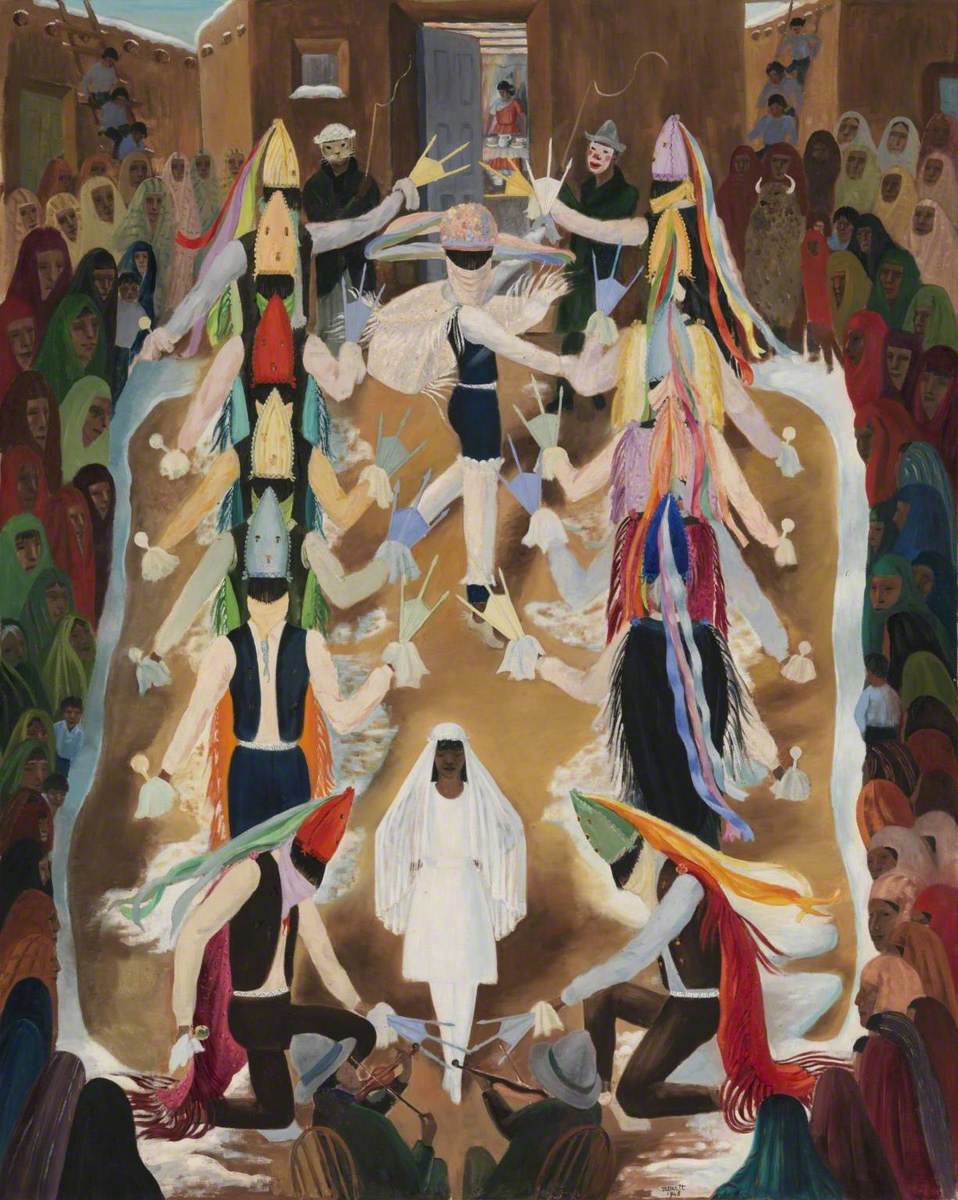
It meant that she could attend – though not directly paint, sketch or photograph – the calendar of dances and ceremonies tied to the agricultural seasons and religious feast-days. The only ceremonial painting by Brett in a UK collection is at the Tate, and painted later in 1948:

Brett, Dorothy Eugenie; Ceremonial Indian Dance: The Matachinas; Tate; http://www.artuk.org/artworks/ceremonial-indian-dance-the-matachinas-197996

Tate Catalogue notes:

The artist wrote (17 September 1959) that the dance is almost entirely Spanish in costume, music, etc.: ‘A variation of the old Spanish Folk Dance “Los Christianos y Tor Moros” celebrating the battle which recovered Spain from the Moors in the 15th Century. Brought to Mexico soon after the Conquest, it added “Matinche” (Cortez’ Mistress and Interpreter) as a character, but retained the Spanish El Toro (the bull). It was then brought up into New Mexico where it took on Indian characteristics. [see more on Tate website]

The costumes and masks are fascinating in their detail, the dancers and the two musicians with people looking on from all around; the symmetry and the colours reflect the ritual importance of the dance. It’s quite breath-takingly beautiful.

Hignett writes that the dance often developed “a deep psychic intensity, building up through the long sun-baked day, through hours of non-stop rhythmic shuffling and swaying, low throat-throbbing chanting and the continual rapid pound of drums. The dance grows until quite suddenly it stops and one feels the silence…”

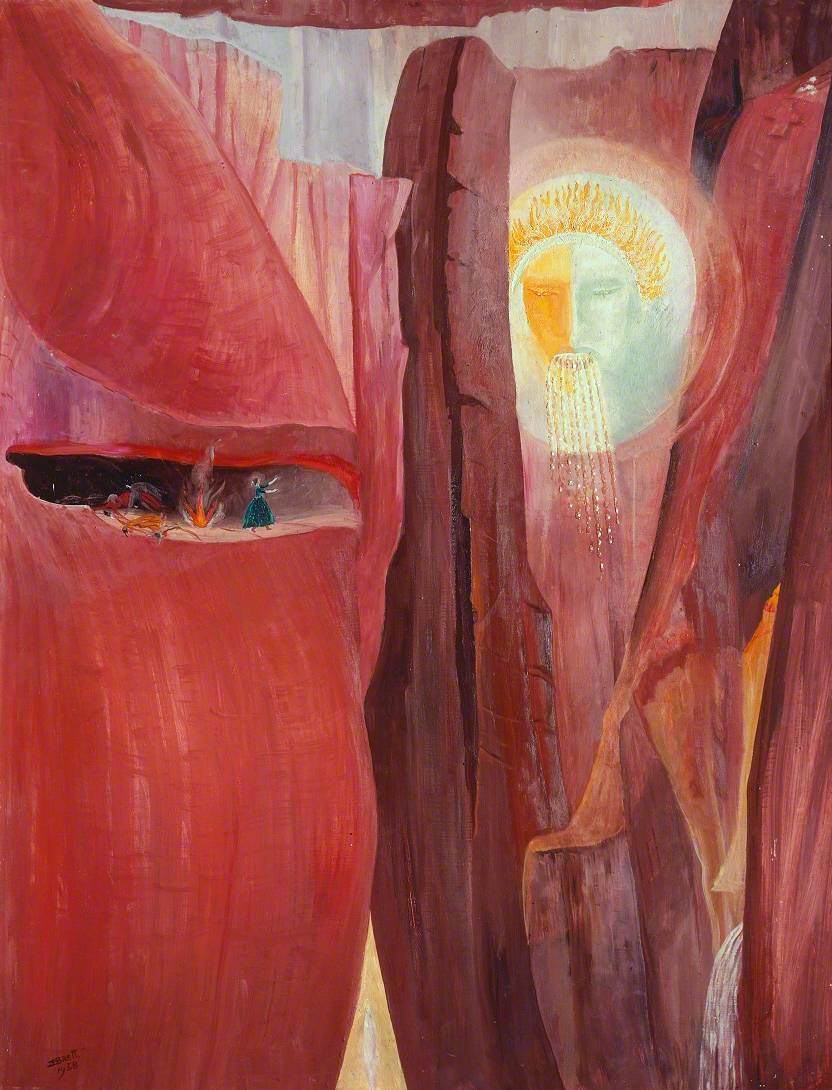
The other extraordinary painting by Brett on the artuk.org website (again at the Tate) is terrifyingly tragic:

Massacre in the Canyon of Death: Vision of the Sun God

Brett, Dorothy Eugenie; Massacre in the Canyon of Death: Vision of the Sun God; Tate; http://www.artuk.org/artworks/massacre-in-the-canyon-of-death-vision-of-the-sun-god-197994

The artist wrote (17 September 1959):

‘The Navajo men before leaving for a hunting expedition placed their women and children in a high cave on the side of the towering cliff…. Soon after they left the Spanish soldiers rode through the Canyon. An old woman … jeered and spat, thus giving away their hiding place. The soldiers then climbed up the opposite side of the Canyon and fired into the cave until all the women and children were killed. My painting shows the dying women seeing a vision of the Sun God as they die.’ [Tate website]

The tragedy is there in the red walls of the canyon, the smallness of the figures – but that vision of the Sun God seems to have such strength: at the moment of death the women and children pass beyond earthly life under the Sun God’s gaze. To me, at least, as a cultural outsider, it would seem Brett had a remarkable understanding of local beliefs and was able to convey/translate the meaning and power of them in paint. I wonder about the balance between the documentary aspect, the story-telling and the artistic vision of the paintings. Brett certainly did not paint for foreign/western eyes, indeed it seems many of her paintings were bought by the local community, but one does wonder about their reception and whether the Pueblo Indians recognised themselves, their lives, legends and beliefs in Brett’s imagery.

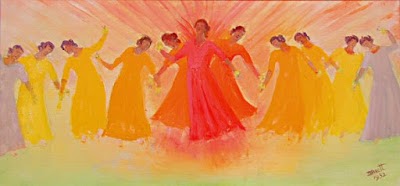
Of course, through the magic of the digital age, we are also able to “visit” some of the Taos galleries and auction houses to see more of Brett’s art:

This is “Women’s Dance” (1932), one of a number at parsonart.com showing again Brett’s glorious use of colour.

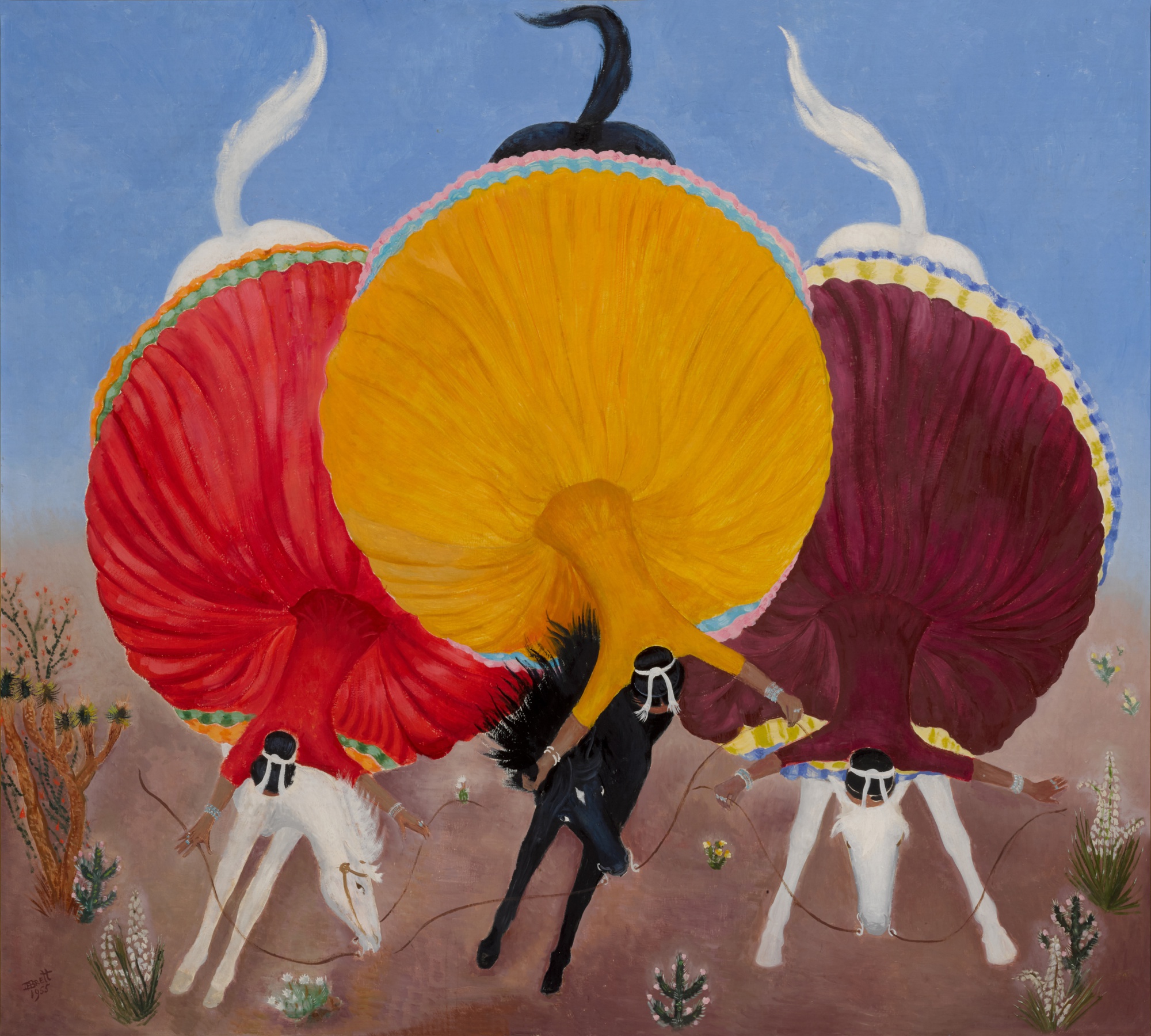
And for her sense of design:

Bareback Riders [1955; c/o Sothebys]

That DH Lawrence, who died in 1930, was such an influence on her life – the invitation to New Mexico was a complete liberation – is recalled in a 1958 painting:

called “My Three Fates” [Albuquerque Museum], it shows Mabel (left), Frieda (centre) and Brett (right) apparently remembering Lawrence who we see through the doorway sitting writing under a tree, as was his habit.

***

Art, Books and Culture Group: July 2021 – Sylvia Gosse, Edna Clarke Hall and Ethel Walker – some resources

Greetings!

How very fabulous it was to start up our Art Discussion meetings again, hurrah! So wonderful to see everyone.

As promised, I’ve put together some resources for our three brilliant artists (just click on the links underlined in blue):

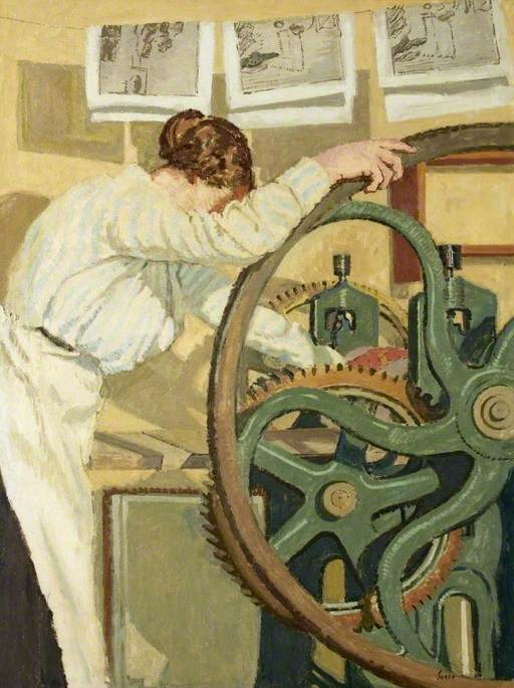
Sylvia Gosse (1881-1968)

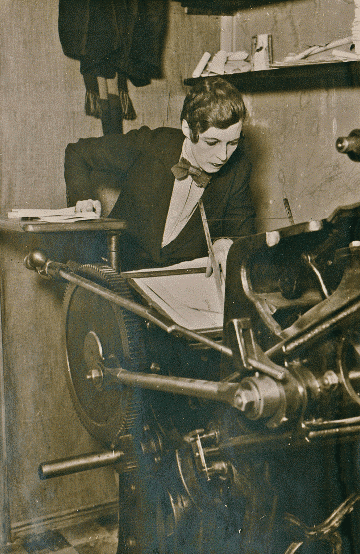
Sylvia Gosse: The Printer [1914; Swindon Art Gallery]

There are 55 paintings by Sylvia Gosse on artuk.org,

Alicia Foster’s article “Sylvia Gosse: being modern” is here

and a short essay about her in connection with Walter Sickert & the Camden Town Group on Tate Inc.

We mentioned the paintings of Sylvia Pankhurst (1882-1960): there’s a Tate essay here and I suspect a very good article in Apollo (but I’m just waiting for a password reset! Very worth signing up to their 4 free articles a month – but don’t forget your password!)

*

Edna Clarke Hall (1879-1979)

Edna Clarke Hall: Poem Picture

So very difficult to find out much about Lady Edna Clarke Hall, other than a short biography on Tate/Wikipedia and an interesting Old Upminster history article.

We do learn quite a lot about her earlier life and marriage via Ida Nettleship’s letters:

which include the immortal line: “Stir up, and look the thing in the face and be a man for a time”.

There are only a few images on artuk.org, more at Abbott and Holder and some on a blogspot called “the sight of morning“, it seems a V&A archive and the National Gallery of Wales archive also hold some of her work, including the Poem Pictures, unfortunately not digitalised – and I’m not sure if the Archives are open to the public yet – I’ll find out!

Edna Clarke Hall is also mentioned in Carolyn Trant’s brilliant “Voyaging Out”

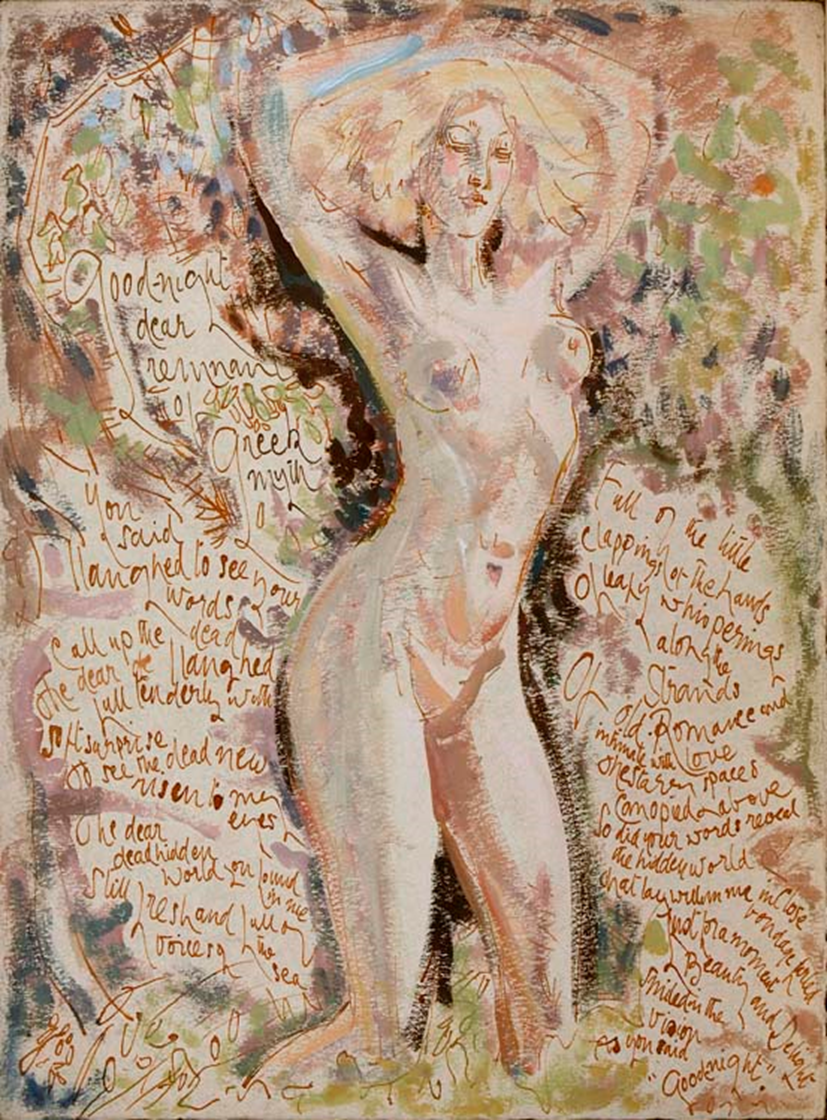
in which Trant writes: “[ECH’s] work was out of kilter with the times…. All her work sprang from emotional compulsion rather than aesthetic consideration, and these merged when, inspired by Blake, she went on to make the Poem Pictures, her own handwritten verses with images, creating a more metaphysical representation of a ‘soul in chains’. The words are frank, sensually erotic and integral to the images… With so much of her work missing and the remainder now rarely exhibited it is hard to arrive at a considered judgement of her achievement.”

*

Ethel Walker (1861-1951)

Ethel Walker: The Young Sculptress [no date; Potteries Gallery & Museum]

112 paintings on artuk.org and Alicia Foster’s essay is here

There are a number of paintings on the Christie’s website (scroll down to their Essays)

as well as interesting information on those paintings held by the Tate – where Walker’s archive and unpublished biography by Grace English is held – click on the “Catalogue Entry”, especially for example on The Zone of Love: Decoration where Mary Chamot writes:
“[The Decorations] are translations of a state of mind in terms of design, they are musical in their abstraction… no jarring note of excessive realisation is allowed to destroy the imaginative completeness of the whole.”

*

I’ll add to these resources as I can

– and please let me know if you discover anything and what you think of the artists’ work.

The other book we mentioned for general information on artists’ lifestyles in this period is:

and, next month (hopefully Saturday 28th August, but I’ll confirm by email) we’ll discuss the

Art & Life

of

Gwen John

John, Gwen; A Corner of the Artist’s Room in Paris; Amgueddfa Cymru – National Museum Wales; http://www.artuk.org/artworks/a-corner-of-the-artists-room-in-paris-116863

Looking forward to seeing you again soon!

***
Protected: Research series: Russian Art and Artists (16): Towards Revolution

This content is password-protected. To view it, please enter the password below.

Posted in The Art & Artists of Russia

Permalink Enter your password to view comments.

Words and Pictures: Medieval Moments

Since my post about Medieval church wall-paintings in the “Rambling with Rothenstein” series last year, I have had half an eye on all things that touch on the visual culture of life in the Middle Ages.

For anyone who shares this curiosity, you may be interested in J.L.Carr’s short novel “A Month in the Country”.

Written in the late 1970s, it looks back to the summer of 1920. A young man, Tom Birkin, returned from the horrors of the Great War to train as a specialist in the restoration of wall-paintings. His first job takes him to the Yorkshire village of Oxgodby, deep in the English countryside, to an ancient church. “It was tremendously exciting”, he says, “to begin with I didn’t know what I was uncovering.” By the end of the second day he has uncovered a head and face of Christ, delighted by the colours that suggested the medieval artist was one of high calibre: “And, as the first tinges of garment appeared, that prince of blues, ultramarine ground from lapis lazuli, began to show – that really confirmed his class – he must have fiddled it from a monastic job – no village church could have run to such expense.”

The novel is extraordinarily subtle as his memories of the war gentle mingle with his meetings with villagers, a brush of romance and a broad contemplation of English life; it’s a subtlety that belies some deep themes if one were to seek them out. For me, though, it is this day-by-day revelation of the wall-painting that is so fascinating, and Birkin’s contemplation of the artist and his world:

“it’s not at all easy to find your way back to the Middle Ages. They weren’t us in fancy dress…”.

Yet, gradually, he does get to ‘know’ the artist, through the details of the image (a large Doom painting) and the touch of the paintbrush, as far as it might be possible across five centuries. By the end of the tale, he stands before “the great spread of colour” recognising that, for those past few weeks, he “had lived with a very great artist”.

*

I was delighted to see fragments of a medieval wall-painting myself last week, at St James the Less Church, in Hadleigh, Essex.

My guide, local historian Sandra Harvey, told me that the Norman church had been built probably in the 1140s during the reign of King Stephen. But it wasn’t until the 1850s, during restoration work, that the whitewash was removed from the walls to reveal painted texts, border decorations and some extraordinary images.

Those that survive today include an angel and a painting of St Thomas of Canterbury inscribed “Blessed Thomas” and dated to the early 1170s. This is of course intriguing, as Thomas Becket had been assassinated in 1170, perhaps on the orders of King Henry II, and was canonised by Pope Alexander III in 1173. Only months later, the King “humbled himself in public penance at Becket’s tomb” which became a site for pilgrimage as Becket became something of a medieval cult figure. That the Hadleigh painting is so early suggests the church’s proximity to Canterbury and the King, perhaps via the Priory at Prittlewell.   

Other paintings at St James the Less could not be preserved, however Mr H.W.King (who oversaw the work) made some drawings, the most wonderful of which shows there had been a large depiction of St George and the Dragon from the 15th century.

The Knight, on horseback, impales the dragon, thus securing Christian good over evil, whilst the Princess watches on along with, in the background, the King and Queen who appear to be applauding from Hadleigh Castle (which had been re/built in the 14th century).

Oh to have seen this in colour!

I did find a version of St George and the Dragon here: https://reeddesign.co.uk/paintedchurch/broughton-st-george.htm from a church in Broughton, Buckinghamshire, just to give a sense of the Hadleigh picture.

*

My other ‘medieval moment’ has been via Charles Spencer’s book “The White Ship” which tells the history of a medieval disaster when Henry I’s only legitimate son, William Aetheling, was one of the many to die when the White Ship – the Titanic of its day – was shipwrecked off the coast of Normandy.

The book is split into three sections. The first, Triumph, tells the story of Henry – the third son of the Conqueror – as he makes his way towards ruling both England and Normandy. It’s a complicated story, with inter-familial and strategic marriages, births both in and out of wedlock, bitter sibling rivalries, bloody battles, awful punishments and the complex relationship of kingship and papal authority. Eventually Henry secures both lands and brings a certain peace and order. His triumph, then, is to marry Matilda of Scotland, with whom he has a legitimate male heir, William Aetheling and a daughter Matilda.

I love Spencer’s imagined description of the charming and handsome seventeen-year-old William:

“Drawing on the aristocratic fashions of the time, we can guess how William Aetheling was turned out when he waited in Barfleur to make his sea passage home. If we picture him swathed in the finest sil shirt and tunic, with a fur-trimmed brocaded cloak thrown over his shoulders – to combine magnificence with warmth – we are probably not too far from the truth. If, in addition, he was following the fashion that had taken root during his grandfather’s rule of England and was still in vogue, his shoes would have been long with pointed toes.”

Part Two is titled Disaster: the White Ship, on which William was travelling from Normandy to England, met with a mighty collision against a rock. As water rushed in, William’s bodyguards got him onto a rowing boat. However, hearing his half-sister’s screams as the ship splintered further and both crew and passengers were hurled into the freezing sea, William made them turn the little boat back to try and rescue her. Those flailing in the water grabbed on to the returning boat, seeking safety, yet ultimately pulling everyone down into the water. Henry I’s dream of securing long-lasting peace, so that England and Normandy might be passed down to his legitimate son, had been shattered.

The third part of the book, Chaos, tells of the anarchy as lands on both sides of the Channel return once again to on-going rivalry, battles and bloodshed. The shipwreck had a huge impact on the course of history leading, on Henry I’s death, to the unsettled reign of King Stephen.

There is an extremely poignant manuscript image of Henry mourning the death of his son:

British Library, Royal MS 20 A.ii, fol. 6v. https://bl.uk/manuscripts/Viewer.aspx?ref=royal_ms_20_a_ii_f006v

You may have seen or read that Charles Spencer has been taking scientific diving teams out to the site of the shipwreck to learn if anything of the ship might remain, which really would be extraordinary, and rather exciting.

***

As a postscript, there’s a great article by Simon Heffer:

Medieval church paintings were the PowerPoint presentations of their day (telegraph.co.uk)

in which he concludes: “With luck, as churches continue to be repaired, more such ancient masterpieces will be found, their glaze protecting them from centuries of whitewash; and once more our ancestors will speak directly to us.”

***
Protected: Research series: Russian Art and Artists (15): Suprematism – Malevich, Rozanova and Popova

This content is password-protected. To view it, please enter the password below.

Posted in The Art & Artists of Russia

Permalink Enter your password to view comments.

Protected: Research series: Russian Art and Artists (14): The Cubo-Futurists

This content is password-protected. To view it, please enter the password below.

Posted in The Art & Artists of Russia

Permalink Enter your password to view comments.

Protected: Research series: Russian Art and Artists (13) – Icons, and Wassily Kandinsky

This content is password-protected. To view it, please enter the password below.

Posted in Uncategorized

Permalink Enter your password to view comments.