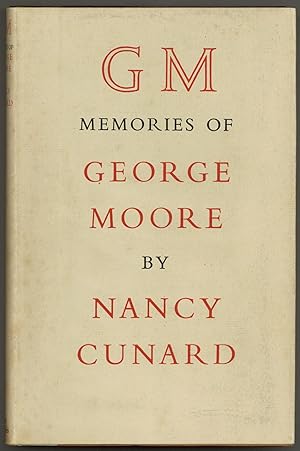
“And it was Christmas Eve or Christmas night that I set him at the top of a long, narrow table of twelve at the dinner I gave for him in the room upstairs at the Rotonde…” writes Nancy Cunard in GM: Memories of George Moore (1) – the “him” of her recollection. For Nancy Cunard the Paris of the 1920s was as refreshing and inspiring as, Anne Chisholm notes (2), 1870s Paris had been for George Moore; both decades of radical literary and artistic change. Moore had been friends with Edouard Manet and the emerging modern art of the Impressionists; Cunard, in turn, was fascinated by Dada and the developments of Surrealism. What a dinner party it must have been!
George Moore had moved to Paris in the 1870s planning to train as an artist, but soon becoming aware he was more of a writer than a painter. Friendships, however, blossomed at the artists’ favourite rendezvous the Café de la Nouvelle-Athènes, in particular with Edouard Manet who sketched and painted Moore a number of times:

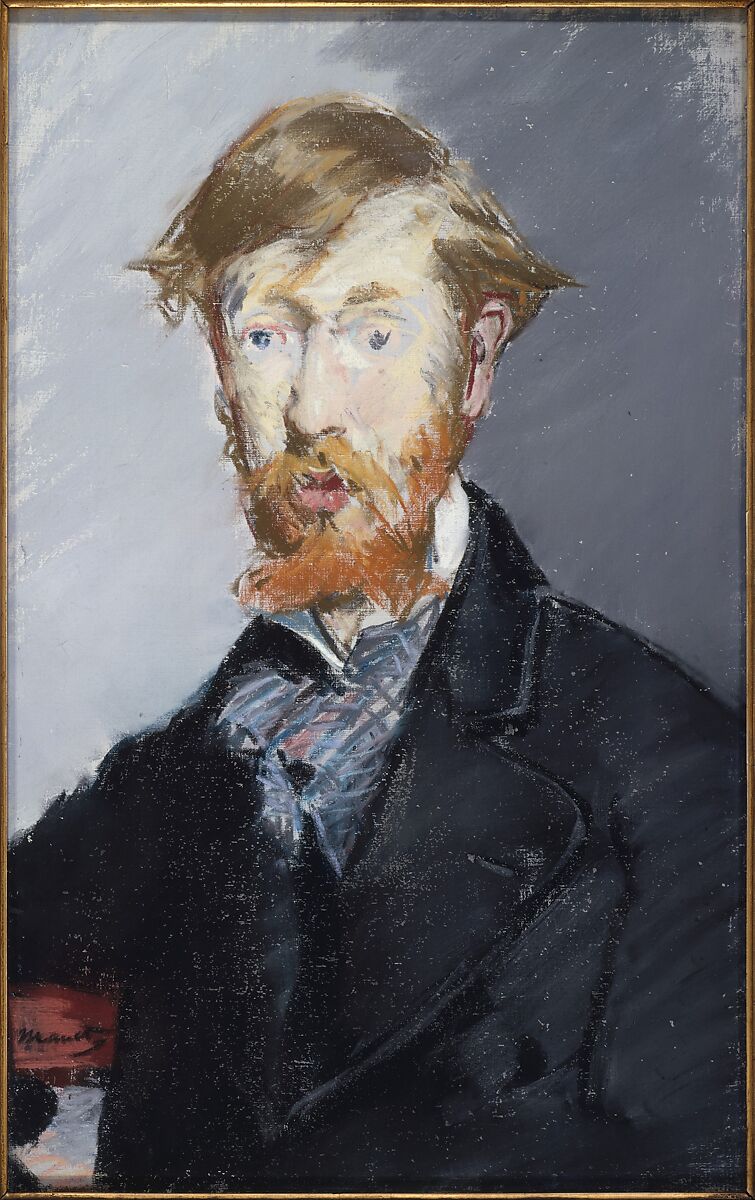
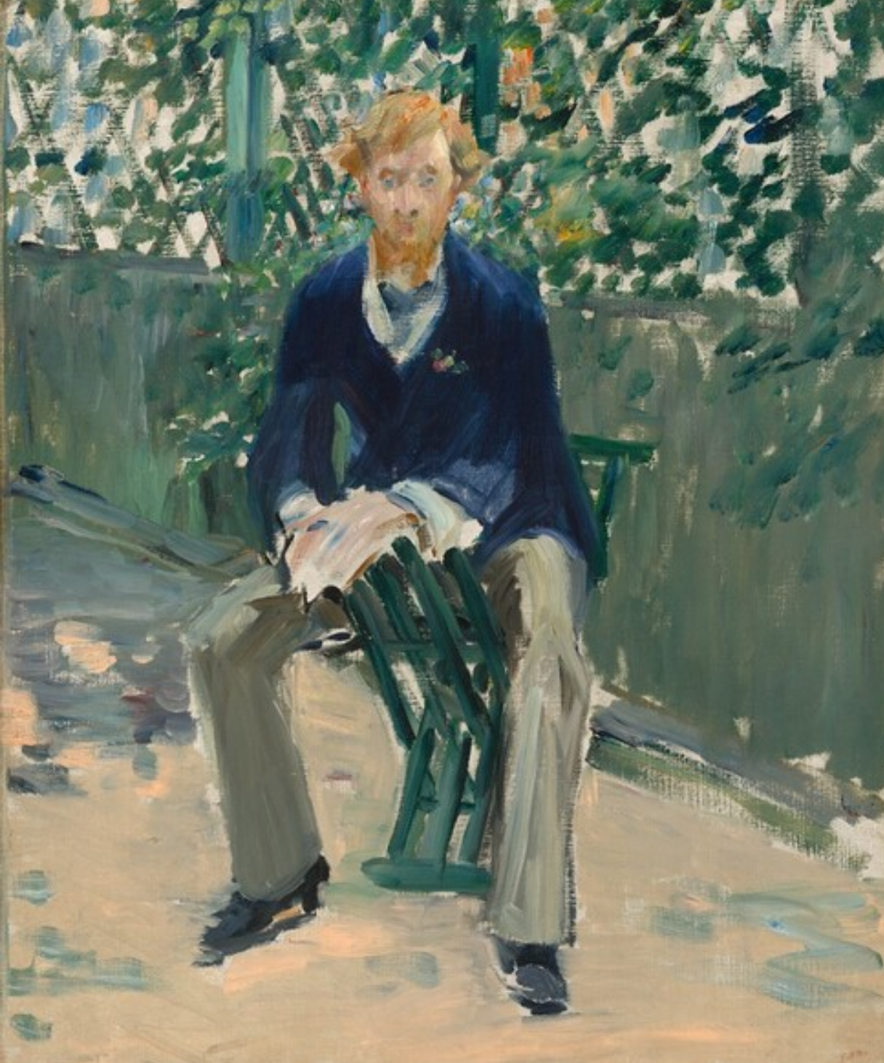
George Moore at the Cafe [c.1878; Met Museum]; Portrait of George Moore [1879; pastel, Met Museum]; George Moore in the Artist’s Garden [1897; National Gallery of Art, Washington]
and Nancy Cunard would inherit a Manet painting “Etude pour ‘Le Linge'”, which she’d loved viewing in his Ebury Street room, on Moore’s death. (This black and white reproduction is from the “Memories”, but I’ve not been able to trace the painting further.)

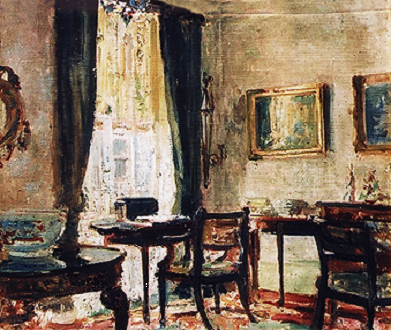
The second picture here is by another life-long painter friend Jacques-Emile Blanche and shows Moore’s room at Ebury Street: “Le Salon de George Moore” [1910; c/o Jane Robert’s fascinating online catalogue].
“But who were the other diners?” asks Nancy Cunard. She cannot recall exactly, but among them must have been, she thinks, the Dada founder and Surrealist writer Tristan Tzara, Nancy’s lover at the time “…and his fellow countryman… the Rumanian sculptor Brancusi (a fine bearded old shepherd of a face and to my mind one of the great sculptors of all time)…”


Photograph of Nancy Cunard and Tristan Tzara au bal des Beaumont by Man Ray[1924; Pompidou Centre, Paris]; La jeune fille sophistiquée (Portrait de Nancy Cunard) by Constantin Brancuși [1928; Christies]
Other artists Nancy believes may have been there (“They were surely asked.”) included Eugene MacCown, who had also painted her portrait, as well as Nina Hamnett, then living in Montparnasse, her friend from the heady days of London’s Soho bohemia during World War I when they had frequented The Eiffel Tower restaurant.


Portrait of Nancy Cunard by Eugene McCown [1923, The University of Texas at Austin]; The Eiffel Tower (illustration from “The Silent Queen”) by Nina Hamnett.
It must have been an extraordinary gathering from across the generations, linking characters from London and Paris, and indeed beyond – a heady mix, no wonder Nancy couldn’t remember the details thirty years later!

Nancy Cunard by Man Ray [1924; Pompidou]
***


 thecommonviewer